No products in the cart.
What It Costs to Start a Date Farm (A Grower’s Breakdown)
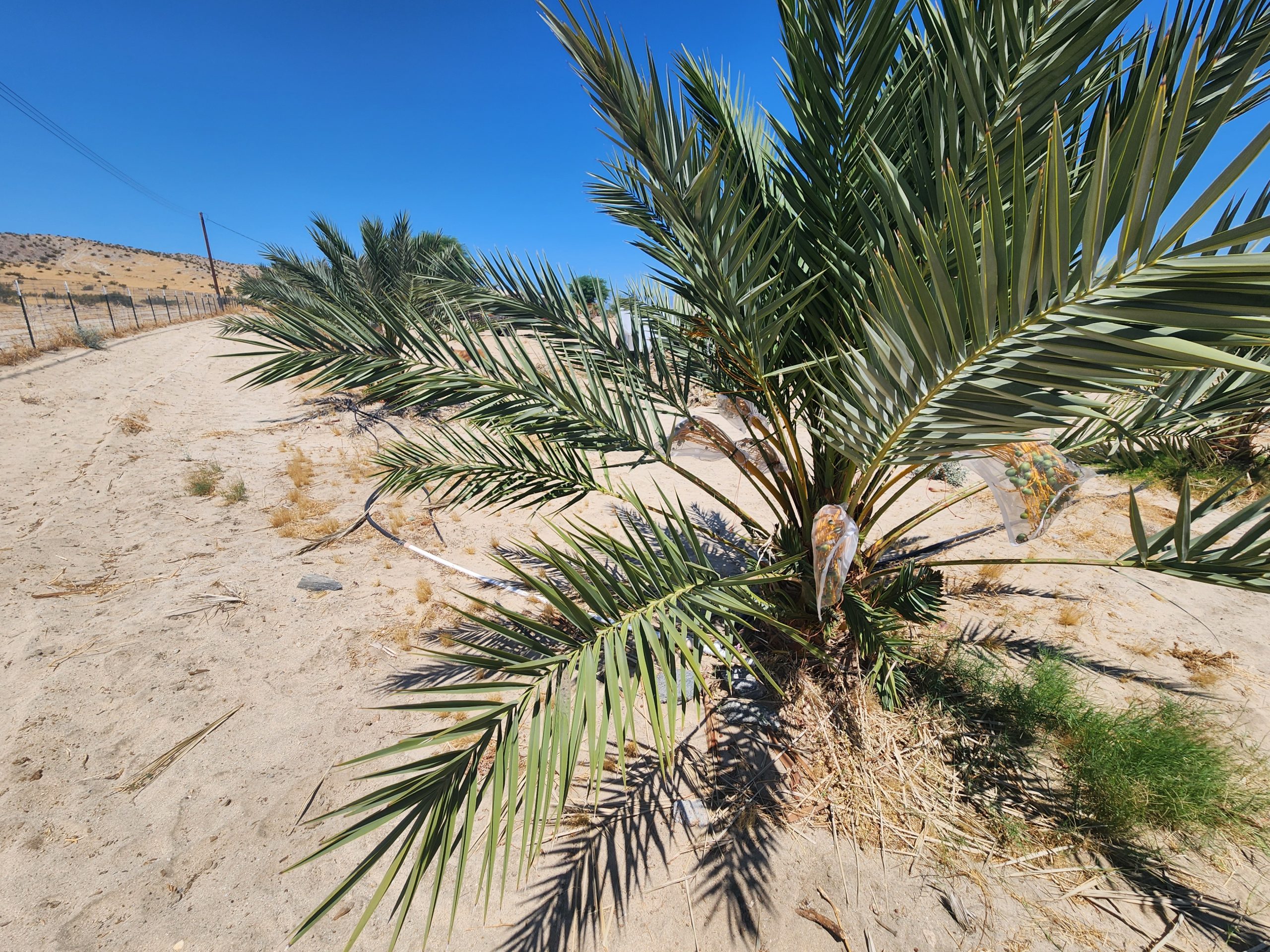
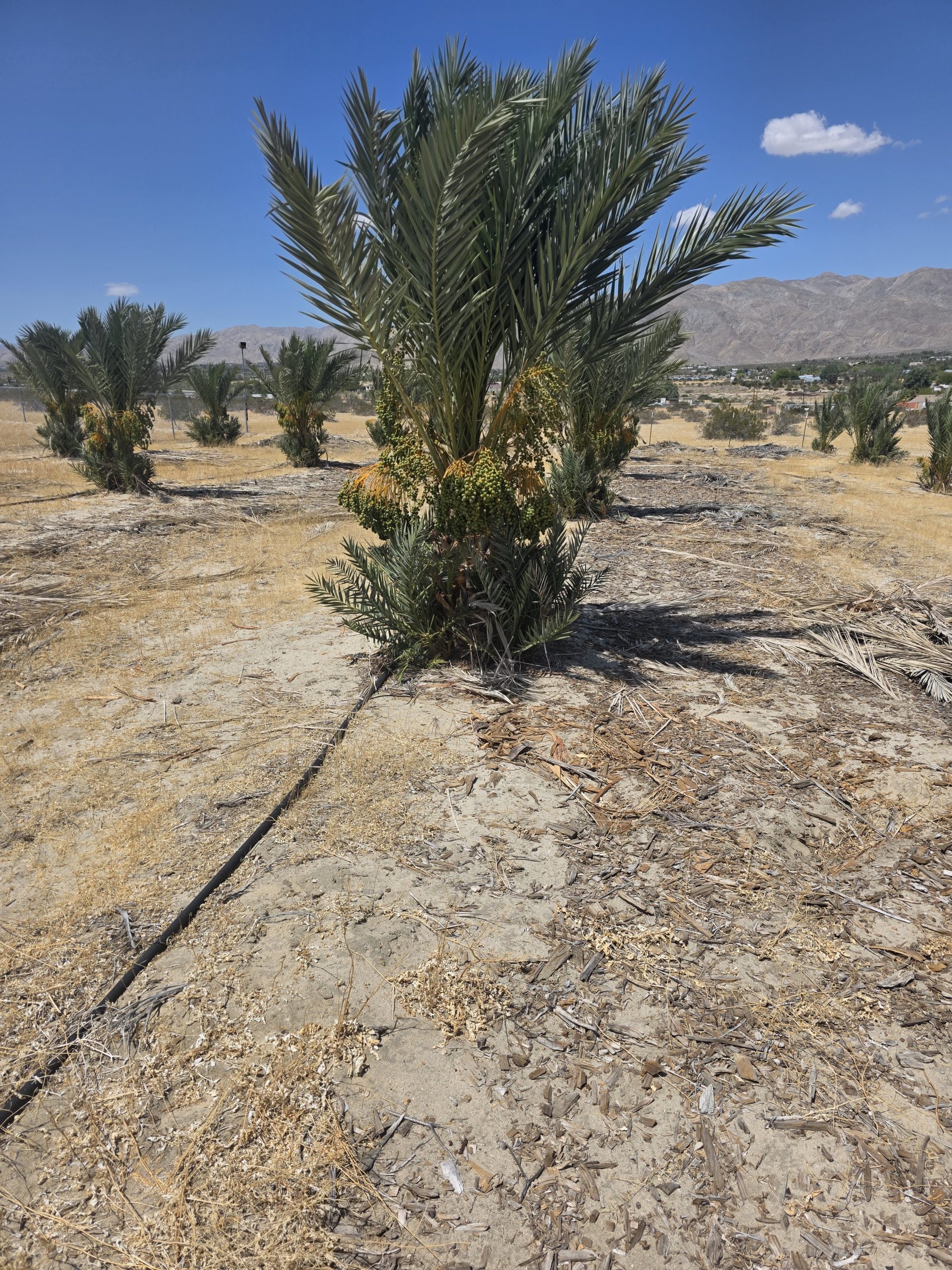
A date farm is a ten-year bet before it pays you back. You buy offshoots, plant them, water them through several desert summers, and wait. The palms start to flower around year three or four, give a real crop around year five or six, and reach full production around year ten. Every step in between is hand work. We farm Medjool and Zahidi in Sky Valley, and this is the honest picture of where the money goes.
The one published cost study, and how to read it
The best public benchmark is a University of California Cooperative Extension study of a hypothetical 25-acre date orchard in the Coachella Valley, written with grower input and funded in part by the California Date Commission. It’s in 2005–2006 dollars and is built around Deglet Noor, the valley’s most planted variety, so treat its numbers as a floor. Wages, water, land and offshoots all cost much more today, and Medjool takes more hand labor than Deglet Noor.
We grow these. Golden Zahidi Dates — Nutty, Less Sweet, Never Sticky | California Farm-Direct from our family farm in Sky Valley, California — from $15/lb, shipping included. See them →
Still, it’s the clearest picture anyone has published of how the money moves:
| Item (UC study, 2005–06) | Figure |
|---|---|
| Palms per acre | About 49 at 30 × 30 ft, one of them a male |
| Offshoots | About $125 each, cut, hauled and planted; assumes 30% replanted in year two |
| Land preparation | About $500 an acre, plus soil fumigation in the study’s conventional system |
| Irrigation system and reservoir | About $1,500 an acre |
| Land value used | $30,000 an acre |
| Water, mature orchard | About 8 acre-feet per acre per year (flood irrigation), starting near 1 in year one |
| Cash cost to establish, years 1–9 | About $33,600 an acre (after crop income in those years) |
| Annual cost at full production | About $9,200 an acre, including land rent and paying back establishment |
| Yield at full production | About 272 lb per palm, 13,000 lb an acre (Deglet Noor, year 10+) |
Source: UC Cooperative Extension, Sample Costs to Establish a Date Palm Orchard and Produce Dates in the Coachella Valley, Riverside County, 2005–2006 (Takele, Mauk, Sharabeen). Figures rounded.
Where the money actually goes
In that study, the biggest single slices of a mature orchard’s annual cost are the cultural work (pruning, weeds, fertilizing, irrigating, pests) at about 29%, paying back the establishment years at about 25%, and land at about 20%. Harvest is only about 7%. The expensive part of a date farm is the years before the fruit, and the hand work on every palm, every year.
Every palm gets touched by hand, several times a year
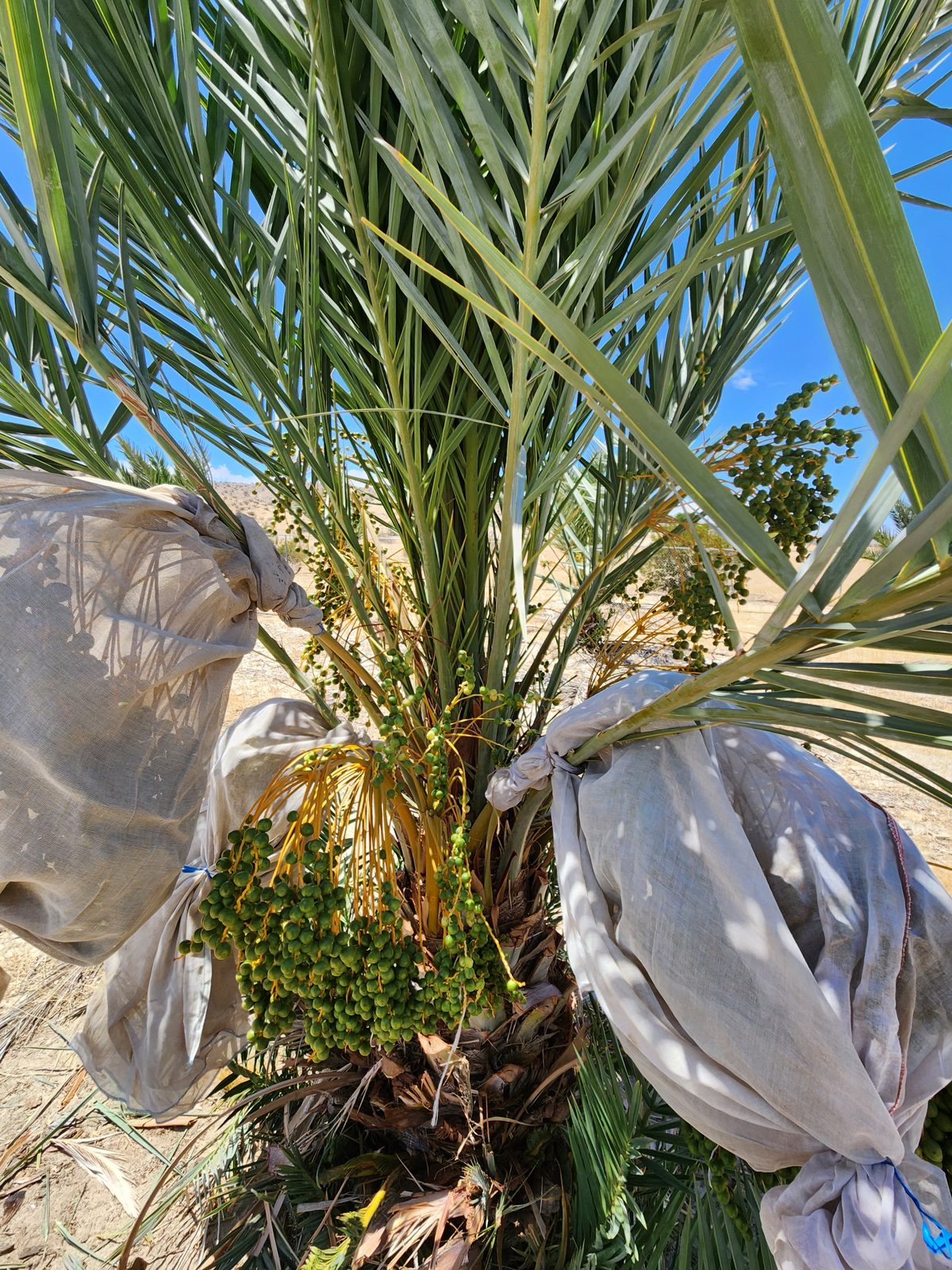
Dates don’t pollinate themselves well, the bunches need support, and the fruit needs protecting. The study’s per-palm costs for that hand work add up like this:
| Job | When | Per palm (2005–06) |
|---|---|---|
| Dethorning | Jan–Feb | $5.00 |
| Hand pollination + bags | Spring | $8.40 |
| Tying down bunches + thinning | May–June | $5.48 |
| Pruning + bagging | July–Aug | $13.35 |
| Total | About $32 a palm, about $1,580 an acre |
That’s at the study’s $8.80 hourly wage. California’s minimum wage today is close to double that, and Medjool needs heavier thinning and more picking passes than Deglet Noor, so the real number on a Medjool farm now is a good deal higher. It’s a big part of why Medjool dates cost what they do.
The waiting years
According to the UC study’s yield table, a palm planted from an offshoot gives roughly:
- Years 1–4: little or nothing. It may flower in year three and set a token crop the next year.
- Year 5: about 47 lb.
- Year 7: about 137 lb.
- Year 10 on: about 272 lb at full production (Deglet Noor). Medjool usually yields less per palm and sells for more.
That curve is why the establishment cost is so large: for most of a decade you’re paying full freight on water and labor for a fraction of a crop. Bigger offshoots shorten the wait and survive better, which is why planting stock matters so much. See offshoots vs. tissue culture and offshoot care for the first two years.
Water is the cost that decides everything
A mature date orchard on flood irrigation can use around eight acre-feet of water per acre per year in the study’s numbers. Where that water comes from (a district, a well, or nothing reliable) decides whether a date farm is possible at all. Read how much water a date palm actually takes and how palms handle salty water and sandy soil.
What the study doesn’t cover
- Packing and selling. The study assumes you sell to a packing house at wholesale. Packing, cold storage, containers, shipping and a store are a whole second business.
- Pests that weren’t here in 2005. The South American palm weevil now has to be watched for and planned around.
- Farming without sprays. The study describes a conventional orchard with fumigation and pesticide dusting. We don’t spray our fruit or use synthetic fertilizer, which trades chemical costs for more hand work and closer watching. Here’s how we grow.
- Frost and weather. Young palms need protecting in a cold snap. See frost damage on date palms.
So is it worth it?
Only if you’re thinking in decades. Date palms stay productive for 40 years and more, a mature palm is a valuable asset (what a mature date palm is worth), and fresh Medjool sold direct earns far more than packing-house prices. But the first ten years are mostly spending. Start small, get your water sorted first, buy the best planting stock you can, and expect to do a lot of the work yourself.
Thinking about planting a few palms or a small orchard? Our Growers’ Hub has the field notes, and we offer date palm consulting for growers who want a second set of eyes.
Taste what ten years of work tastes like. Jumbo Medjool from our farm → · Golden Zahidi · Coachella Valley dates · Our date farm
From our farm to your door
We grow every date we sell on our family farm in Sky Valley, California. Shipping is included in the price to the lower 48.
- Jumbo Medjool Dates — large, soft, caramel-sweet, from $19
- Golden Zahidi Dates — firm, nutty — the baking date, from $15
- Barhi Dates — butterscotch, creamy, seasonal, between harvests