
No products in the cart.

Why Date Bunches Are Bagged on the Palm
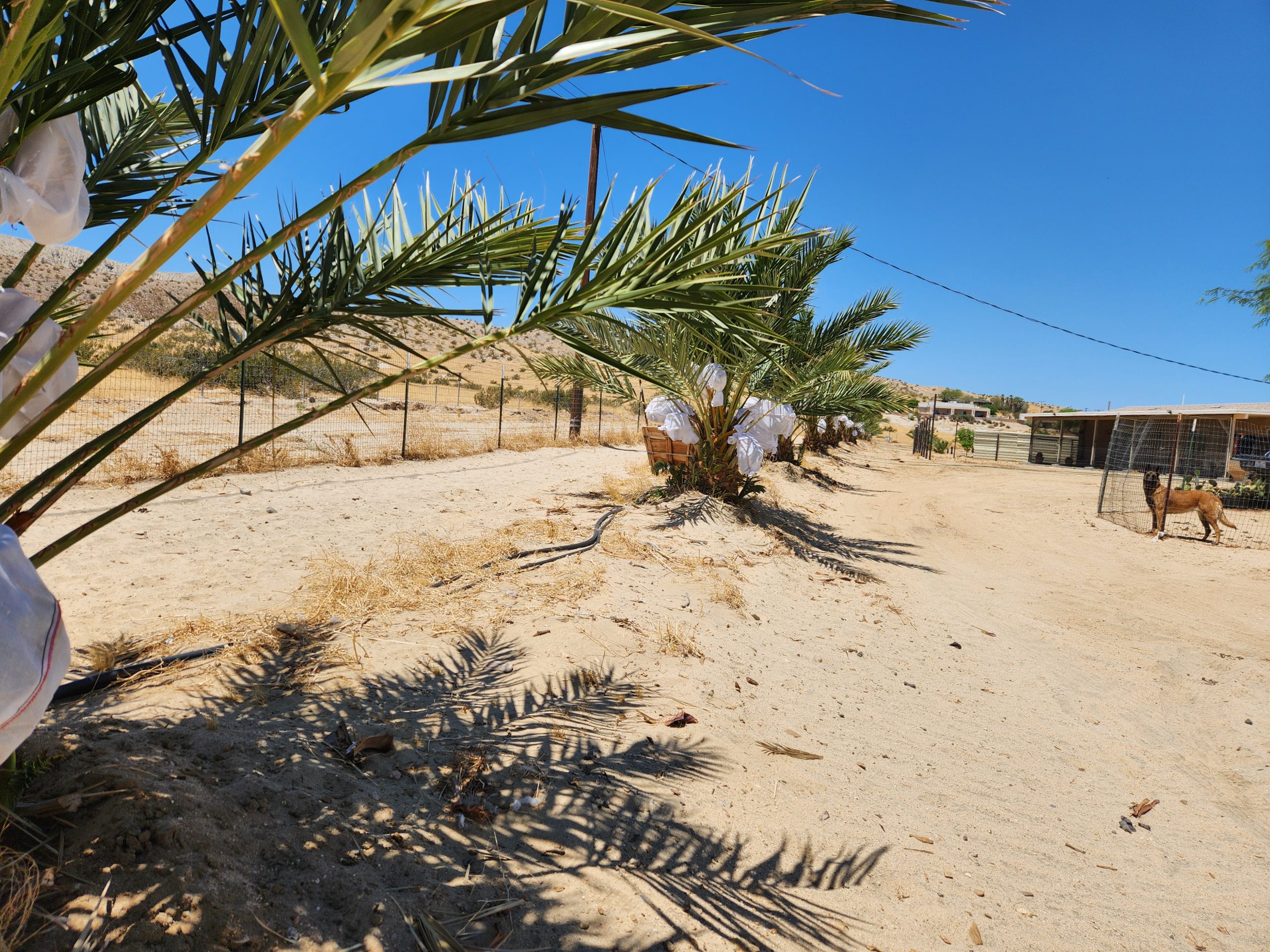
Drive past a date garden in late summer and every palm is wearing covers — those are bags over the fruit bunches, and they’re doing three jobs at once. Bagging is one of the oldest tricks in date farming, and it’s a big reason farm-direct fruit arrives clean and unblemished. Here’s what the bags are for, straight from a farm that ties them on every season.
Job one: rain insurance
Dates finish ripening in late summer and early fall — exactly when the desert gets its rare monsoon storms. Water on nearly-ripe dates is the crop’s worst enemy: the skin checks and splits, the sugar ferments, and a single wet night can sour fruit that took a year to grow. The bag sheds rain off the bunch while the open bottom lets air keep moving. After a storm, bagged fruit dries; unbagged fruit souring on the strand is how a grower loses September’s paycheck in an hour. It’s also why thinning comes first — an opened-up bunch dries fast under its bag.
We grow these. Golden Zahidi Dates — Nutty, Less Sweet, Never Sticky | California Farm-Direct from our family farm in Sky Valley, California — from $15/lb, shipping included. See them →
Job two: birds, and everything else with an appetite
A ripening date is candy hanging in the open, and every bird in the valley knows the exact week it turns sweet. The bag is a physical wall between the flock and the crop — no nets over whole trees, no noise cannons, no spraying anything. For a farm like ours that grows without sprays, the bag is the pest program for the fruit: it keeps out birds, beetles and wasps with cloth instead of chemicals.
Job three: the catcher
Dates on a bunch don’t ripen together — the ripest fruit drops first. A tied bag catches those early drops clean, instead of losing them to the sand ten meters down. On harvest passes, the picker empties the bag’s catch along with what’s ready on the strand — some of the best fruit of the year comes out of the bottom of the bag.
When they go on, and what they’re made of
Bags go on as the fruit starts turning — once the dates reach the yellow-amber khalal stage and the sugar starts climbing. Growers use breathable materials: traditional waxed-paper date bags, muslin or cotton sleeves, or mesh where birds are the main worry. The constant is airflow — a date must keep curing on the palm inside its bag, so plastic is never the answer. The bag ties above the bunch around the stalk, hangs open or loosely gathered below, and stays on until the last harvest pass.
What it means for the fruit you buy
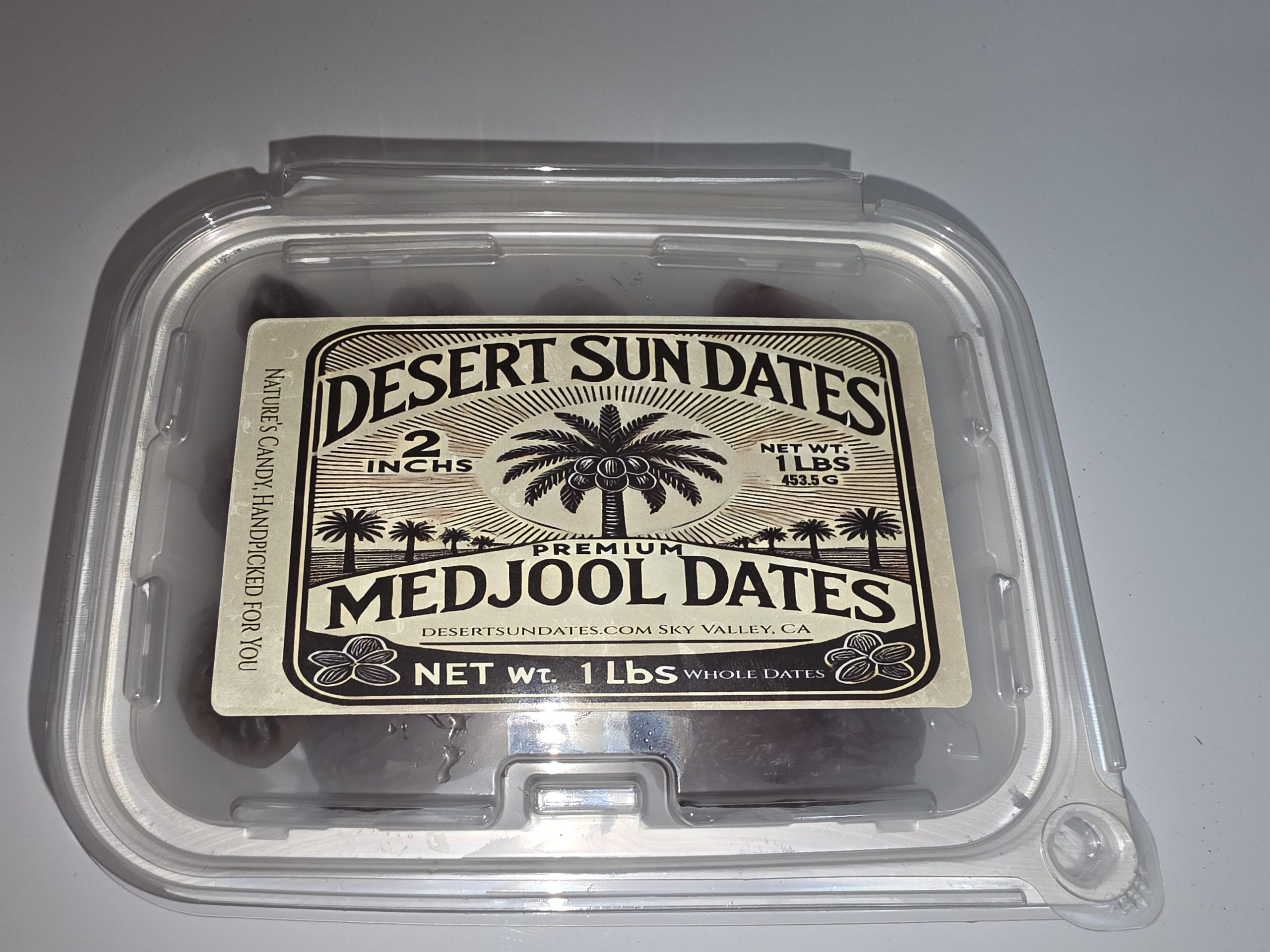
Bagged, thinned, hand-picked fruit reaches the box without ever being rained on, pecked, or treated with anything — which is exactly the difference you taste in our jumbo Medjool and golden Zahidi. One harvest a year, protected all the way down the strand, shipped farm-direct with shipping included.
From our farm to your door
We grow every date we sell on our family farm in Sky Valley, California. Shipping is included in the price to the lower 48.
- Jumbo Medjool Dates — large, soft, caramel-sweet, from $19
- Golden Zahidi Dates — firm, nutty — the baking date, from $15
- Barhi Dates — butterscotch, creamy, seasonal, between harvests