
No products in the cart.
How Much Water It Actually Takes to Grow a Date Palm in the Desert
Dates are a desert crop, and people hear “desert” and assume that means the trees barely drink. The opposite is true: a producing date palm is one of the thirstiest fruit trees you can grow — it just happens to be extraordinarily good at turning that water into fruit, instead of losing it to the heat the way a less-adapted plant would.
Here’s what the real research says a mature palm actually needs, and how growers in hot, dry country have learned to deliver it without wasting it.
We grow these. Golden Zahidi Dates — Nutty, Less Sweet, Never Sticky | California Farm-Direct from our family farm in Sky Valley, California — from $15/lb, shipping included. See them →
A mature palm’s real water budget
Published crop-water studies for mature date palms put annual water use in a wide range — roughly 1.15 to over 3 cubic meters per tree per year, depending on climate, soil, and irrigation method, which works out to several hundred gallons per tree, per year, delivered as regular, deep irrigation rather than a light daily sprinkle. Research out of Saudi Arabia tracking real orchard water use found mature palms taking in anywhere from about 108 to 324 cubic meters per tree annually depending on how heavily they were watered — a roughly threefold range on the very same variety, in the very same desert.
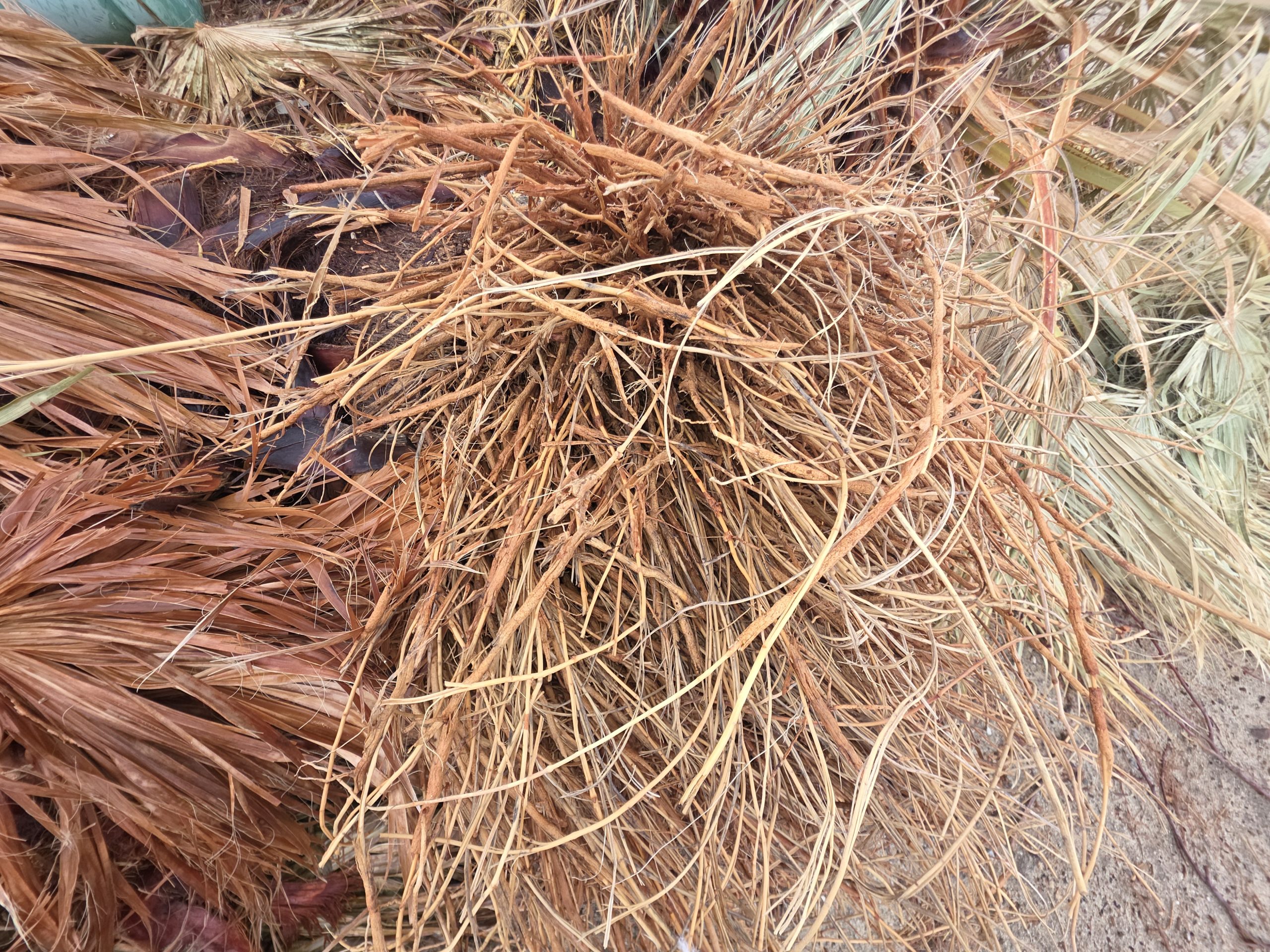
What matters more than the raw number is how deep that water needs to go. A date palm’s root system is fibrous and spreading rather than a single taproot, with major roots reaching down 20 feet or more in favorable soil — but the active feeder roots that do most of the drinking tend to sit in the upper few feet. Shallow, frequent watering mostly wets soil the tree isn’t using; deep, infrequent watering reaches where the roots actually are.
Why delivery method changes the outcome — not just the bill
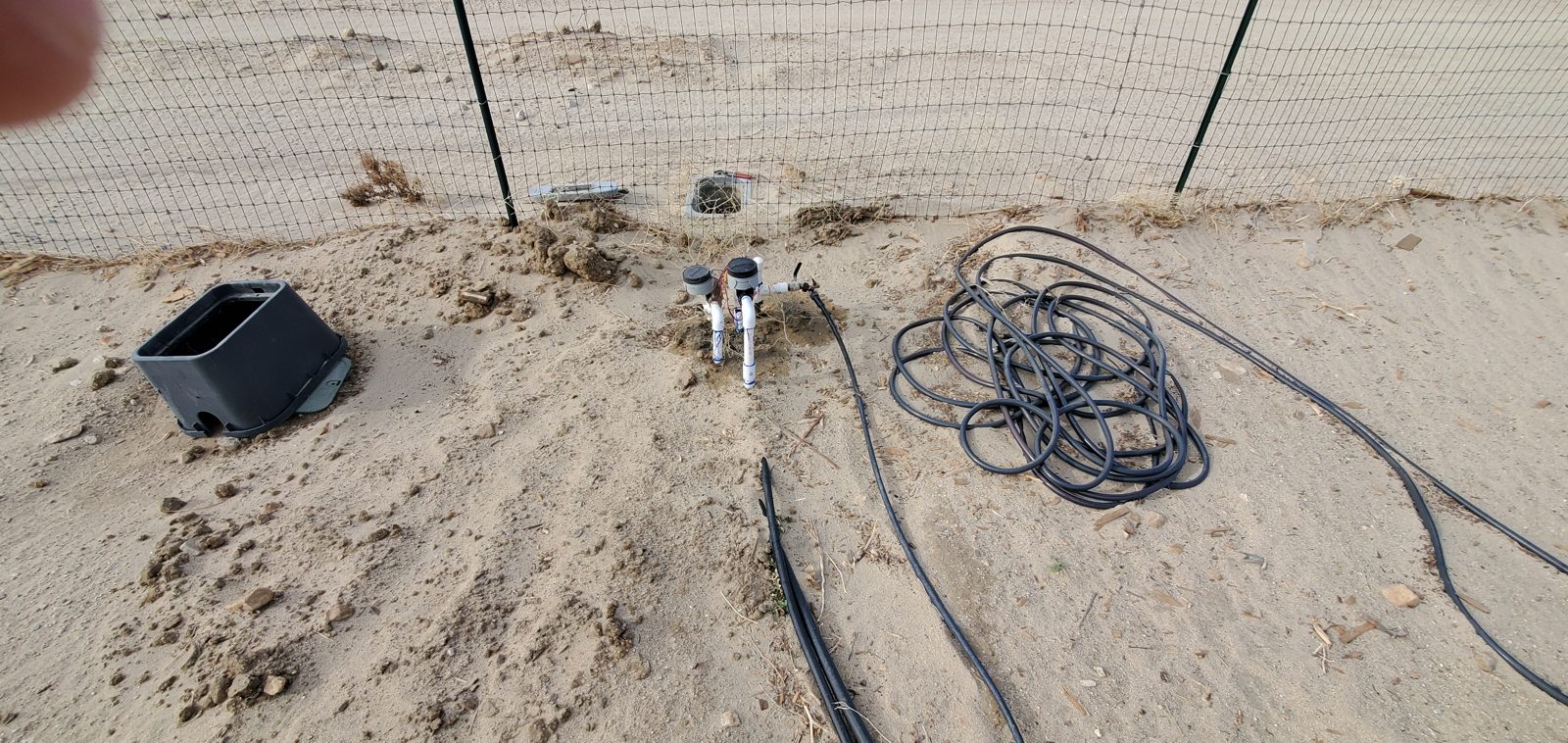
For most of the history of American date farming, flood irrigation — basins built around each tree, flooded on a schedule — was the standard method, and it still works. But controlled drip-irrigation trials on mature palms have found real gains over older methods: subsurface drip systems, which run the irrigation line underground near the root zone instead of flooding the surface, have been shown to cut total water use by roughly 30% compared to conventional surface drip, and by as much as half compared to overhead sprinklers — while increasing yield, in some trials by 30–70%, because the water reaches the root zone directly instead of evaporating off a wet soil surface in desert heat or drifting away unused.
In one multi-year field trial, a plot of mature palms switched from surface to subsurface drip went from an average yield of about 75 kg of fruit per tree under the old system to over 120 kg per tree in the first year on the new one — using close to the same amount of water, not more. The gain wasn’t from pouring on extra water; it was from stopping the losses that happen before a less-efficient system’s water ever reaches a root.
There’s a second desert-specific reason subsurface and drip methods matter: salt. Desert irrigation water almost always carries some dissolved salts, and in a flood or sprinkler system, water evaporating off the surface leaves those salts behind and concentrated right where the roots are. Research has found that drip and subsurface systems, by watering the root zone directly and pushing salts outward past the root mass instead of concentrating them at the surface, measurably reduce this long-term salt buildup compared to older irrigation methods — which matters a great deal over an orchard’s multi-decade lifespan.
The payoff, in plain percentages
A multi-year Saudi field trial comparing subsurface drip against conventional surface irrigation on mature palms put real numbers on the gain: water savings up to 60% with an average yield increase of 25%, and a water-use efficiency more than three times that of conventional surface drip. The same research found a side benefit that matters for long-term orchard health in desert soil: because the system wets the root zone from below instead of flooding the surface, it suppresses weed growth around the tree and prevents the salt buildup that forms when irrigation water evaporates off a wet surface and leaves its dissolved minerals behind, concentrated exactly where the feeder roots are trying to work.
What a Coachella Valley irrigation schedule actually looks like
University cost studies for establishing a date orchard in the Coachella Valley lay out a real, year-by-year water budget rather than a rule of thumb: irrigation every 11 days through the summer growing season (May through September), dropping back to once a month in the shoulder months (October–November and March–April), with the total volume applied roughly doubling every year as the young palm grows — starting around 1 acre-foot per acre in the first year and reaching roughly 8 acre-feet per acre annually once the orchard is in full production. At a typical district water rate, that mature-orchard water bill alone runs into real money per acre, per year — which is exactly why the efficiency gap between a wasteful irrigation method and a tuned one isn’t an abstraction to a working grower. It’s the difference between an orchard that pencils out and one that doesn’t.
What this looks like on real desert ground
None of this is theoretical for a Coachella Valley–area orchard. Deep soils, minimal rainfall, and triple-digit summer heat are exactly the conditions date palms evolved for — and exactly the conditions that punish a wasteful irrigation setup. A drip system that delivers water slowly and directly to the root zone, on a schedule tuned to the tree rather than the calendar, is less about ideology and more about not giving the desert free water to evaporate.
It’s also part of why we don’t spray and keep our growing practices as simple as the ground allows — the less a tree has to fight shallow roots, surface salt, and heat stress, the less it needs propping up with anything else.
Quick Answers
How much water does a mature date palm need per year? Published studies put it roughly in the range of 100–325 cubic meters per tree annually depending on climate and irrigation method — several hundred gallons a week during the growing season for a mature, fruiting palm.
Does drip irrigation really use less water than flooding a date palm? Yes — field trials comparing methods have found subsurface drip can cut water use by roughly 30% versus surface drip and by up to half versus sprinkler irrigation, while often increasing yield, because less water is lost to surface evaporation in desert heat.
Do date palms need deep watering or frequent light watering? Deep and less frequent. The feeder roots that do most of the drinking sit a few feet down; a light daily sprinkle mostly wets soil the tree isn’t using.
More from the orchard: the Date Palm Growers’ Hub collects everything we publish here, including the date palm root system, dug up and shown plainly.
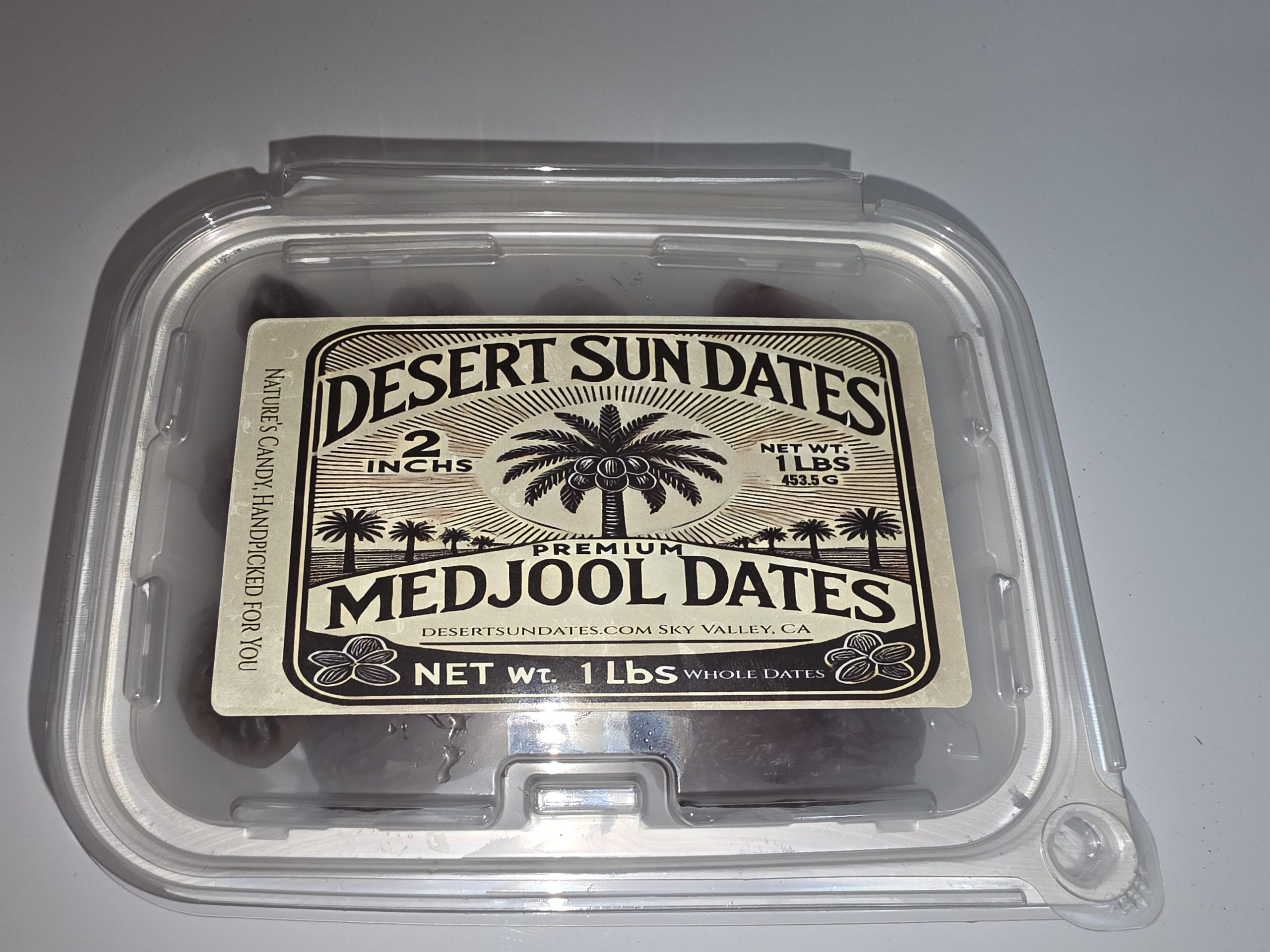
Grown on deep desert water, not sprays. This season’s fruit, farm-direct: Shop Medjool → · Golden Zahidi
From our farm to your door
We grow every date we sell on our family farm in Sky Valley, California. Shipping is included in the price to the lower 48.
- Jumbo Medjool Dates — large, soft, caramel-sweet, from $19
- Golden Zahidi Dates — firm, nutty — the baking date, from $15
- Barhi Dates — butterscotch, creamy, seasonal, between harvests