No products in the cart.
Date Palms, Salt and Sand: Why This Crop Thrives Where Others Die
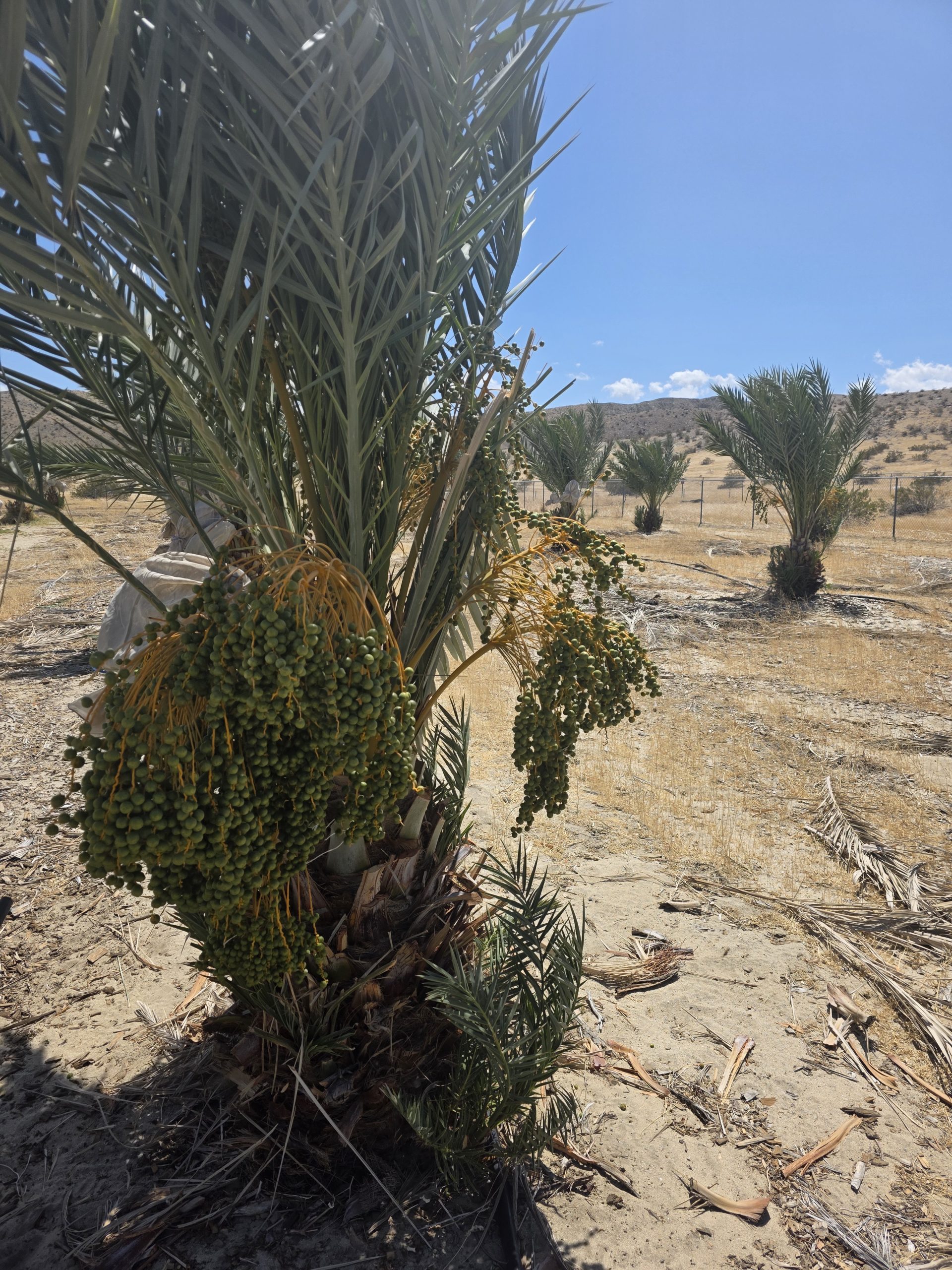
The old growers’ proverb says a date palm wants “its feet in water and its head in the fire of heaven.” There’s a second, quieter half to that toughness: the water at its feet can be salty enough to kill nearly any other fruit tree, and the ground can be pure sand — and the date palm carries on. Salt tolerance is one of the reasons this crop ended up in desert basins like ours, and it’s worth understanding whether you farm dates or just wonder how anything fruits in this ground.
How salt-tolerant is a date palm, really?
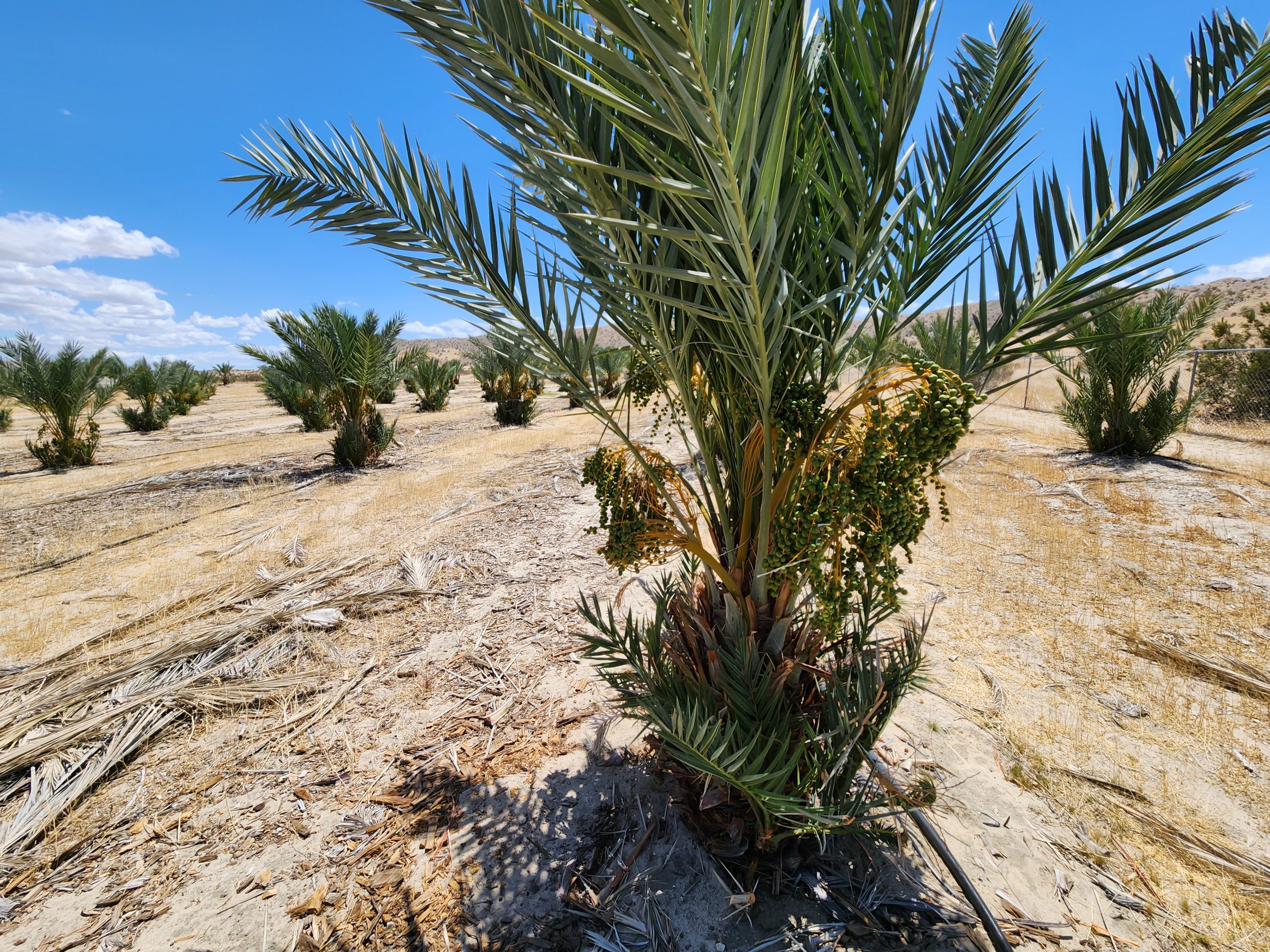
Among fruit crops, the date palm sits at or near the top of every salinity-tolerance table. Water and soil salty enough to stunt citrus, kill avocados and ruin stone fruit will still grow dates. That’s not the same as salt being harmless: past a point, salinity costs the palm — growth slows and yield shrinks even while the tree itself looks fine. The honest way to say it: a date palm survives salt that kills other crops, and it pays a yield tax on salt long before it shows distress. Commercial growers manage salt not to keep palms alive but to keep bunches heavy.
We grow these. Golden Zahidi Dates — Nutty, Less Sweet, Never Sticky | California Farm-Direct from our family farm in Sky Valley, California — from $15/lb, shipping included. See them →
Why sand is a feature, not a bug
- Drainage is the whole game. Salt kills by accumulating in the root zone. Sand drains, so irrigation water can carry salts down and out — a practice called leaching. Give a date palm an occasional deep, heavy watering beyond what it drinks, and the surplus flushes the root zone clean. In heavy clay, those same salts sit and concentrate.
- Deep, wide roots find the sweet layers. The fibrous root system spreads far and runs deep in open sand, reaching moisture other trees can’t.
- Heat plus drainage equals date country. Add the valley’s heat accumulation to sandy, leachable ground and you get the handful of places on earth where this crop reaches its best.
What desert growers actually do about salt
- Leach on purpose. Periodic deep irrigations — beyond the tree’s thirst — push salts below the roots. It’s a scheduled part of the water budget, not an accident.
- Watch the water, not just the soil. Well water in desert basins varies enormously in salinity from one aquifer layer to the next; knowing your water is step one of managing your ground.
- Feed the ground organic matter. Compost-built soil holds moisture more evenly between irrigations and buffers the root zone — how we build ours.
- Don’t fight sand — plant the crop that loves it. The deepest lesson of date farming: the “worst” agricultural land in America, by row-crop standards, is the best date land anywhere outside the old world.
What it means for the fruit
Hot sand, managed water and a crop built for both is the entire recipe behind desert dates — fruit that cures to deep sweetness on the tree in air too dry for mold and ground too harsh for most farming. Taste what this ground does: jumbo Medjool and golden Zahidi, grown in Sky Valley sand and shipped farm-direct, shipping included. Growing your own in tough ground? Our consulting page covers soil and water questions, and the Growers’ Hub has the rest of the series.
From our farm to your door
We grow every date we sell on our family farm in Sky Valley, California. Shipping is included in the price to the lower 48.
- Jumbo Medjool Dates — large, soft, caramel-sweet, from $19
- Golden Zahidi Dates — firm, nutty — the baking date, from $15
- Barhi Dates — butterscotch, creamy, seasonal, between harvests