

No products in the cart.
Whole Dates, Pits In
Every date we sell is whole and unpitted. That is a choice, and customers ask about it often enough that it deserves a straight answer.
What pitting actually does to a date
- It opens the fruit. A whole date is sealed by its own skin. Pitting cuts that open, and the exposed flesh starts drying and darkening from that moment.
- It bruises. Removing a pit — by hand or by machine — squeezes the fruit. On a soft Medjool that shows.
- It shortens shelf life. The pit is a moisture regulator. Take it out and the date stiffens faster.
- It hides the grade. A pitted date has been handled and reshaped. Sorting size and quality is much harder once the pit is gone, which is part of why lower grades often get pitted.
Pitted dates exist for convenience, and that is a real thing to want. But convenience is the only advantage, and it costs freshness.
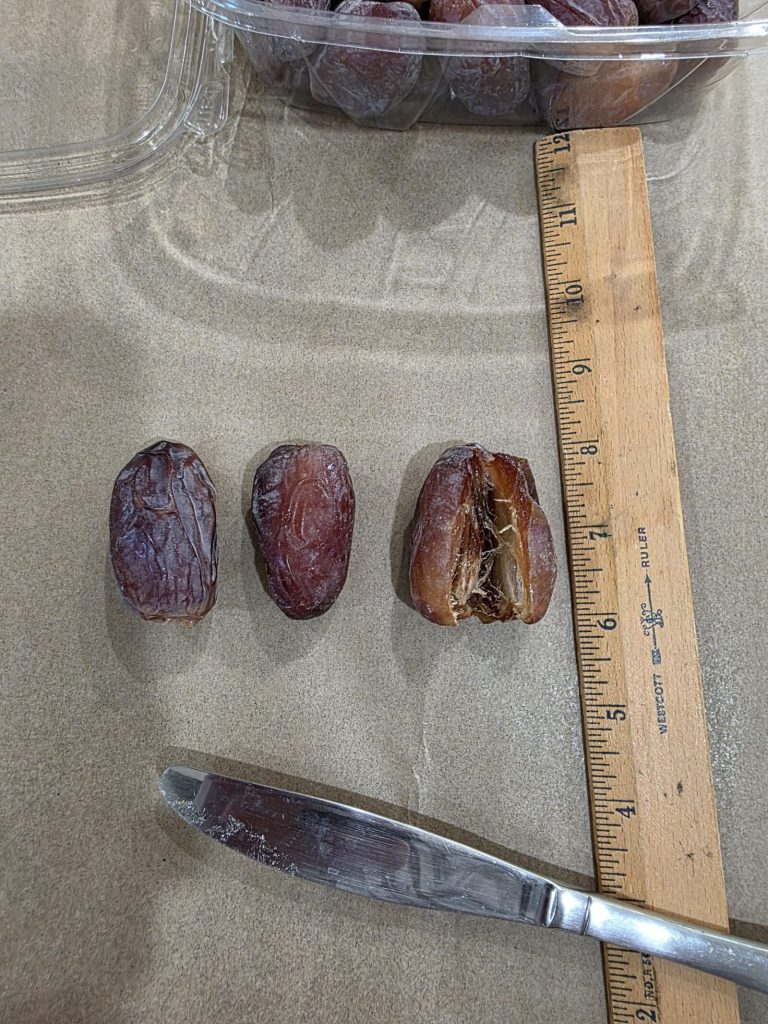
Pitting one takes about three seconds
Slit the date lengthways with a knife tip, open it like a book, and lift the pit out with your thumb. It comes away clean. If you are pitting a lot at once, do it cold from the fridge — firmer fruit is tidier to work with.
That open, butterflied shape is also exactly what you want for stuffing with an almond, a walnut half, a spoon of nut butter, or a piece of cheese.
What we grow
- Jumbo Medjool — large, soft, caramel-sweet. From $9.83/lb at 12 lb.
- Zahidi — golden, firm, nutty. The baking date.
- Barhi — butterscotch and creamy. Seasonal, August to September.
All hand-harvested on our family farm in Sky Valley, California, and shipped free to the lower 48.
Need them pitted for a production run? Ask us — for bulk orders we can sometimes arrange it.