
No products in the cart.
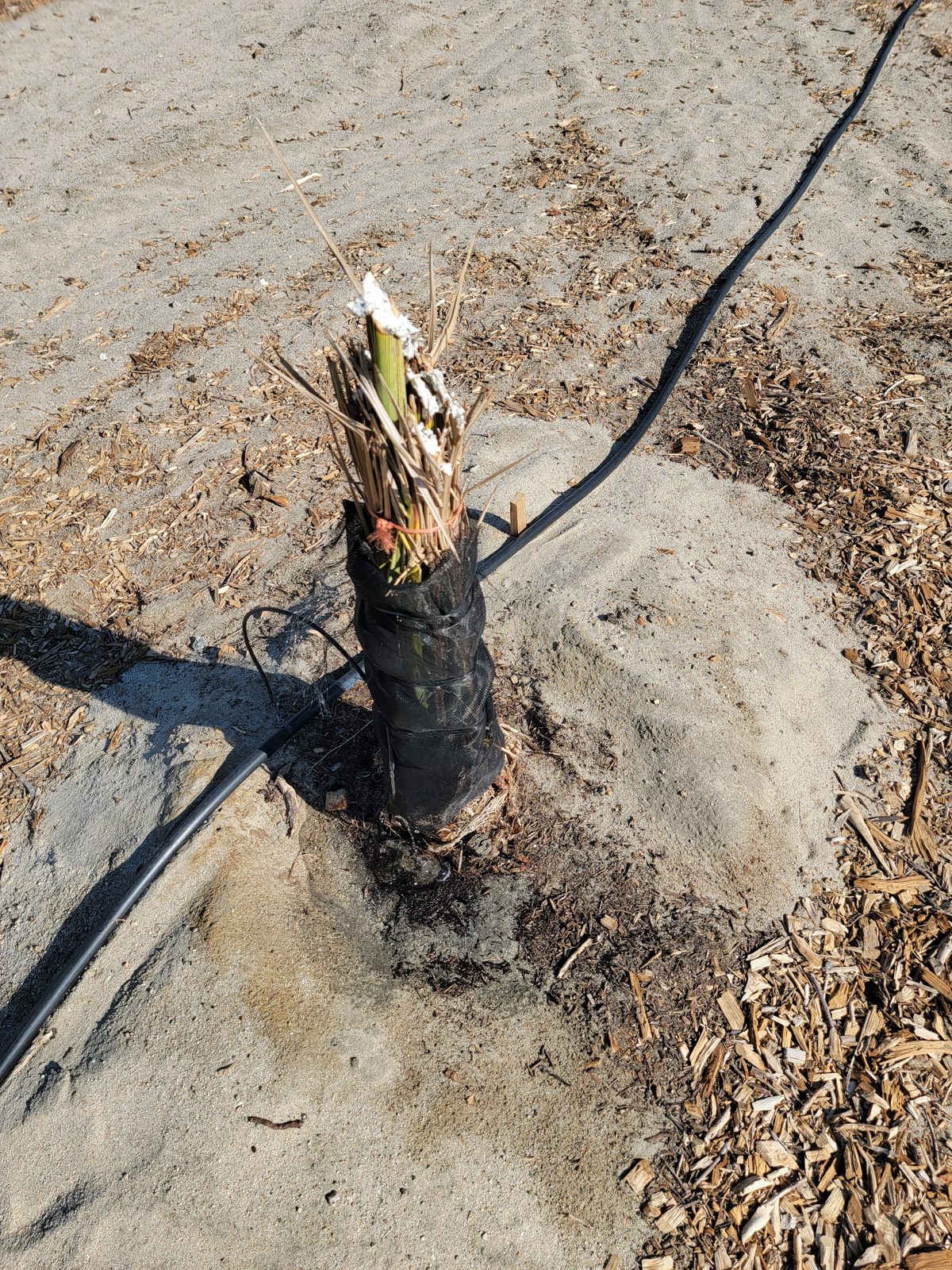
Date Palm Offshoot Care: The First Two Years After Separation
Separating the offshoot is an afternoon. Establishing it is two years. Most offshoot losses happen not at the cut but in the months after, when a young palm with half its roots is asked to survive a desert summer. We raise our own offshoots from our own palms, so here’s the care routine that gets them through — picking up where our removal guide leaves off.
Start with the right offshoot
The published establishment research on date offshoots points the same direction as every old grower’s rule of thumb: bigger offshoots survive at much higher rates. An offshoot with real weight to it, several feet of leaf, and ideally some roots of its own where it touched soil carries enough stored reserves to push new roots. A small “pup” with little stored energy is a coin flip even with perfect care. If you’re buying rather than cutting, that’s the thing to pay up for — size and roots, not frond count alone.
We grow these. Golden Zahidi Dates — Nutty, Less Sweet, Never Sticky | California Farm-Direct from our family farm in Sky Valley, California — from $15/lb, shipping included. See them →
Year one: water is the whole job
- Plant shallow-proud, in a basin. Same depth it sat on the mother — bury the heart and it rots. Build an earth basin around it that holds water over the whole root zone.
- Keep the root zone moist, constantly. This is the one stage of a date palm’s life when you cannot overwater in sand. Fresh separations have few roots and no margin; drip in the basin, daily through the first summer, tapering as it establishes. (Context on how much water mature palms drink: the honest water numbers.)
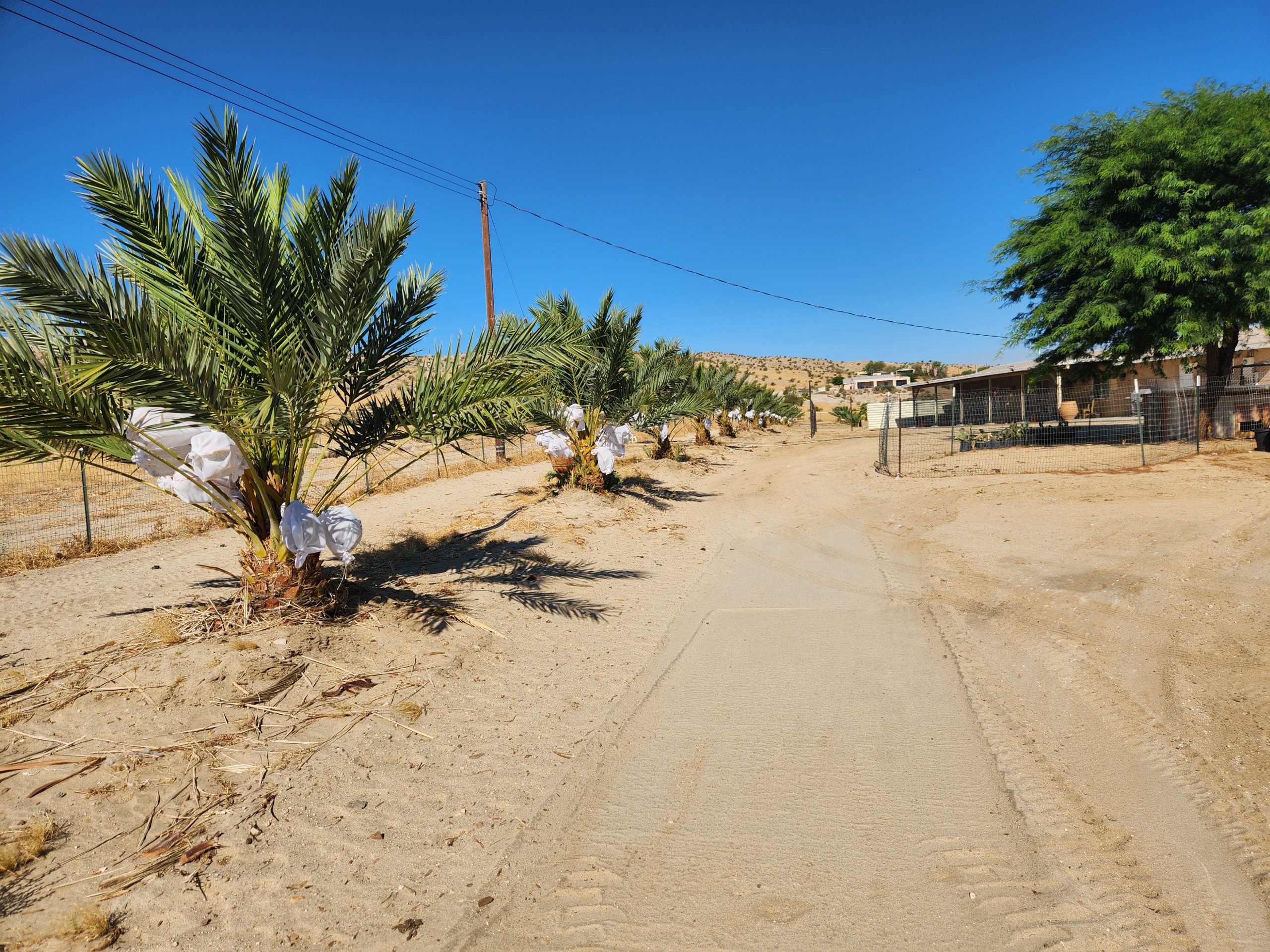
- Tie the fronds up into a loose column around the spear. It shades the bud, cuts moisture loss, and protects the growing point — the one part the palm cannot replace.
- Shade helps in the first summer. Shade cloth or a burlap wrap on the south side eases a fresh separation through 115°F afternoons. The mother palm was its shade before; you’re standing in for her.
- Don’t feed yet. No fertilizer at planting — salts in a rootless basin burn. Wait for new growth.
Year two: the turn
The sign you’ve won is a firm spear that keeps pushing new leaves — first slowly, then noticeably. Once the offshoot is clearly growing, start light, regular feeding through the warm months, widen the basin as the root zone spreads, and let the watering interval stretch. By the end of the second year a well-kept offshoot stops being a patient and starts being a palm. From there the timeline to fruit is the one we lay out in how long a date palm takes to bear — a few years to first bunches, several more to full production.
What kills offshoots
- Drying out once. A rootless offshoot has no reserve tank; one missed week in July can end it.
- Planting too deep. Heart rot from buried crowns is the quiet killer.
- Winter separation. Cut and planted into cold soil, an offshoot just sits and rots — warm-season separation only. (Cold itself is survivable for established palms: frost and date palms.)
- Impatience. Digging at it, feeding it early, untying it to “let it breathe.” Leave it alone and keep it wet.
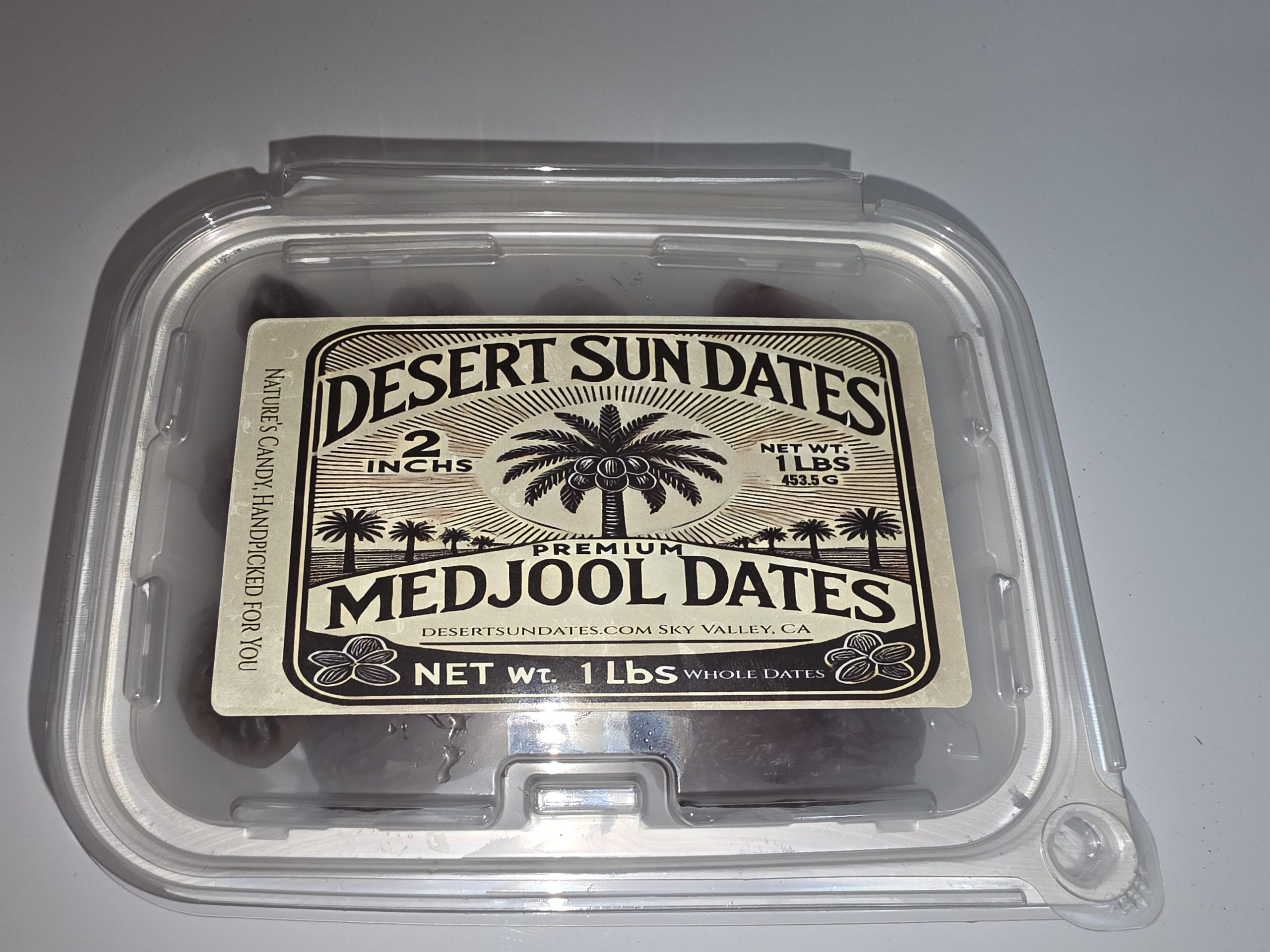
Want a true-variety palm without the wait of a mystery seed? We part with female Zahidi offshoots and a limited Medjool allotment from our own orchard — details on The Date Farmer, and consulting if you want your establishment plan checked. And while yours grows up, the fruit it’s working toward: jumbo Medjool and golden Zahidi, farm-direct with shipping included.
From our farm to your door
We grow every date we sell on our family farm in Sky Valley, California. Shipping is included in the price to the lower 48.
- Jumbo Medjool Dates — large, soft, caramel-sweet, from $19
- Golden Zahidi Dates — firm, nutty — the baking date, from $15
- Barhi Dates — butterscotch, creamy, seasonal, between harvests