
No products in the cart.

Deglet Noor vs Medjool Dates
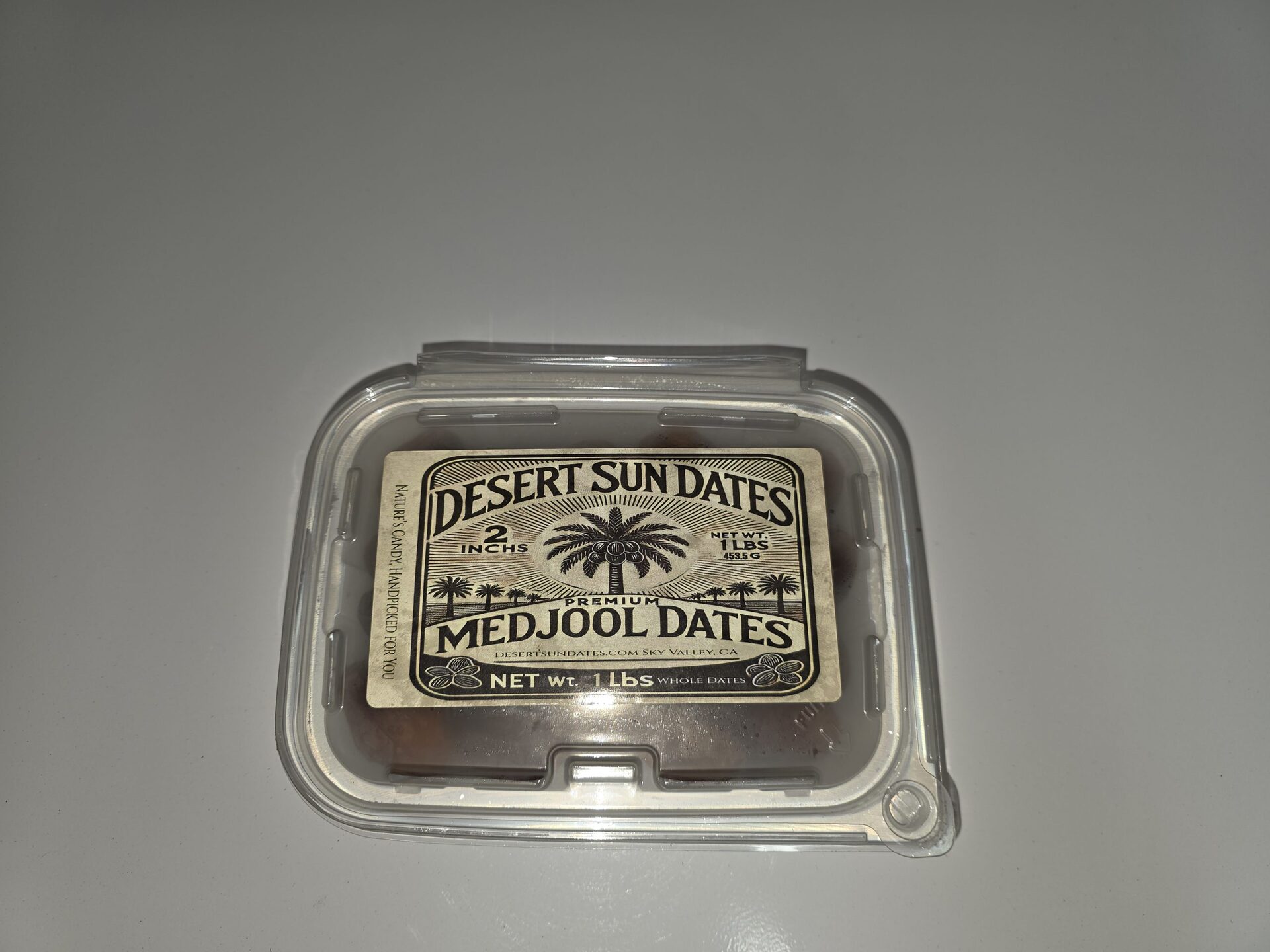
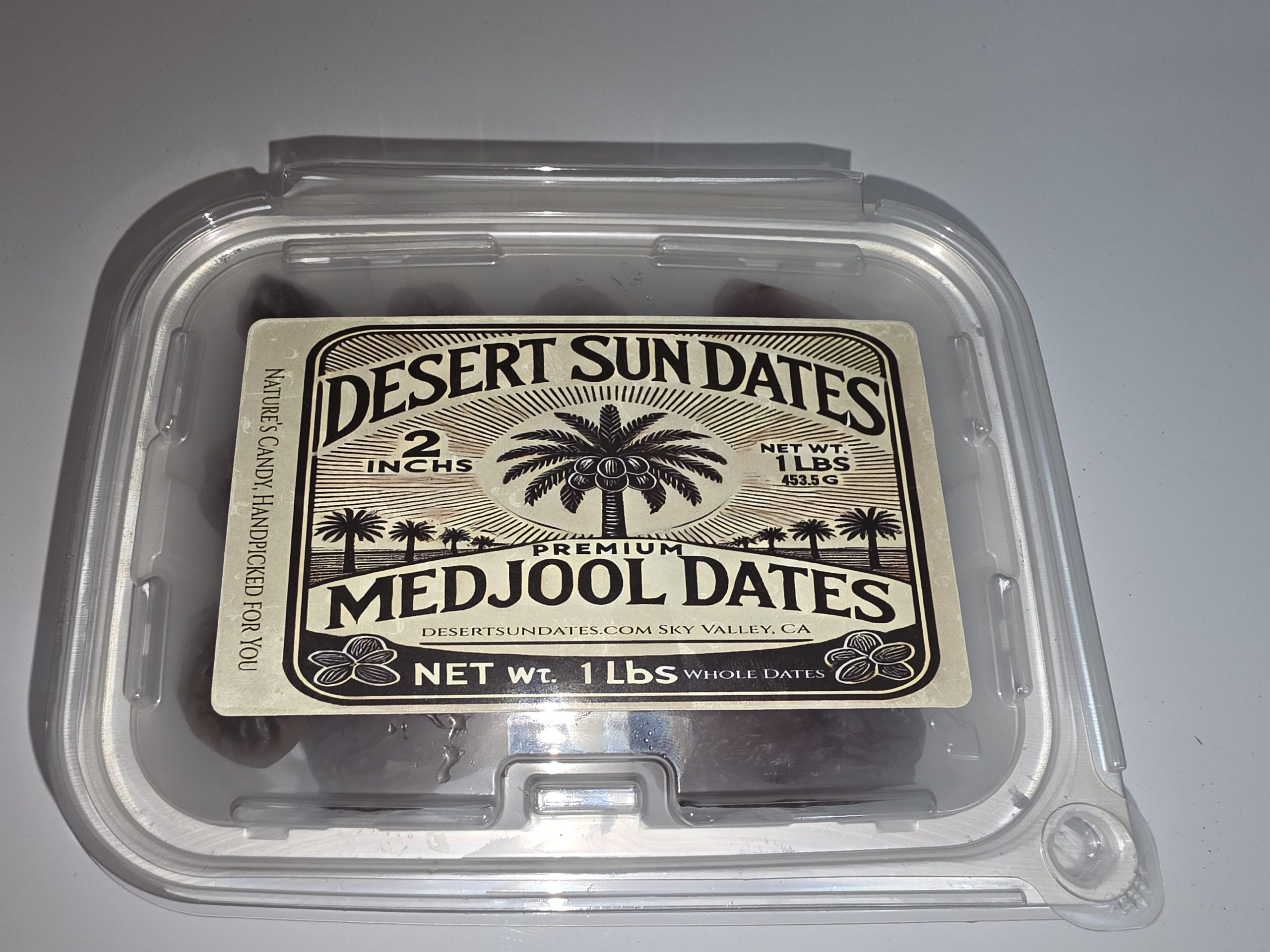
Deglet Noor vs Medjool, in short: Medjool dates are large, soft and caramel-sweet, best for snacking, stuffing and gifting. Deglet Noor dates are smaller, firmer and milder, with a honey-nut flavor that holds its shape in baking and cooking. Medjools cost more because each one is hand-harvested.
Medjool vs “regular” dates — what people usually mean
When someone asks about medjool vs regular dates, the “regular” date is almost always Deglet Noor — the smaller, firmer, honey-nut date sold in grocery tubs and baking aisles, which makes up most of what America eats. So this whole comparison IS the medjool-vs-regular answer: Medjool is the large, soft, caramel one you eat as-is; the regular grocery date is Deglet Noor — drier, milder, cheaper, and better at holding its shape in cooking. If a recipe just says “dates,” it was probably written for Deglet; if a snack board needs one showpiece fruit, that’s Medjool. (We grow jumbo Medjool and golden Zahidi — a third option that out-bakes both.) Whichever you cook with, our farm-kitchen date recipes are collected here.
We grow these. Golden Zahidi Dates — Nutty, Less Sweet, Never Sticky | California Farm-Direct from our family farm in Sky Valley, California — from $15/lb, shipping included. See them →
| Medjool | Deglet Noor | |
|---|---|---|
| Size | Large, plump (about 24 g) | Medium, slender (about 7 g) |
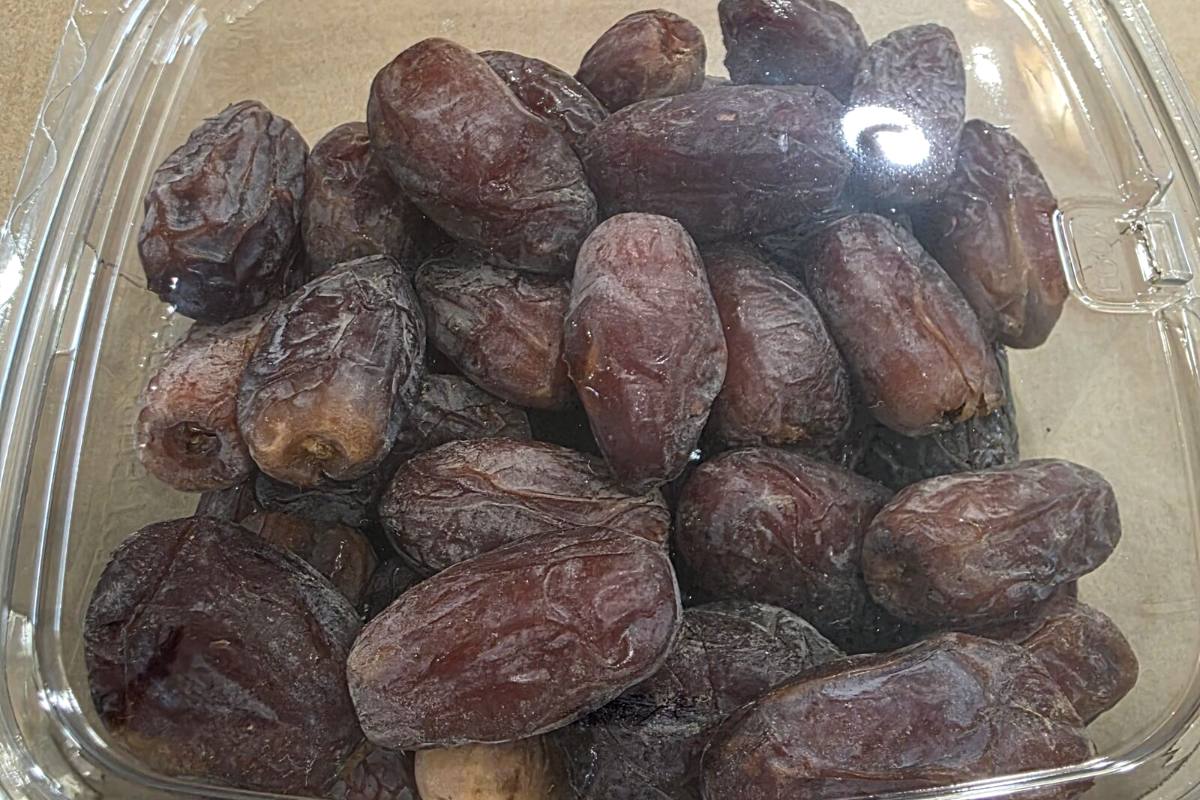
| Texture | Soft, moist, creamy | Firm, chewy, semi-dry |
| Flavor | Rich caramel, very sweet | Mild honey, slightly nutty |
| Calories per date | About 66 | About 20 |
| Best for | Snacking, stuffing, smoothies, gifts | Baking, chopping, savory dishes |
| Price | Higher (hand-harvested) | Lower (machine-harvestable) |
We grow Coachella Valley dates (Medjool, Zahidi and Barhi) on our family farm in Sky Valley, California. Fresh jumbo Medjool from $19, shipping included →
🎁 Medjool Date Gift Box
2 lb $29 · 4 lb $49 · 6 lb $67, shipping included. Your note on top, no prices in the box.
Thanksgiving: order by Fri Nov 13
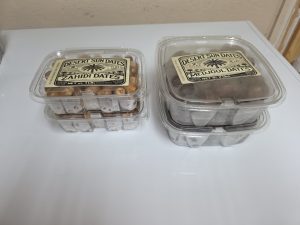
Try both: the Baker's Bundle
4 lb soft Medjool for paste and snacking, plus 2 lb firmer Zahidi that holds its shape in the oven. One box, $73, shipping included to the lower 48.
Get the bundle — $73 →Which date is right for you?
Select how you plan to use them and get a personalized recommendation.
Full comparison
Medjool
Deglet Noor
Size & appearance
Large, plump, dark brown, wrinkled skin
Medium, cylindrical, golden amber, semi-dry
Taste
Rich caramel, butterscotch, deeply sweet
Mild honey, slightly nutty, less intense
Texture
Soft, moist, creamy
Firm, chewy, drier — holds shape when cooked
Sweetness
Calories per date
~66 cal (large, 24g)
~20 cal (small, 7g)
Best uses
Snacking, stuffing, smoothies, energy balls, gifting
Baking, grain salads, tagines, savory cooking
Shelf life (refrigerated)
Up to 6 months
Up to 12 months
Price
Higher — hand-harvested
Lower — machine harvestable
The date palm (Phoenix dactylifera) is believed to have been cultivated for over 6,000 years, originating in the Middle East and North Africa. Today, dates are grown in arid regions around the world, particularly in the Middle East, North Africa, and California.
- Medjool dates are often referred to as the “King of Dates.” They originated in Morocco but are now widely cultivated in countries like the U.S., Jordan, and Israel. Historically, Medjool dates were considered so luxurious and delicate that only royalty consumed them.
- Deglet Noor dates, on the other hand, are known as the “Queen of Dates.” They are native to Algeria and Tunisia, but like Medjool, they are also grown in California, particularly in the Coachella Valley. Deglet Noor dates are considered a staple in North African cuisine.
Appearance and Texture
One of the most notable differences when comparing Deglet Noor dates vs Medjool dates is their appearance and texture.
- Medjool dates: These are larger, plumper, and softer than Deglet Noor dates. Their skin is deep brown, almost mahogany, and the flesh is incredibly soft and chewy, resembling caramel in texture. Medjool dates are often described as “melt-in-your-mouth” due to their high moisture content. This softness makes them ideal for raw consumption and as a natural sweetener in desserts or smoothies.
- Deglet Noor dates: Deglet Noor dates are smaller and firmer. Their amber color is lighter compared to the dark, almost black hue of Medjool dates. Deglet Noor dates have a semi-dry texture, which means they are not as soft or sticky as Medjool dates. However, their firmness makes them an excellent choice for baking, as they hold their shape better under heat and provide a satisfying chewiness in cookies, breads, and savory dishes.
Flavor Profile
Both date varieties are naturally sweet, but their sweetness levels and flavor profiles differ.
- Medjool dates: Medjool dates are known for their rich, intensely sweet flavor. Many people compare the taste to caramel or toffee, with notes of honey and a slight nuttiness. Because of their indulgent sweetness, Medjool dates are often used in desserts or eaten alone as a treat. Their sweetness is what makes them a popular choice for people looking for a healthier alternative to processed sugars.
- Deglet Noor dates: While still sweet, Deglet Noor dates have a more subtle flavor compared to Medjool. They are often described as having a delicate, honey-like sweetness with a slightly nutty, buttery taste. Some people liken the flavor to browned butter or roasted cashews, which makes Deglet Noor dates a fantastic addition to both sweet and savory dishes.
Nutritional Comparison
Dates are a nutritional powerhouse, providing a range of essential vitamins, minerals, and fiber. When comparing Deglet Noor vs Medjool dates, the nutritional differences are slight but worth noting depending on your dietary needs.
Medjool Dates (Per 100g):
- Calories: 277 kcal
- Carbohydrates: 75g
- Fiber: 7g
- Protein: 2g
- Potassium: 15% of the daily value (DV)
- Magnesium: 13% DV
- Copper: 40% DV
- Manganese: 13% DV
- Iron: 5% DV
Deglet Noor Dates (Per 100g):
- Calories: 282 kcal
- Carbohydrates: 75g
- Fiber: 8g
- Protein: 2.5g
- Potassium: 14% DV
- Magnesium: 10% DV
- Copper: 23% DV
- Manganese: 11% DV
- Iron: 6% DV
While both varieties are high in carbohydrates and sugars, they also provide essential minerals, particularly potassium and magnesium. Medjool dates tend to be slightly richer in potassium and copper, which are essential for maintaining nerve and muscle function and supporting the body’s metabolic processes. Deglet Noor dates, on the other hand, have slightly more fiber, making them a better option if you’re looking to increase your fiber intake.
What those numbers mean for you: we’ve written up the questions our customers ask most, with the math shown. If you’re watching blood sugar, start with are dates OK for diabetics? For the fiber side, see dates for constipation: the fiber math. Using dates for energy? Read dates as workout fuel. And if you’re expecting, here’s what the research actually says about Medjool dates for labor.
Culinary Uses
Deglet Noor vs Medjool dates differ significantly in how they are used in cooking and baking due to their texture and flavor.
- Medjool dates: Because of their soft, sticky texture and intense sweetness, Medjool dates are often enjoyed as a snack on their own or stuffed with ingredients like nuts, cheese, or nut butter. They are also perfect for blending into smoothies, energy bars, or using as a natural sweetener in raw desserts. Medjool dates are commonly used in recipes where a creamy, rich sweetness is desired, such as in date paste, caramel sauces, or blended into vegan desserts. Due to their moisture, they aren’t ideal for recipes that require dates to hold their shape during baking.
- Deglet Noor dates: Deglet Noor dates, being firmer and less sweet, are often used in baking and cooking. Their subtle sweetness complements savory dishes such as stews, salads, and stuffed meats. They can be chopped and added to breads, cookies, and cakes for texture and a hint of natural sweetness without overpowering the dish. Additionally, Deglet Noor dates work well in recipes where the dates need to be baked or cooked, as their semi-dry texture holds up better under heat compared to Medjool dates.
Price and Availability
When considering Deglet Noor dates vs Medjool dates, price is often a factor. Medjool dates tend to be more expensive due to their larger size, higher moisture content, and richer flavor. The labor-intensive process of harvesting Medjool dates, which are hand-picked at peak ripeness, also contributes to their higher price.
Deglet Noor dates, being smaller and more abundant, are generally more affordable. They are widely available in grocery stores, both pitted and unpitted, making them a more budget-friendly option for everyday use, especially in baking and cooking.
Ready to taste the difference yourself? We grow jumbo Medjool here in the Coachella Valley and ship it fresh from the ranch — current harvest, shipping included.
Shop Fresh Medjool — from $19 →Try Golden Zahidi →
Which Should You Choose?
The decision between Deglet Noor vs Medjool dates ultimately comes down to personal preference and the specific recipe or use you have in mind.
Which is healthier — Medjool or Deglet Noor?
Nutritionally they’re cousins: both are whole fruit with fiber, potassium and natural sugars. Per date, Deglet Noor is smaller so it carries fewer calories; gram for gram they’re nearly identical, with Medjool slightly ahead on potassium and Deglet slightly ahead on fiber by weight. The honest answer: the healthier date is the one you’ll eat instead of candy — pick by texture, not by nutrition label.
More from the farm: every variety side by side in our guide to the types of dates, how long each keeps in our date storage guide, and where to buy Medjool dates online.
- Choose Medjool dates if you’re looking for a naturally sweet treat to enjoy on its own, or if you want to create indulgent desserts or smoothies. Their soft, caramel-like texture and flavor make them a satisfying snack or a healthier alternative to refined sugars.
- Choose Deglet Noor dates if you’re planning to bake or cook with dates, as their firmer texture and more subtle flavor make them ideal for recipes where the dates need to maintain their shape. They’re also a good option if you prefer a less intensely sweet date for snacking or adding to savory dishes.
How many Deglet Noor dates equal one Medjool?
By weight, about three. A jumbo Medjool runs 20–24 grams; a Deglet Noor runs 7–9. If a recipe calls for five Medjools and you’re holding Deglets, use about fifteen — or skip the counting and go by weight, since 100 grams of date paste is 100 grams whichever fruit it started as.
Can you substitute Deglet Noor for Medjool in recipes?
In anything blended — date paste, smoothies, energy balls — yes, freely. Soak Deglets ten minutes in warm water first, because they run drier. In anything where the date stays whole, the swap changes the dish: a stuffed Medjool is a two-bite dessert, a stuffed Deglet is a canapé. Baking is where Deglet Noor genuinely wins — it holds its shape in the oven where a Medjool melts toward toffee.
Which is healthier, Deglet Noor or Medjool?
Per 100 grams they’re near-twins — the numbers above are honest about that. Per fruit is where they differ: one Medjool is about 66 calories and 16 grams of sugar; one Deglet Noor is about 20 calories and 5 grams. Deglet Noor also tends to measure a touch lower on the glycemic index (roughly 42–50 versus around 50–55 for Medjool — published values vary by study and ripeness). If you’re counting anything, count per date, not per variety.
The Costco question
A lot of people land on this page standing in a warehouse aisle, so: the big tub at Costco is usually Deglet Noor, often packed right here in our valley, and the smaller clamshell is Medjool. The tub is the better buy for baking; the clamshell is the better eating date. And if you’d like to taste what a Medjool is like when it was never near a warehouse at all, that’s the one thing we grow.
Buying for someone else? Dates are the rare food gift that keeps for months — our gift boxes ship with your note on top, straight from the farm.
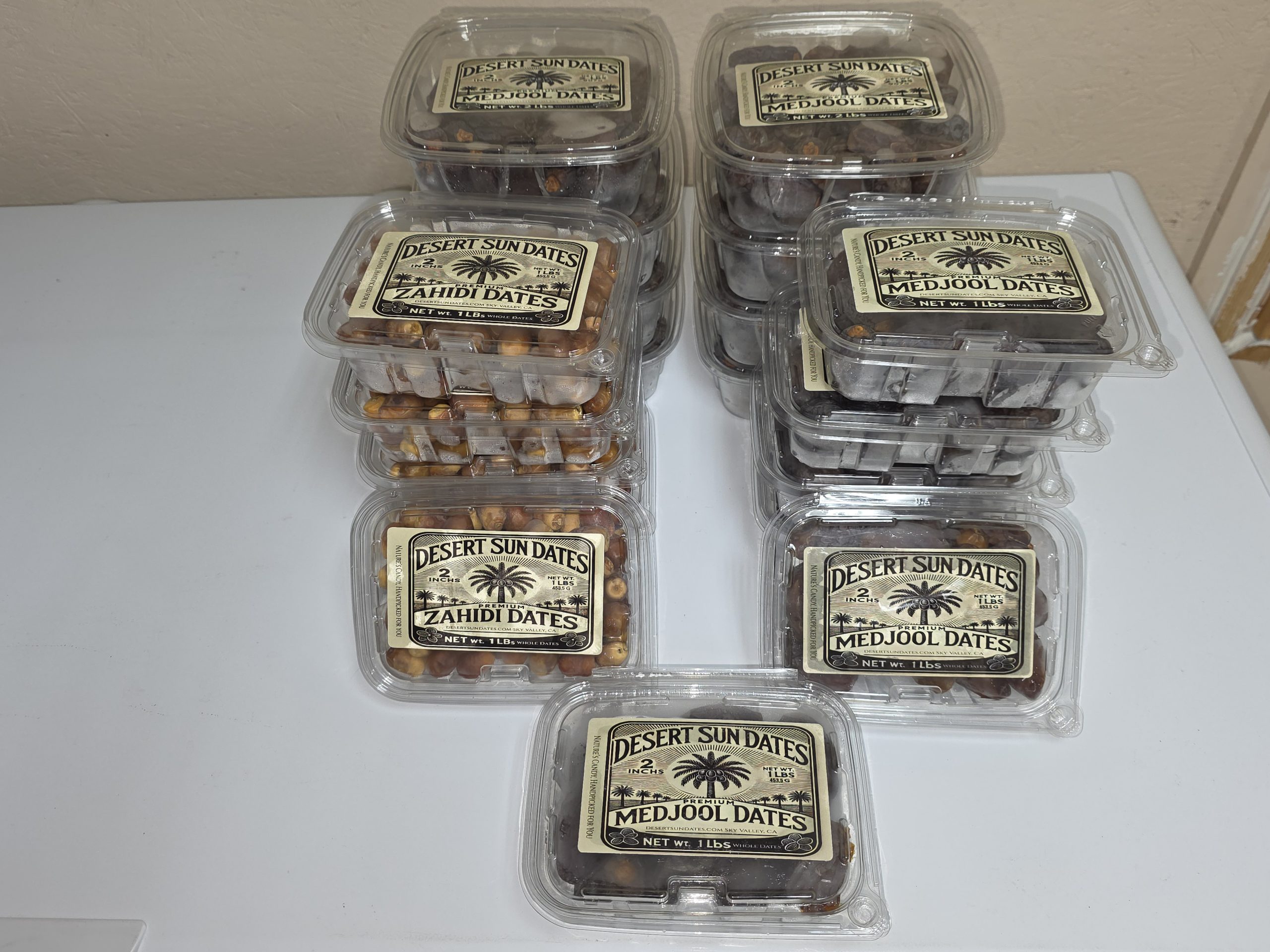
One honest confession before you go
We don’t grow Deglet Noor. But if everything in the Deglet column is what you’re looking for — firmer flesh, lighter sweetness, nutty flavor, no sticky fingers, holds its shape in the oven — that’s exactly why we grow golden Zahidi on our farm. Same idea, more character: golden amber fruit with a clean honey-nut flavor that Deglet fans consistently tell us out-eats the date they came for. Grown, packed and shipped from our own Coachella Valley grove, shipping included, posted prices.
Shop Golden Zahidi — from $15, shipping included →
Taste the Difference — Farm-Direct California Dates
Our Medjool, Zahidi, and Barhi dates are hand-harvested in Sky Valley, California and shipped direct from the farm. No middlemen, no sitting in a warehouse — just fresh dates from our family orchard to your door.
Shipping included on every order to the lower 48 states.
From our farm to your door
We grow every date we sell on our family farm in Sky Valley, California. Shipping is included in the price to the lower 48.
- Jumbo Medjool Dates — large, soft, caramel-sweet, from $19
- Golden Zahidi Dates — firm, nutty — the baking date, from $15
- Barhi Dates — butterscotch, creamy, seasonal, between harvests