
No products in the cart.
How Medjool Dates Are Harvested: Passes, Bags and Hand-Picking on a California Farm
Medjool dates are harvested by hand, in several passes, over a few weeks in late summer and fall. The fruit on a single bunch does not ripen all at once, so we climb each palm more than once and pick only what is ready. Here is what harvest actually looks like on our farm in Sky Valley, in California’s Coachella Valley.
Quick answers
Who picks them? People, by hand. There is no machine that can tell a soft jumbo from a dry one.
How many times per palm? Three or more passes, because the dates ripen unevenly.
When? Late summer into fall, once a year.
Who picks them? People, by hand. There is no machine that can tell a soft jumbo from a dry one.
How many times per palm? Three or more passes, because the dates ripen unevenly.
When? Late summer into fall, once a year.
Why one harvest takes several passes
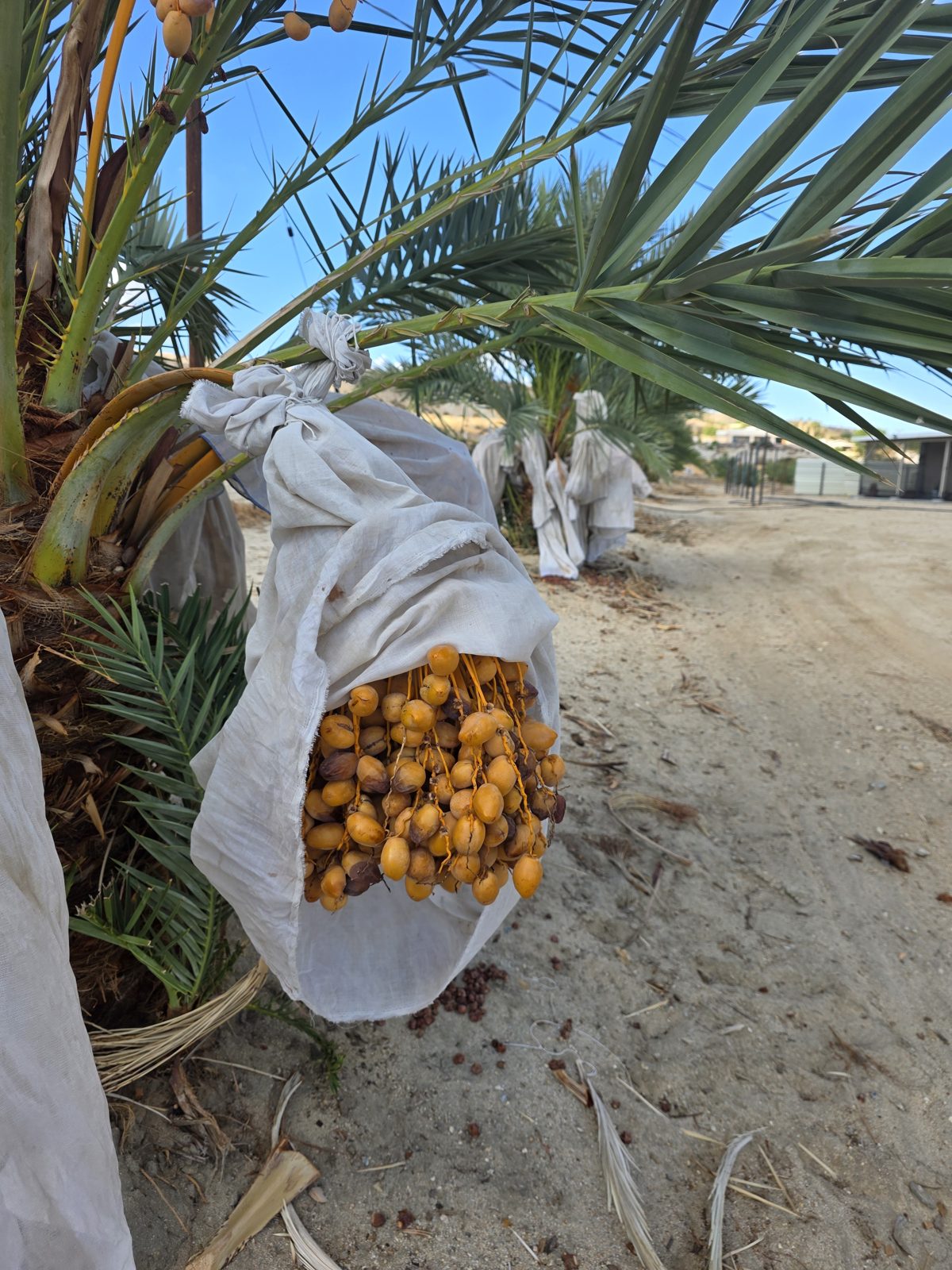
A date bunch holds hundreds of fruit on strands, and each date ripens on its own schedule. Dates start green, turn golden (the khalal stage), then soften and darken as they ripen. A bunch can have fruit at different stages at once, so picking it all in one go would mean either picking some too early or leaving some too long. We go back through the palms and take only what is ready each time.
We grow these. Fresh Jumbo Medjool Dates — Shipping Included | California Farm-Direct from our family farm in Sky Valley, California — from $19/lb, shipping included. See them →
Bags protect the fruit until it is ready
Earlier in summer, each bunch is sleeved in a bag. The bag keeps off birds and insects and shields the fruit from late-season rain. By harvest, the bags are already in place, so the fruit is protected right up to picking.
Climbing, picking and sorting
Date palms grow tall, and the bunches hang up in the crown, so harvest means climbing. We cut or pick the ready fruit, bring it down and sort it right away. Every date goes across a table by hand, where we separate jumbo from standard, soft from dry, and keepers from culls. Only fruit that meets our standard goes into a box. Our post on the fifteen touches every palm gets shows where harvest fits in the farm year.
After harvest: curing and cold storage
Once sorted, the fruit goes into cold storage on the farm, where it keeps soft and fresh until we pack it to order. That is why we can ship fruit from this year’s crop long after the harvest ends. When the cold room is empty, we are out until next year’s harvest.
Why this matters when you buy
Hand-picking in passes is why a good Medjool is soft, plump and consistent, and also why it costs more than a bag of dates that was machine-sorted somewhere else. Our guide on why Medjool dates are expensive breaks down the cost. Want to taste the result? Shop fresh jumbo Medjool dates (shipping included), send a gift box, or order bulk cases. See also when Medjool dates are in season and our home page.
Common questions
Are Medjool dates picked by machine?
No. Medjool dates are picked by hand because the fruit ripens unevenly and bruises easily.
When is Medjool date harvest in California?
Late summer into fall. The exact timing shifts a little each year with the weather.
Do you pick dates when they are green?
Medjool is picked ripe and soft. The golden stage is part of ripening, not the stage we pick for sale.
From our farm to your door
We grow every date we sell on our family farm in Sky Valley, California. Shipping is included in the price to the lower 48.
- Jumbo Medjool Dates — large, soft, caramel-sweet, from $19
- Golden Zahidi Dates — firm, nutty — the baking date, from $15
- Barhi Dates — butterscotch, creamy, seasonal, between harvests