
No products in the cart.
Protecting Canary Island Date Palms from the South American Palm Weevil
Protecting a Canary Island date palm, in short: Canaries are the South American palm weevil’s favorite host, and once the crown flattens the tree usually cannot be saved. The playbook: never prune April through October (fresh cuts attract flying weevils), have a licensed arborist or pest-control adviser set up preventive protection before the pest arrives in your area, watch the crown for early signs, and for high-value palms consider continuous per-tree monitoring. Removing one dead Canary runs $5,000–$20,000; everything on this page costs less than that.
Why Canary Island date palms are target #1
The South American palm weevil (SAPW) can attack many palms, but study after study and the San Diego body count agree: Phoenix canariensis — the big-trunked, full-crowned Canary Island date palm that anchors Southern California resorts, golf courses, HOA entrances and estates — is its preferred host. More than 20,000 palms have been killed in the San Diego area since the weevil crossed the border, and adults have now been trapped in the Coachella Valley. If you own Canaries anywhere in Southern California, this pest is your problem to plan for — before it’s your problem to pay for.
We grow these. Fresh Jumbo Medjool Dates — Shipping Included | California Farm-Direct from our family farm in Sky Valley, California — from $19/lb, shipping included. See them →
The early signs (check from the ground, monthly)
- The central spear leaf leaning, wilting or collapsing while outer fronds still look fine
- A crown that’s lost its symmetry — flattening on top, fronds dropping to a “half-open umbrella”
- Chewed or notched frond bases; holes or tunnels near the crown
- Oozing wet patches or a fermented smell near the top of the trunk
- Sawdust-like frass around the crown or at the trunk base
Hard truth: by the time most of these show, the growing point is often already destroyed. A palm has exactly one growing point and cannot regrow it — which is why the serious protection happens before symptoms, not after.
The prevention playbook
- Prune only November through March. Adult weevils fly April–October and are drawn to the scent of fresh-cut palm tissue. An elective summer trim on a Canary in weevil country is an invitation. If pruning can’t wait, UC guidance is to treat cut surfaces promptly — your arborist should know this protocol cold.
- Get preventive protection set up professionally. Systemic insecticide programs can protect healthy palms, but products, timing and application methods are regulated and tree-specific — this is licensed-arborist and pest-control-adviser territory, not a DIY job. The university references we trust: UC Riverside’s SAPW program and UCANR’s management pages.
- Monitor continuously if the palm is worth real money. For signature palms — the ones framing a resort entrance or a fairway — per-tree seismic sensors now exist that hear larvae feeding inside the trunk weeks before visible symptoms, and verify afterward that a treatment worked. Peer-reviewed field data backs the approach. For a tree that costs five figures to remove and can’t be replaced in under a decade, continuous monitoring is the cheap part.
- Remove infested palms fast and properly. A dying palm is a weevil nursery: larvae inside it mature and fly to your neighbors’ trees. UC guidance calls for prompt removal and chipping, burning or deep burial of the material — tarped transport if it leaves the site.
The money math
| Item | Typical cost |
|---|---|
| Removing one dead mature Canary Island date palm | $5,000–$20,000 (crane work, disposal) |
| Replacing it with a comparable specimen | Often not possible at any price — decades of growth |
| A year of professional preventive care | A small fraction of removal |
| Per-tree monitoring sensor + annual service | Tens of dollars per tree per year at scale |
Every HOA board and property manager weighing “do we really need a weevil plan” should run that table against the number of Canaries on the property.
Why a date farm wrote this
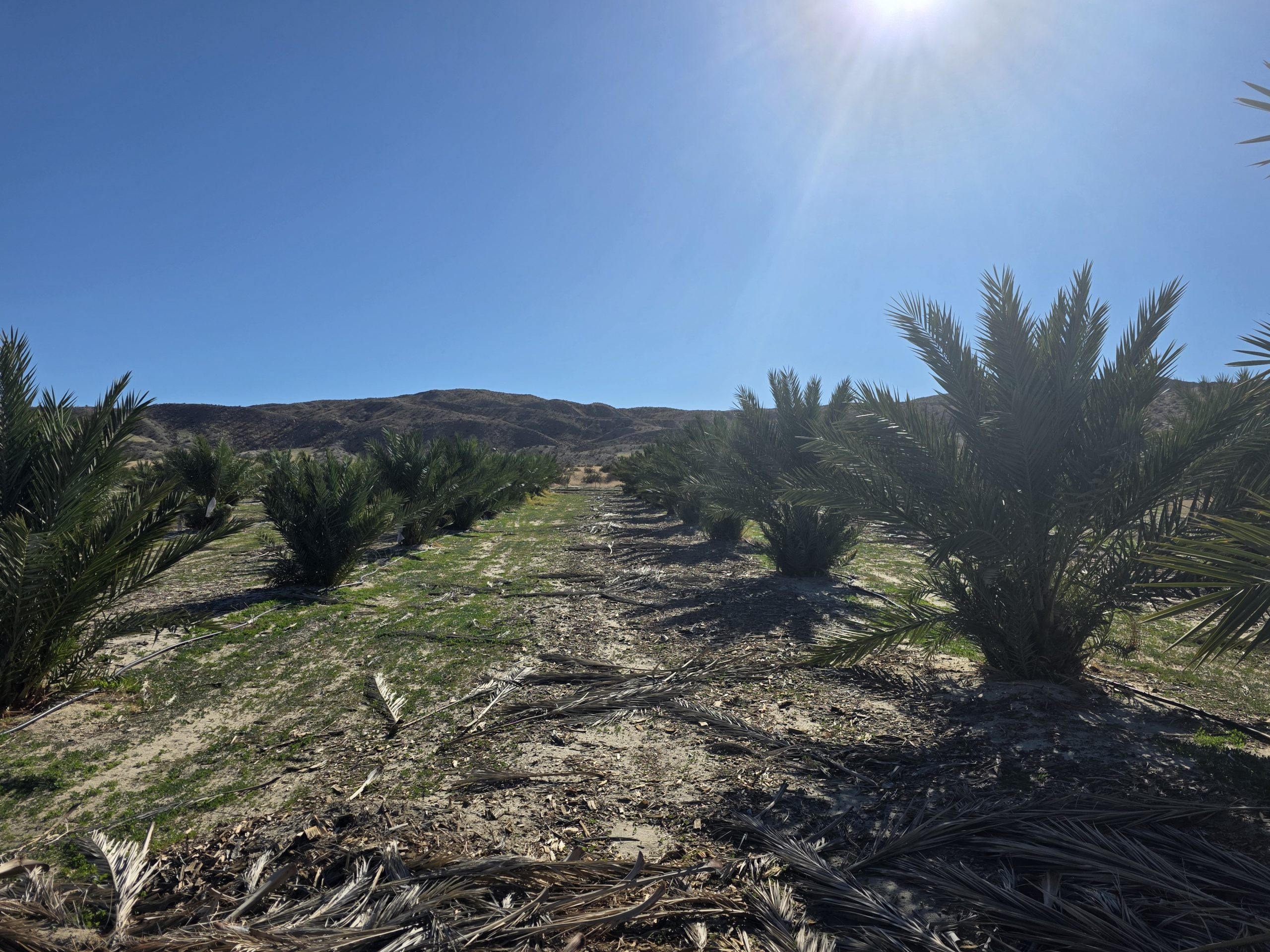
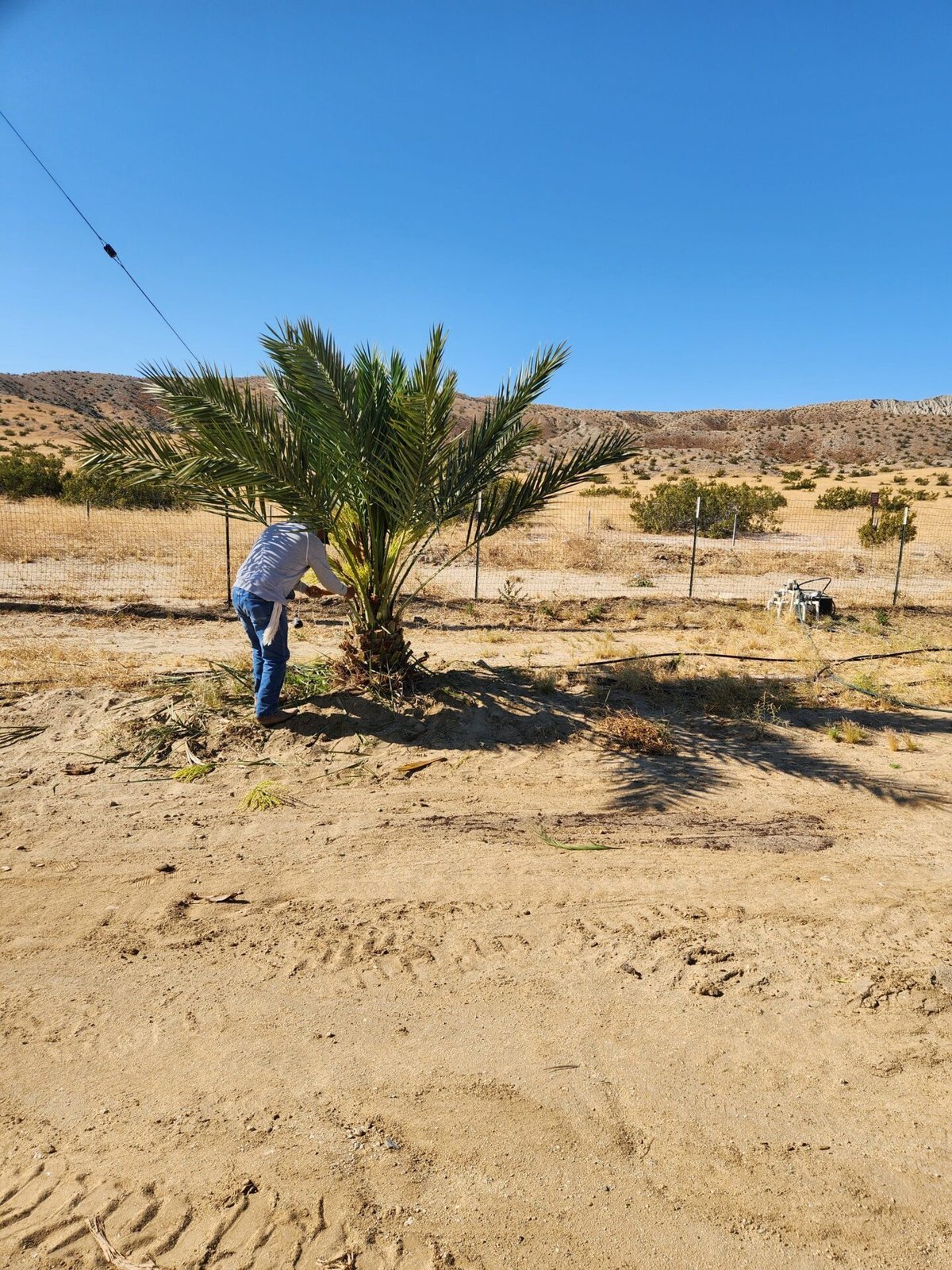
We grow Phoenix dactylifera — the Canary’s fruit-bearing cousin — on our family farm in Sky Valley, in the Coachella Valley. Same genus, same enemy, and our livelihood stands in the weevil’s path, so we track this pest the way coastal homeowners are about to have to. If you want an honest, farm-side assessment of your palms — no spray contract to sell you — we offer date palm consulting.
Canary palm weevil questions
Can a weevil-infested Canary Island palm be saved?
Only if it’s caught before the growing point is destroyed — which in practice means catching it before obvious crown symptoms. That’s the case for monitoring and early detection.
Is it safe to prune my Canary in summer?
In Southern California weevil country, no — fresh cuts attract flying adults April through October. Schedule structural pruning for November–March.
Does SAPW attack other palms?
Yes — edible date palms, blue hesper palms and others — but Canaries are its documented favorite in California.
More from the farm: SAPW and date palms: what to know · palm weevil early detection methods · the date farmer · and the fruit we grow: fresh California Medjool
From our farm to your door
We grow every date we sell on our family farm in Sky Valley, California. Shipping is included in the price to the lower 48.
- Jumbo Medjool Dates — large, soft, caramel-sweet, from $19
- Golden Zahidi Dates — firm, nutty — the baking date, from $15
- Barhi Dates — butterscotch, creamy, seasonal, between harvests