
No products in the cart.
How to Transplant a Date Palm (We Move Our Own)
Date palms are one of the few trees you can dig up at full size, put on a trailer, replant, and expect to fruit again. It’s how this industry was built — the Coachella Valley’s original orchards were planted from palms and offshoots that traveled by ship and wagon, and mature palms still move up and down this valley every year. We’ve dug and moved palms on our own farm, so here is the actual procedure, not the garden-blog version.
Why date palms move so well
A date palm has no taproot. It grows thousands of pencil-thick fibrous roots from a root-initiation zone at the base of the trunk, and it keeps making new ones its whole life. Cut roots don’t doom the tree the way they can with an oak — the palm simply pushes fresh roots from the trunk base once it’s watered in. That root system is the subject of our most-read article, the root of the date tree, and it’s the whole reason a fifty-year-old Medjool can survive a move that would kill most trees. Not every palm shares this talent — see which palms transplant well and which go into shock.
We grow these. Golden Zahidi Dates — Nutty, Less Sweet, Never Sticky | California Farm-Direct from our family farm in Sky Valley, California — from $15/lb, shipping included. See them →
The procedure, step by step
- Time it warm. Dig when the soil is warm and staying warm — late spring into summer is ideal here, because new roots only grow in warm soil. A palm moved into cold ground just sits there losing moisture with no way to replace it.
- Water deeply the day before. A hydrated palm handles the shock better, and damp soil holds a root ball together.
- Dig a modest root ball. This surprises people: a date palm doesn’t need a huge ball. A couple of feet out from the trunk on a mature palm is normal commercial practice — the old roots mostly get replaced anyway. Keep the ball intact and wrap it; what you’re protecting is the root-initiation zone at the trunk base, not every root tip.
- Tie the crown. Pull the fronds up around the spear and tie them. It protects the bud — the single growing point the palm cannot live without — and cuts water loss. Removing some of the oldest fronds before the move reduces the load the shortened roots have to supply.
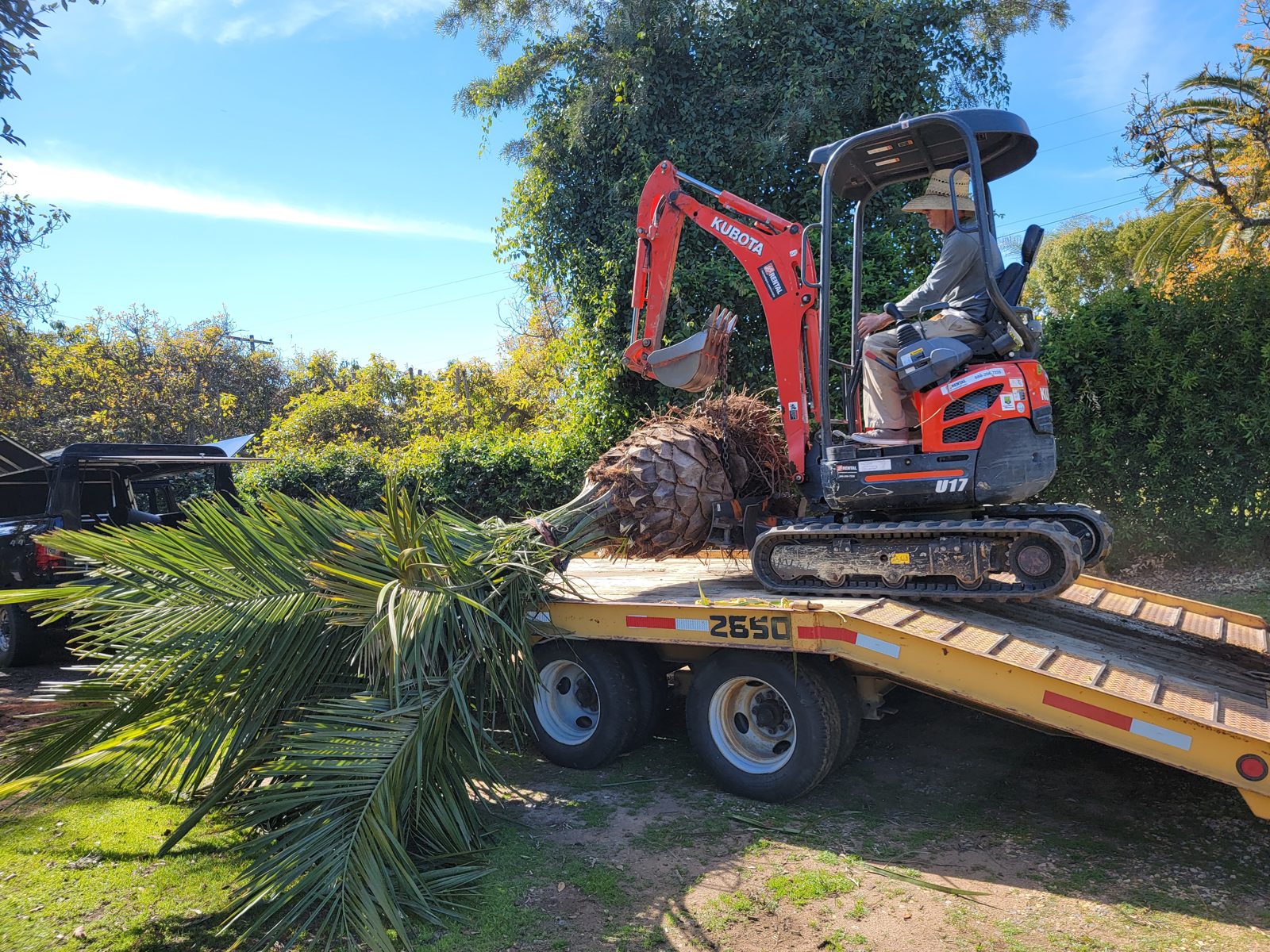
- Lift by the trunk, padded. Excavator, tractor forks or a crane depending on size — always with the trunk wrapped where the sling or forks bear. Fresh trunk wounds are an open door for pests; in this valley that matters more every year (see our palm weevil guide — fresh cuts and wounds attract them).
- Replant at the same depth, water like you mean it. Same soil line it grew at — burying a palm deeper is a slow death. Build a watering basin and keep the root zone constantly moist through the first season. New roots are the entire project now, and they only grow in moist, warm soil.
- Brace the big ones. A tall palm on a new, small root system is a lever in the wind. Padded braces for the first year, never nails into the trunk — palm trunks don’t heal.
The settling year
Expect the palm to look unimpressed for six to twelve months. Older fronds brown off, growth slows, and the tree lives off the trunk’s reserves while it rebuilds roots. The spear is what you watch: as long as the center spear stays firm and eventually pushes new growth, the move worked. A palm that fruited before a move usually skips or lightens a crop the following season, then comes back.
Moving one? Worth a conversation first
A mature palm is worth real money and a botched move wastes all of it — if you’re weighing a move, our date palm consulting page is the place to start, and what a mature date palm is worth covers the money side. Starting smaller? A properly removed offshoot is the easiest palm you’ll ever transplant.
And the reason we grow them at all: the fruit. This season’s jumbo Medjool and golden Zahidi ship straight from the farm, shipping included to the lower 48.
From our farm to your door
We grow every date we sell on our family farm in Sky Valley, California. Shipping is included in the price to the lower 48.
- Jumbo Medjool Dates — large, soft, caramel-sweet, from $19
- Golden Zahidi Dates — firm, nutty — the baking date, from $15
- Barhi Dates — butterscotch, creamy, seasonal, between harvests