
No products in the cart.

Ajwa Dates vs Medjool: A California Farmer on the Madinah Date
Ajwa dates (عجوة) are a small, dark, tender date grown in and around Madinah, Saudi Arabia — and let’s answer the question we get asked first: no, we don’t grow them, and true Ajwa can’t be grown in California. We’re a date farm in the Coachella Valley, and we’d rather explain plainly what makes Ajwa singular, how it actually compares with the Medjool we do grow, and when each one belongs on your table.
What makes Ajwa different
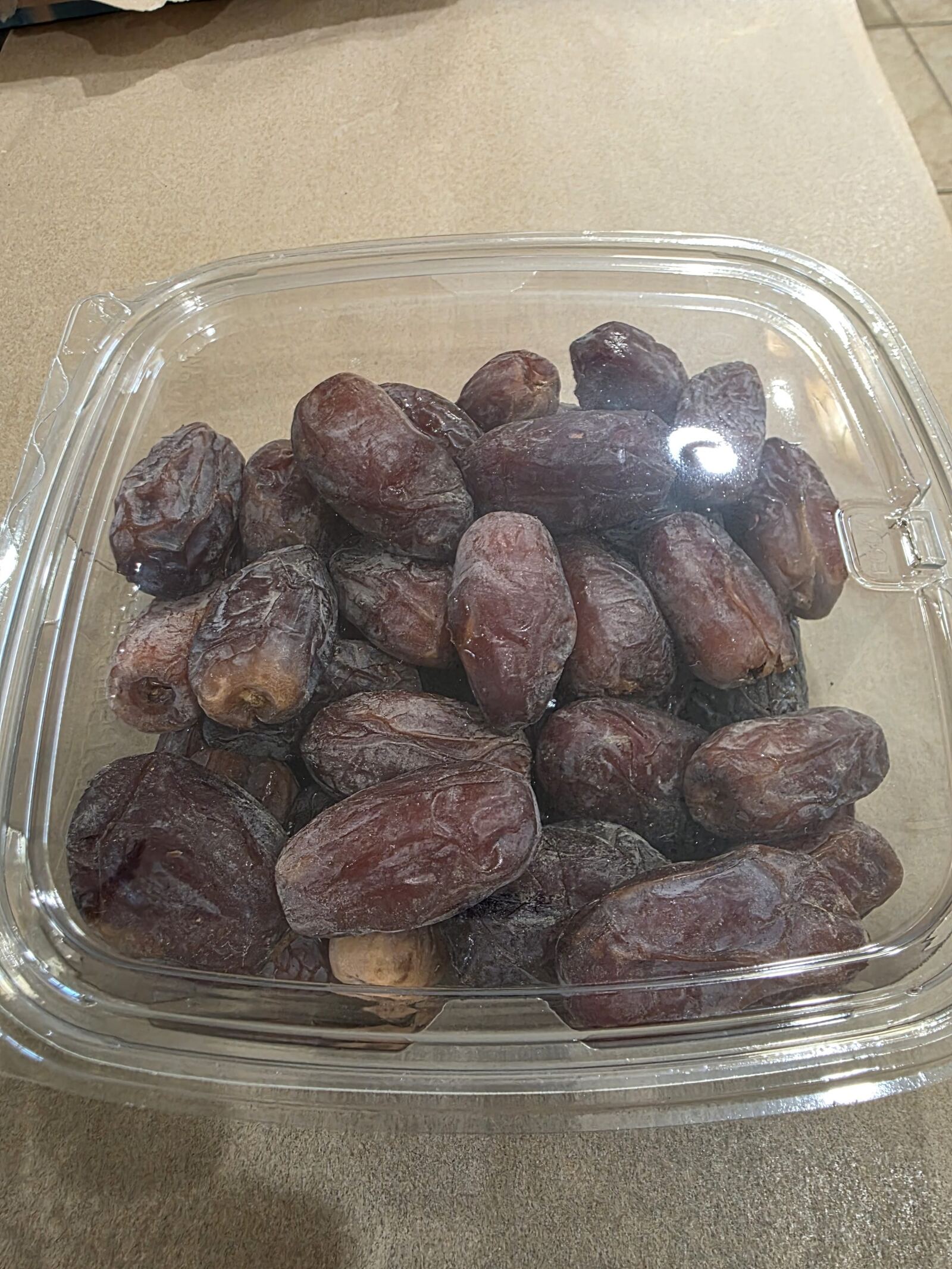
Ajwa holds a place no other date has. In Islamic tradition it is the date of Madinah, mentioned in hadith — many Muslims keep the practice of eating an odd number of Ajwa in the morning — and its provenance is the point: authentic Ajwa comes from the Madinah region, full stop. The fruit itself is small, nearly black, with a soft, fine-textured flesh, a gentle sweetness well short of sugary, and a faint dried-fruit depth some people compare to raisin or prune. It is prized, imported, and priced accordingly — and because the name commands a premium, mislabeled “Ajwa” is common. Real Ajwa is small and matte-dark, never glossy, jumbo, or cheap.
We grow these. Golden Zahidi Dates — Nutty, Less Sweet, Never Sticky | California Farm-Direct from our family farm in Sky Valley, California — from $15/lb, shipping included. See them →
Ajwa vs Medjool, side by side
- Origin: Ajwa — Madinah only. Medjool — Morocco originally; the American crop is grown here in the Coachella Valley, where our farm is.
- Size: Ajwa is small and compact. Medjool is the largest common date — one jumbo Medjool outweighs three Ajwa.
- Sweetness: Ajwa is restrained and dusky. Medjool is openly sweet — caramel, honey, brown sugar.
- Texture: Both are soft; Ajwa is finer and drier, Medjool is plush and chewy.
- Role: Ajwa is eaten mindfully, often for its tradition, a few at a time. Medjool is the Iftar tray, the stuffed date, the gift box, the everyday fruit bowl.
- Price: Genuine Ajwa typically runs two to four times the price of even premium Medjool — the provenance is what you’re buying.
Can anything grown here stand in for Ajwa?
Honestly: nothing replaces Ajwa’s provenance, and we won’t pretend otherwise. But for the table itself, soft fresh Medjool is the natural companion — most families we ship to keep both: Ajwa for the morning tradition, Medjool for Iftar, guests, tamr mahshi, and the month of Ramadan when a household goes through pounds, not pieces. Our golden Zahidi covers the less-sweet end of the spectrum at an everyday price.
Buying advice from a grower
If you’re buying Ajwa, buy from an importer you trust and expect to pay for the real thing — a bargain “Ajwa” usually isn’t. If you’re stocking the rest of the season — Iftar trays, Suhoor, gifts, everything Ramadan asks of a kitchen — that’s the fruit we grow, pick, and ship ourselves, usually within days of your order, with bulk cases for masjids and big families.
From our farm, with respect for Madinah’s. California-grown dates, shipping included: Shop Medjool → · Golden Zahidi · Ramadan bulk
From our farm to your door
We grow every date we sell on our family farm in Sky Valley, California. Shipping is included in the price to the lower 48.
- Jumbo Medjool Dates — large, soft, caramel-sweet, from $19
- Golden Zahidi Dates — firm, nutty — the baking date, from $15
- Barhi Dates — butterscotch, creamy, seasonal, between harvests