
No products in the cart.
Zahidi vs Medjool Dates: A Grower’s Honest Comparison
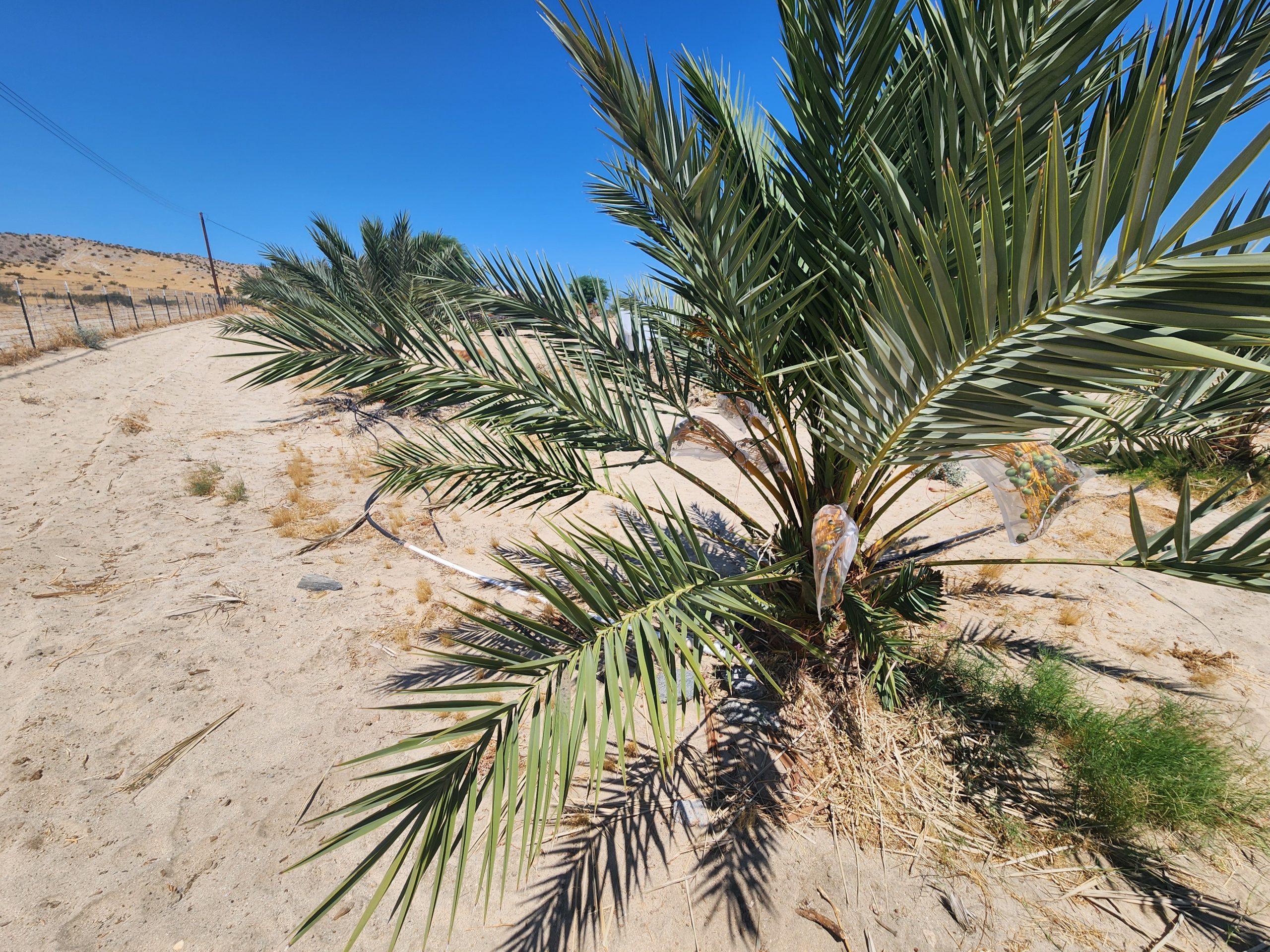
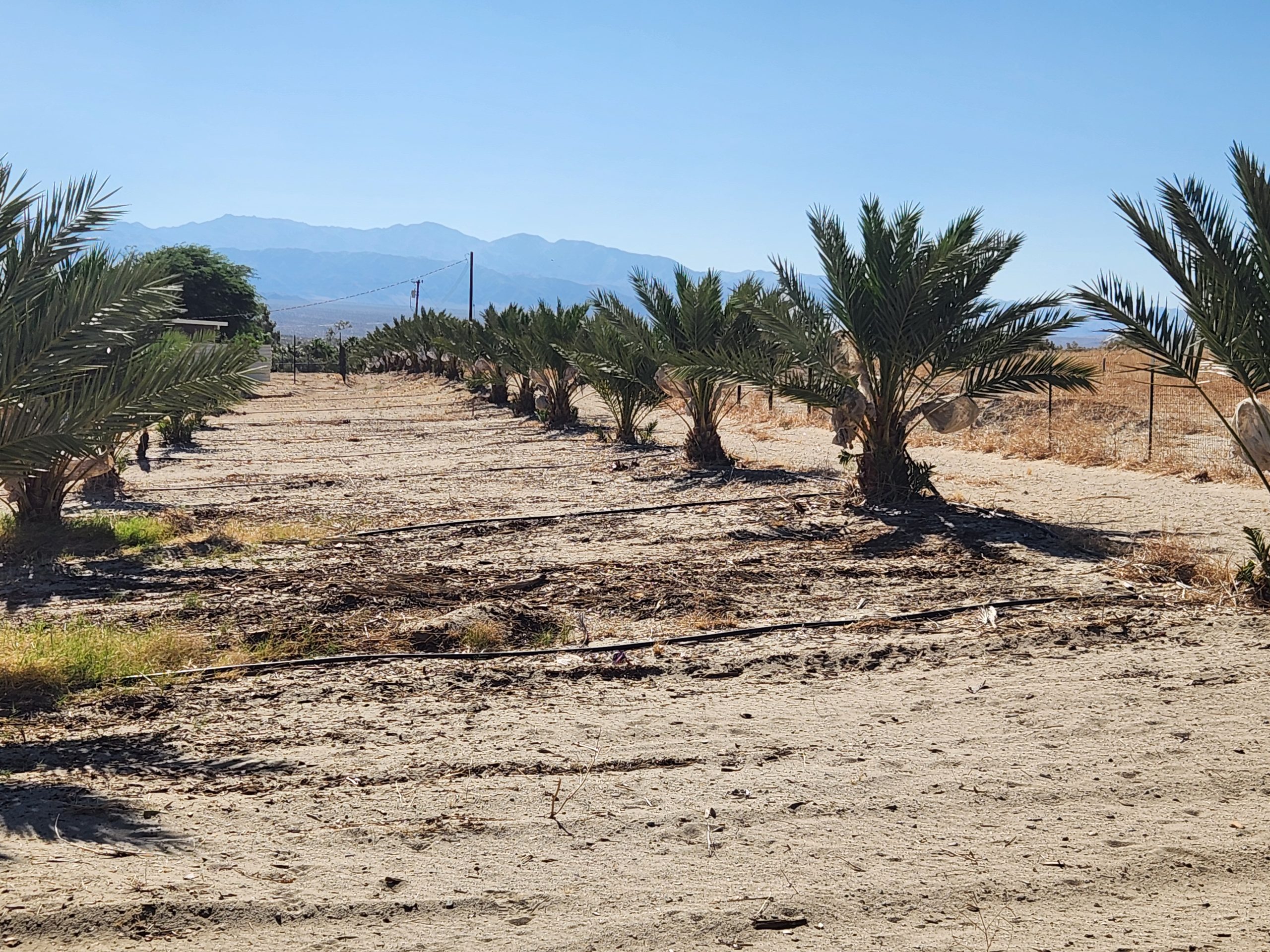
I grow both of these, on the same farm, in the same soil, about two hundred yards apart. So take this for what it is — a grower’s comparison, written by someone who sells you either one. I’ve tried to be straight about where each falls down.
The short answer: Medjool is the famous one and Zahidi is the useful one. If you want a date to eat out of hand like a caramel, buy Medjool. If you want a date that behaves like an ingredient, buy Zahidi. Most people have only ever been offered the first.
We grow these. Golden Zahidi Dates — Nutty, Less Sweet, Never Sticky | California Farm-Direct from our family farm in Sky Valley, California — from $15/lb, shipping included. See them →
Side by side
| Medjool | Zahidi | |
|---|---|---|
| Size | Large — 22–28 per lb at jumbo grade | Small to medium, oval |
| Colour | Deep reddish brown, wrinkled | Golden amber, smooth |
| Texture | Soft, sticky, yielding | Firm, semi-dry, a little chew |
| Flavour | Caramel, honey, very sweet | Brown butter and roasted nut, moderately sweet |
| Moisture | High | Low |
| Chopping | Sticks to everything | Clean cuts |
| Shelf life | Good | Excellent |
| Availability | Everywhere | Rare at retail |
What a Medjool actually is
Medjool came out of Morocco. The variety nearly disappeared to disease there in the 1920s, and a small number of offshoots were brought to the United States, quarantined, and eventually planted out in the California desert. Essentially every Medjool grown in America descends from that handful of plants.
It is a large, soft, high-moisture date, and it is sweet in a way that surprises people the first time. Left on the palm to full ripeness it tastes closer to caramel sauce than to fruit. That is why it became the date everyone knows — it needs no explanation and no preparation.
The trade-off is that a Medjool is fragile and it is sticky. It bruises if you look at it wrong. Try to dice one and you will end up scraping paste off a knife. And in anything baked, it dissolves.
What a Zahidi actually is
Zahidi is far older as a cultivated variety and comes originally from Mesopotamia — modern Iraq — where it has been grown for a very long time. It arrived in the Coachella Valley in the same early wave of date-palm introductions that brought the industry here.
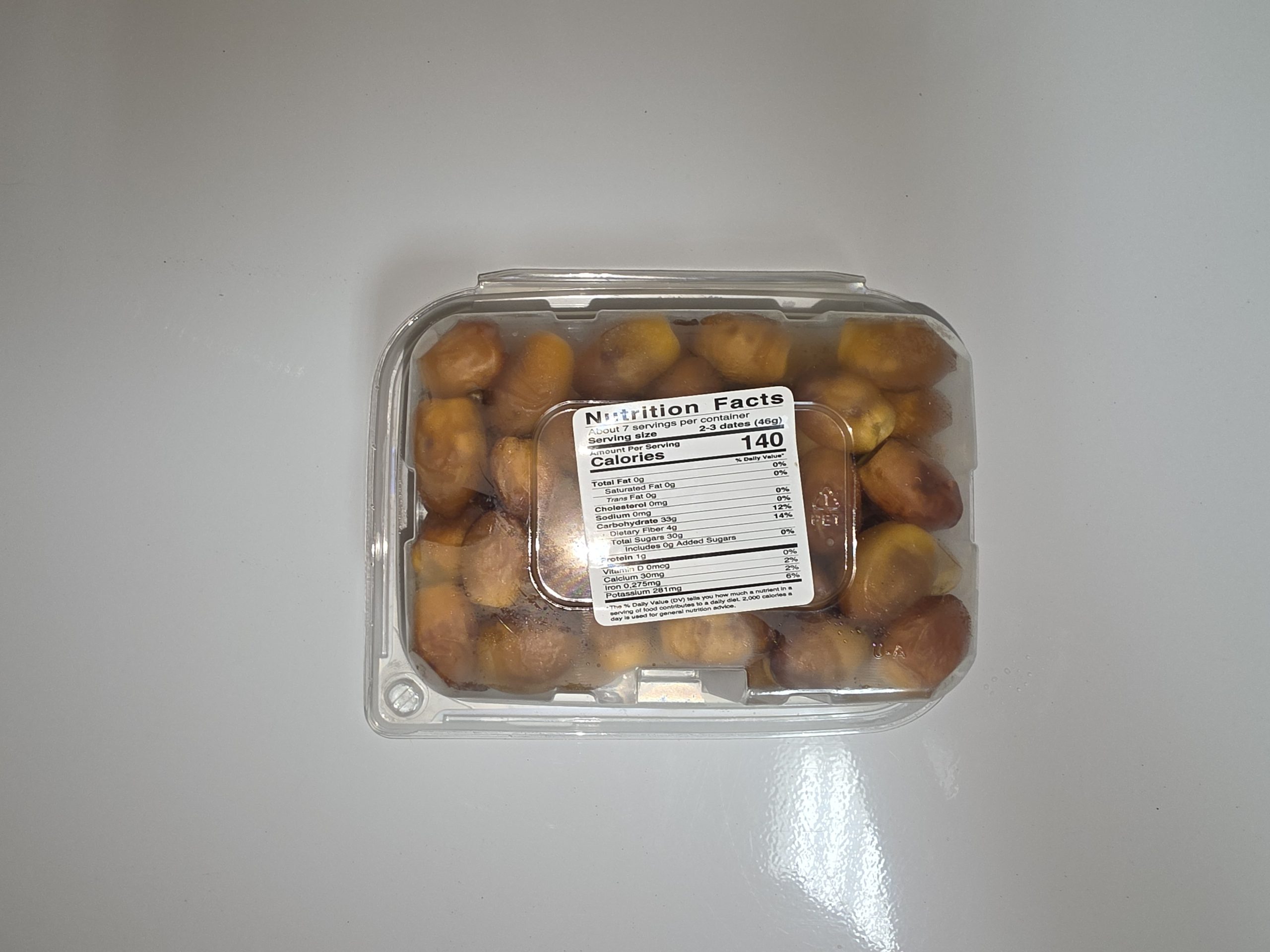
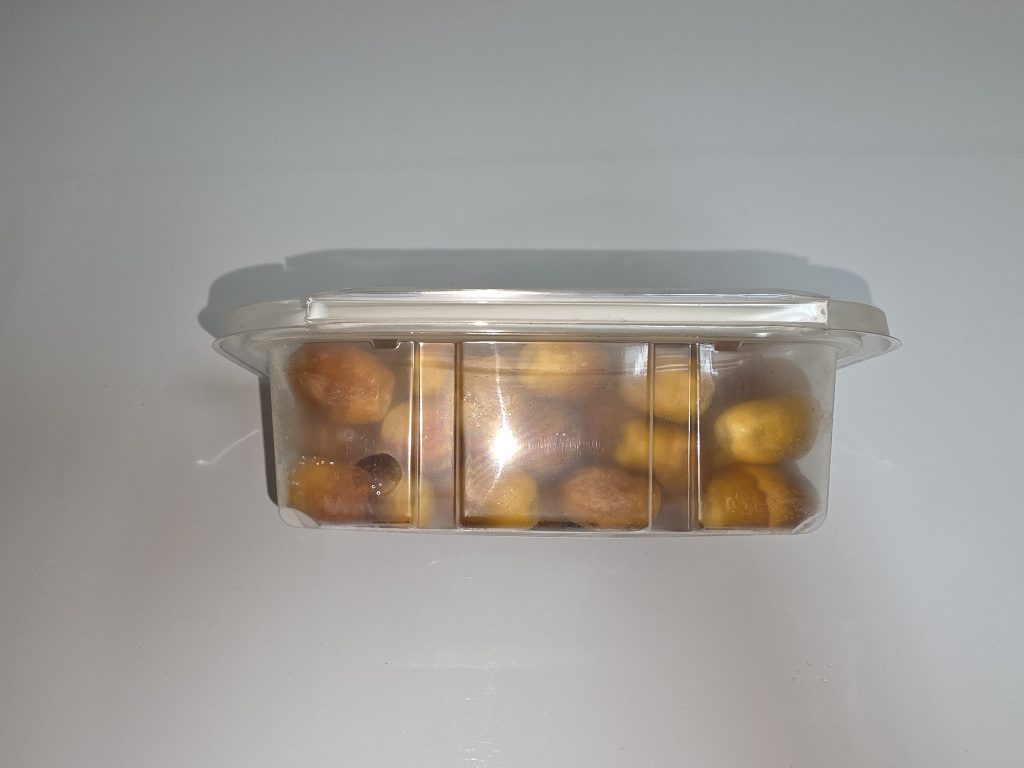
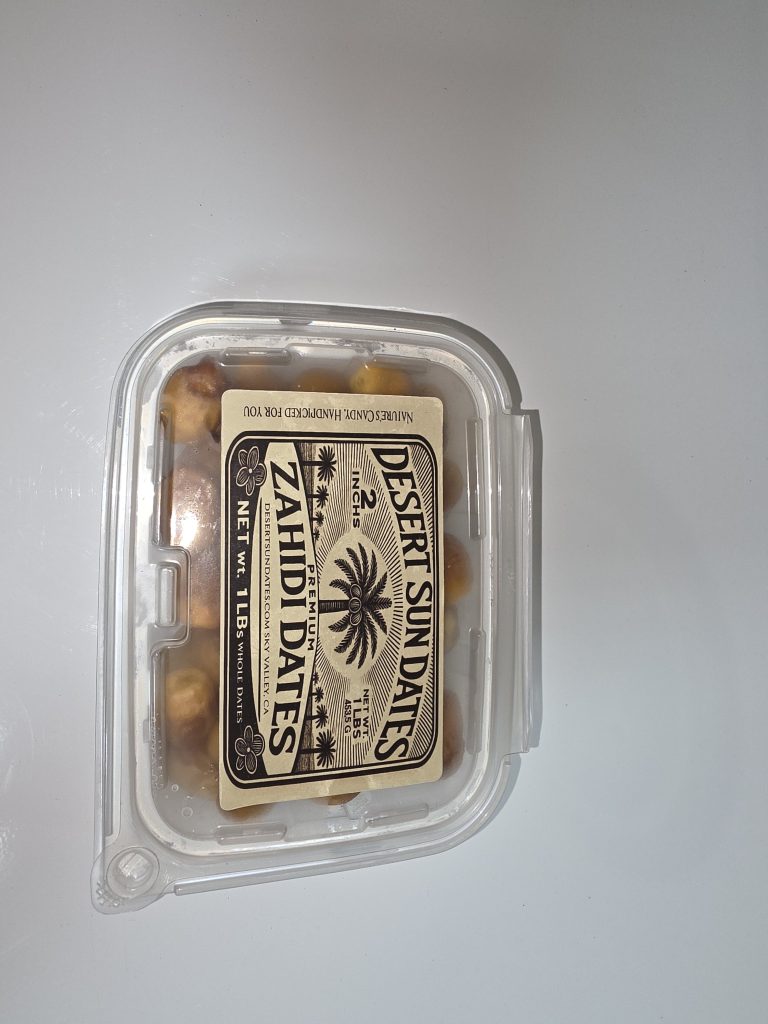
It is golden rather than brown, smaller, smooth-skinned, and semi-dry. The flavour is nuttier and less sugary — I describe it as brown butter and roasted cashew, and that is genuinely what it tastes like rather than marketing language. It has a clean finish instead of a syrupy one.
Because it holds less water it is firm enough to slice, dice, stuff or throw whole into a pan without turning to mush. It also keeps far longer than a Medjool without any special handling.
Where each one wins
Buy Medjool if
- You are eating them out of the bag, or serving them as they are
- You are making date paste, date caramel, or sweetening a smoothie
- You are replacing refined sugar in a recipe and want the fruit to disappear into it
- You are buying a gift, or feeding people who have never had a proper date — Medjool is the more impressive first date, no argument
Buy Zahidi if
- You want the pieces to stay visible in cookies, breads, scones or granola
- You are cooking savoury — tagines, grain salads, stuffing, anything where heavy sweetness would take over
- You want to stuff them with cheese or nuts and have them hold their shape
- You find Medjools too sweet, which a lot of people quietly do
- You want dates that keep for months in a cupboard without fuss
If your question is specifically about baking, we go into much more depth on that — including a rough sugar-substitution ratio — in our guide to which dates hold their shape in baking.
Why you have probably never been offered a Zahidi
This is the honest part, and it is not about quality.
Zahidi are smaller, which makes them less impressive in a package. They are less sweet, and sweetness sells. Most of the Zahidi crop in this country goes into processing — chopped, pressed, turned into paste and sugar — rather than onto a shelf as whole fruit. The retail date market has largely settled on one variety because one variety is easier to market.
So the reason Zahidi are rare is commercial, not agricultural. They are not a lesser date. They are a date that a supermarket buyer decided was harder to sell.
Growing both, I would say this: Medjool is the better date to eat, and Zahidi is the better date to cook with. Most kitchens would be better off with a box of each than two boxes of Medjool.
Price
Zahidi now costs less than Medjool at every size — both ladders posted, both with shipping included to the lower 48:
| Size | Medjool | Zahidi |
|---|---|---|
| 1 lb | $19 | $15 |
| 2 lb | $29 | $23 |
| 4 lb | $49 | $38 |
| 6 lb | $67 | $52 |
| 8 lb | $84 | $65 |
| 12 lb | $118 ($9.83/lb) | $88 ($7.33/lb) |
Nothing is added at checkout for the lower 48. Alaska and Hawaii are rated at checkout.
Medjool dates → · Zahidi dates →
Common questions
Is Zahidi healthier than Medjool?
Not meaningfully. Both are whole fruit with nothing added. Zahidi holds less water, so gram for gram it is more concentrated — but you are comparing two versions of the same thing, and neither is a health product. Eat the one you enjoy.
Can I substitute one for the other in a recipe?
Sometimes. Going from Medjool to Zahidi, the result will be less sweet and the pieces will stay whole — usually an improvement in baking, a problem in date paste. Going the other way, expect the dates to melt and the dish to get sweeter.
Which is better for stuffing?
Zahidi, comfortably. A Medjool is so soft it tends to collapse around the filling. A Zahidi has enough structure to hold it.
Do they need refrigerating?
Neither has to be. Both keep well in a cool cupboard — Zahidi noticeably longer because of the lower moisture. Refrigeration extends both if you have bought a large box.
Are yours organic?
No. We are not USDA certified organic and we do not describe ourselves that way. We grow without pesticides, which is a narrower claim than certification and the only one we are entitled to make.
Written by Jason Shopshear, who grows Medjool, Zahidi and Barhi dates at Desert Sun Dates in Sky Valley, California. We sell both varieties described here, so weigh this accordingly — but the farm is on Sky Valley and you are welcome to come and taste them side by side off the trees.
From our farm to your door
We grow every date we sell on our family farm in Sky Valley, California. Shipping is included in the price to the lower 48.
- Jumbo Medjool Dates — large, soft, caramel-sweet, from $19
- Golden Zahidi Dates — firm, nutty — the baking date, from $15
- Barhi Dates — butterscotch, creamy, seasonal, between harvests