
No products in the cart.
The Fifteen Touches: Why Dates Are California’s Most Labor-Intensive Fruit
Ask any California farmer which crop demands the most human touch and the honest answer is dates. Date palms are widely considered the most labor-intensive crop in American agriculture — and on our farm we can count exactly why: between planting a crop and packing it, our hands are on every palm about fifteen times a year. Here’s what those fifteen touches are, and why we keep making them.
The fifteen touches, in order
1–2. Dethorning and cleanup (winter). Every palm carries rows of needle-sharp thorns at the base of each frond — before any other work can happen, we climb and strip them by hand, then clean last season’s growth.
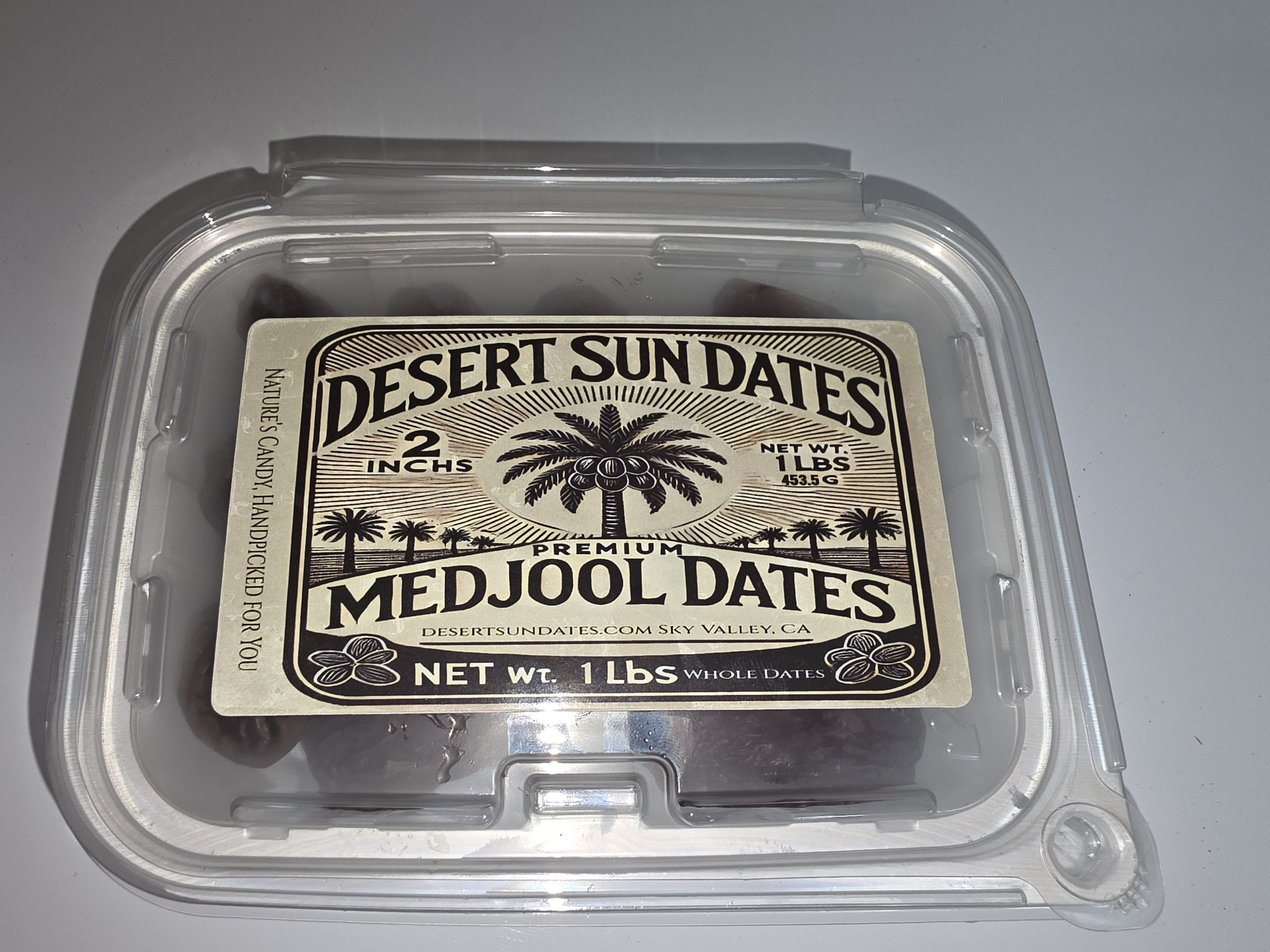
We grow these. Fresh Jumbo Medjool Dates — Shipping Included | California Farm-Direct from our family farm in Sky Valley, California — from $19/lb, shipping included. See them →
3–6. Pollination (spring, three to four climbs per palm). Date palms are either male or female, and in a commercial grove the wind can’t be trusted. We harvest pollen from the males, then climb every female palm repeatedly as her flower sheaths crack open on their own schedule — dusting each bloom by hand. One palm, several climbs, every spring. Here’s what hand pollination actually looks like.
7. Thinning (late spring). A palm will happily set far more fruit than it can ripen well. We remove strands and shorten bunches by hand so the remaining dates grow large and soft — deliberately cutting our own yield to raise our own grade.
8–9. Tying and arching (early summer). Each bunch gets pulled through the fronds, tied, and arched downward so it can be reached, protected, and harvested without bruising.
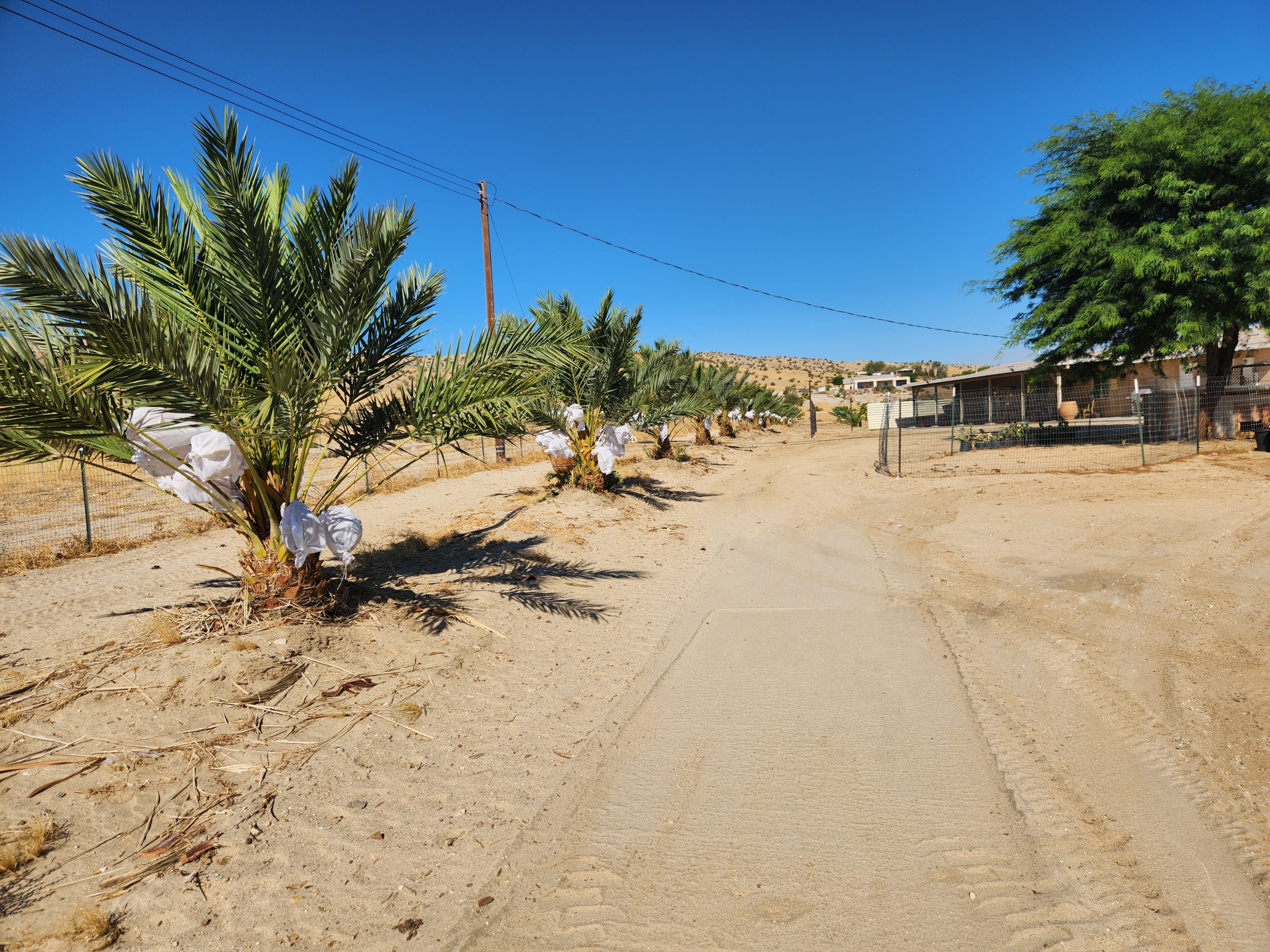
10. Bagging (summer). Every bunch is sleeved by hand against birds, insects, and late-season rain. Thousands of bags, one at a time, in desert heat.
11–13. Harvest (late summer, multiple passes). Dates on one strand don’t ripen together — so harvest isn’t an event, it’s three or more climbing passes per palm, picking only what’s ready each time.
14. Grading and packing. Every single date crosses a human hand at the grading table — jumbo from standard, soft from dry, keeper from cull.
15. Offshoot and palm care (fall). After harvest, the palms themselves get tended: offshoots cut or nurtured, fronds pruned, the grove reset for the next year’s fifteen.
What fifteen touches cost — and what they buy
Industry-wide, this hand labor runs on the order of $100 per palm, per year, before a single box ships — the single biggest reason real Medjool dates cost what they cost. There is no machine for any of it: no mechanical pollinator, no thinning robot, no harvester that can tell a soft jumbo from a dry cull. A date grove is one of the last places in American agriculture where the crop is literally made by hand, touch by touch.
Why we keep climbing
Here’s the part that doesn’t fit in a spreadsheet: you don’t farm dates for efficiency. You farm them because somewhere around the fourth spring climb, dusting pollen into a flower sheath forty feet over the Coachella Valley at sunrise, it stops being labor and becomes the whole point. Every one of those fifteen touches is a decision about quality made by a person who will also read the review you leave. When a box of our jumbo Medjool reaches your door, you’re not buying a commodity that passed through a machine — you’re holding a year of one family’s hands.
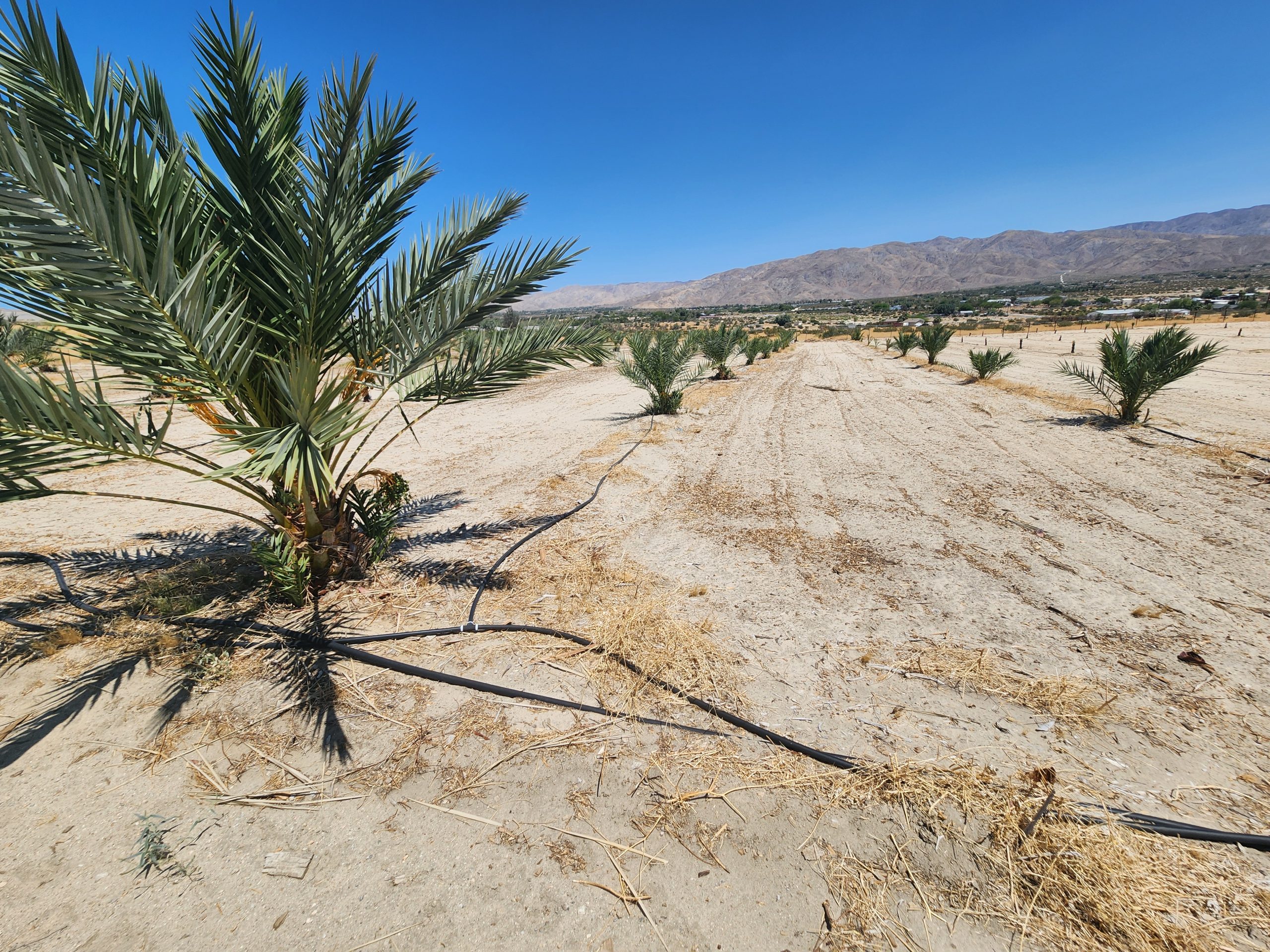
That’s the fruit. Here’s the farm behind it — palms, thorns, bags and all.
Desert Sun Dates is a family farm in Sky Valley, California. We grow, hand-harvest, pack and ship every order ourselves — about fifteen touches per palm, one harvest a year.
From our farm to your door
We grow every date we sell on our family farm in Sky Valley, California. Shipping is included in the price to the lower 48.
- Jumbo Medjool Dates — large, soft, caramel-sweet, from $19
- Golden Zahidi Dates — firm, nutty — the baking date, from $19
- Barhi Dates — butterscotch, creamy, seasonal, between harvests