
No products in the cart.
Which Palms Transplant Well — and Which Go Into Shock
Palms are not interchangeable when it comes to moving them. A date palm can be dug, trucked across the valley and replanted at fifty years old; a Bismarck palm can go into fatal shock from the same treatment. Among people who move palms for a living this is settled knowledge, and university palm-horticulture research explains why: species differ enormously in what their roots do after being cut. Some regrow cut roots, some abandon them and push entirely new ones from the trunk, and some do neither well — those are the ones that die on the trailer.
The species table
| Palm | Transplant tolerance | What its roots do |
|---|---|---|
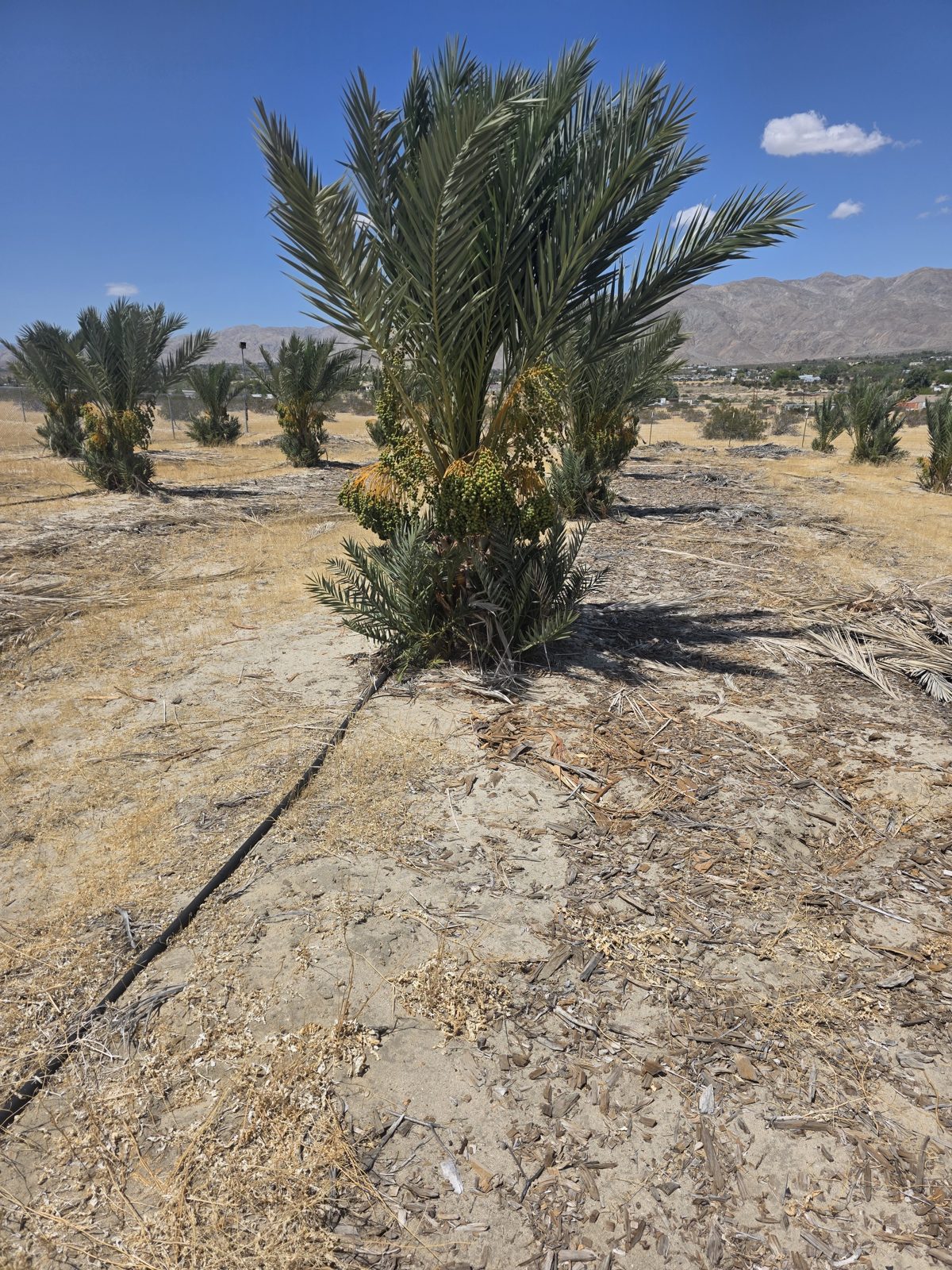
| Date palm (Phoenix dactylifera) | Excellent — moved commercially at full size for a century | Pushes new roots from the trunk base; tolerates a modest root ball |
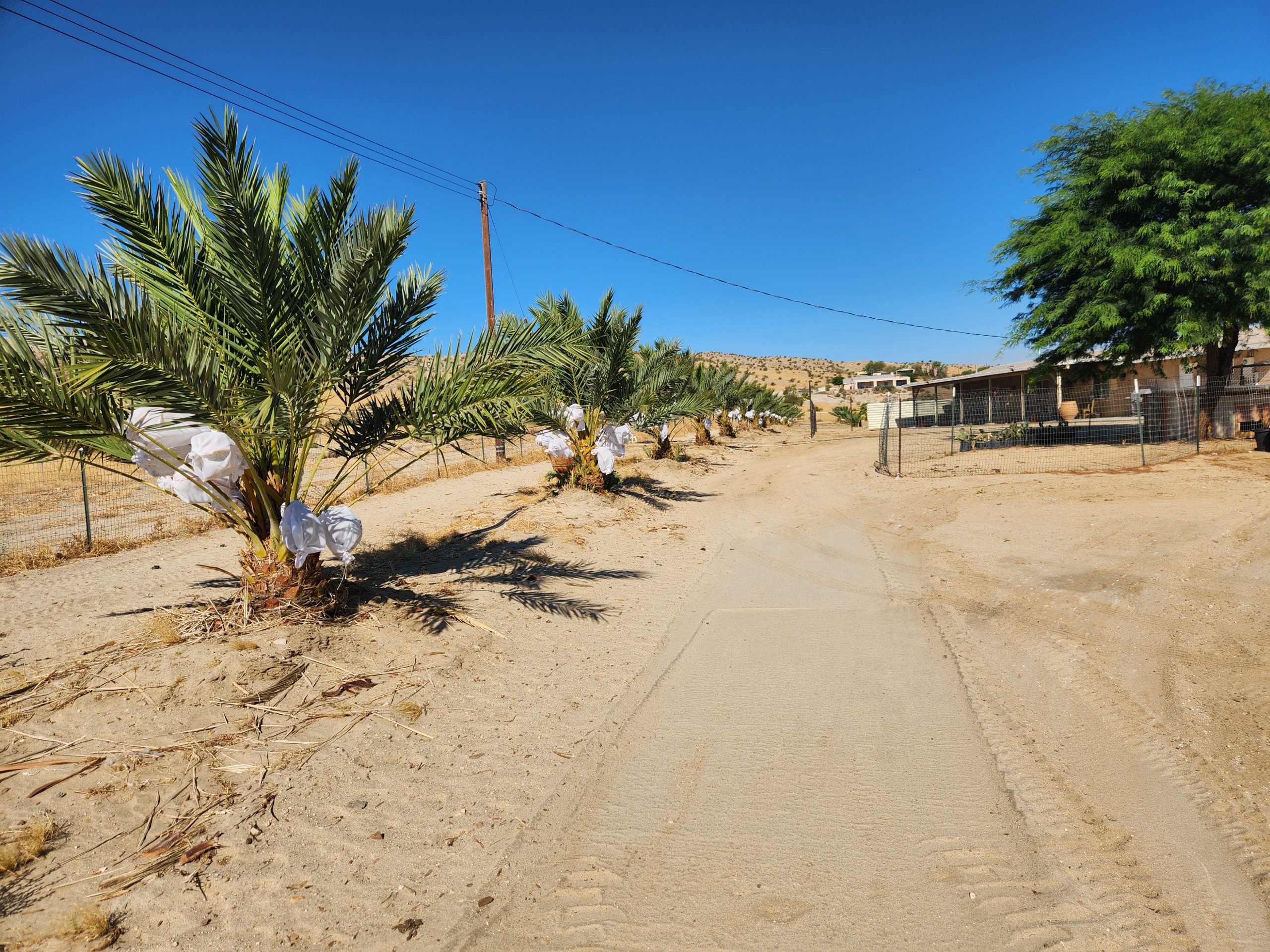
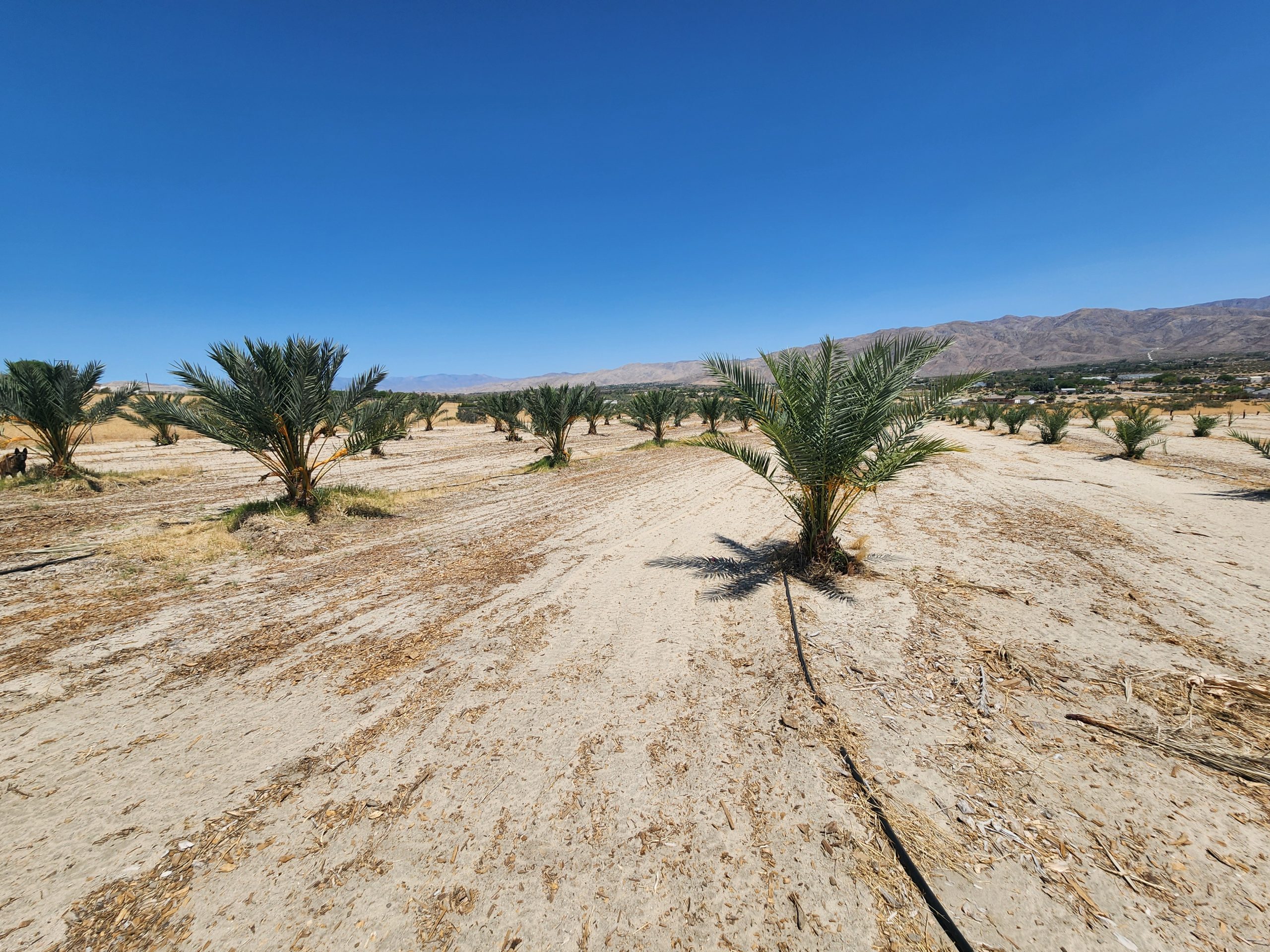
| Zahidi and other date varieties | Excellent — Zahidi is a famously tough mover | Same fibrous Phoenix system; our Zahidis shrug off moves |
| Mexican/California fan palm (Washingtonia) | Very good — the workhorse of palm relocation | Many cut roots survive and branch; fast re-rooter |
| Cabbage palm (Sabal palmetto) | Very good, with a trick — dug with almost no root ball | Abandons all cut roots and grows a complete new set; traditionally moved with fronds removed |
| Canary Island date palm (Phoenix canariensis) | Good but slow — moves succeed with care and patience | Phoenix-type roots, but enormous weight, slower re-establishment, and crown-rot risk while weakened |
| Queen palm (Syagrus) | Moderate — survivable but sulky | Needs a generous root ball, warm soil and a careful first year |
| Bismarck palm (Bismarckia nobilis) | Poor — the shock palm | Resents any root disturbance; field digs frequently fatal; even container-grown ones sulk for a season after planting |
| Foxtail and other tropical specimens | Risky | Limited root regeneration; move small, from containers, in heat |
What separates a mover from a sulker
- Root regeneration. The movers replace cut roots quickly — a date palm treats a dig as a haircut. The sulkers regenerate slowly or not at all, so the tree sits on a shrinking water budget until it runs out.
- Trunk reserves. A thick-trunked Phoenix carries months of stored water and starch to live on while it re-roots. Thin-trunked tropicals have no such cushion.
- The bud. Every palm has exactly one growing point. Species that weaken under stress invite bud rot during the recovery year — which is why a struggling transplant often dies months later, not on moving day.
Practical rules from our own moves
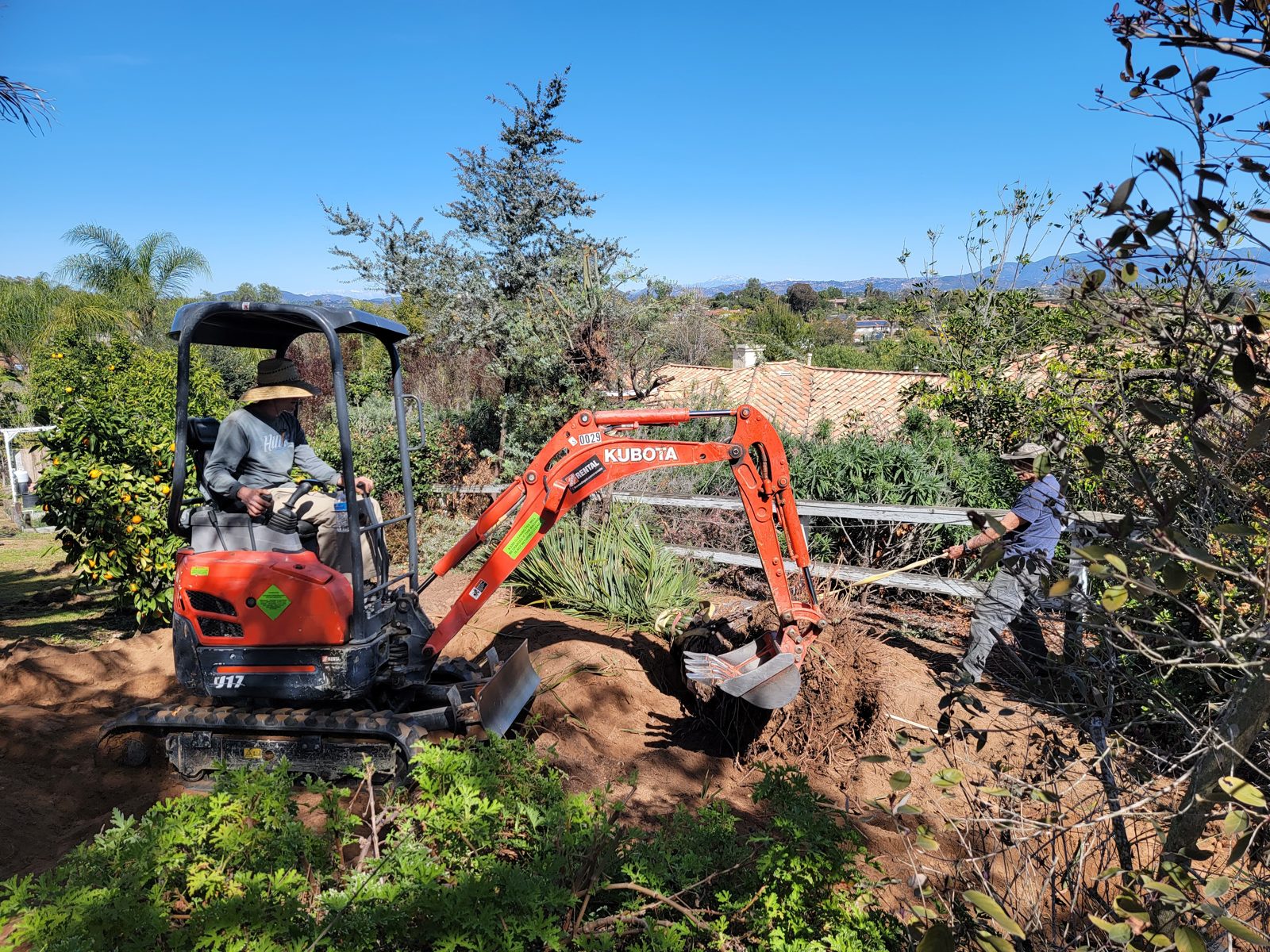
- If it’s a date palm or a Washingtonia, a mature specimen is movable — see our step-by-step transplant procedure.
- If it’s a Bismarck, buy the size you want in a container, plant it once in late spring, and never move it again. Don’t even rough up the root ball at planting — set it in whole.
- If it’s a Canary, budget for the crane and the slow year, and watch the crown; a weakened Canary is also the palm weevil’s favorite target.
- Whatever the species: warm soil, same planting depth, a watering basin, and patience measured in seasons, not weeks.
Weighing a move, a removal, or a purchase? Our date palm consulting covers exactly this, and what a mature date palm is worth covers the dollars. And since the whole point of a date palm is the crop: this season’s jumbo Medjool and golden Zahidi ship farm-direct, shipping included.
We grow these. Golden Zahidi Dates — Nutty, Less Sweet, Never Sticky | California Farm-Direct from our family farm in Sky Valley, California — from $15/lb, shipping included. See them →
From our farm to your door
We grow every date we sell on our family farm in Sky Valley, California. Shipping is included in the price to the lower 48.
- Jumbo Medjool Dates — large, soft, caramel-sweet, from $19
- Golden Zahidi Dates — firm, nutty — the baking date, from $15
- Barhi Dates — butterscotch, creamy, seasonal, between harvests