
No products in the cart.
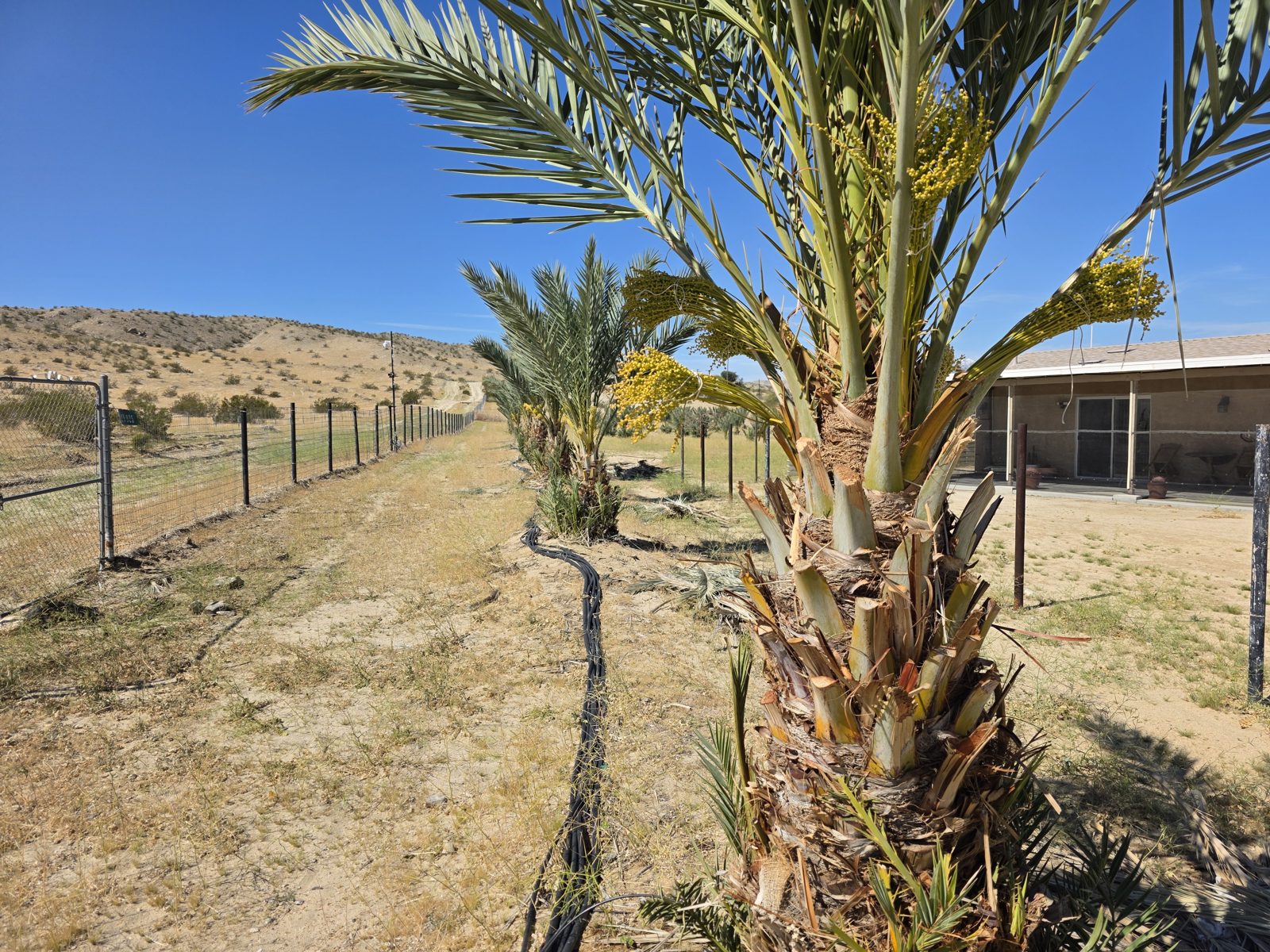
Why Do Some Medjool Dates Come Out Bigger? The Pollen-Parent Effect
Open two boxes of Medjools from the same farm, same season, even the same variety — and you’ll sometimes find one batch runs noticeably plumper than the other. Most people assume that’s just natural variation, like any crop. It is partly that. But there’s a stranger, documented cause hiding behind hand pollination that almost nobody outside date-growing circles has ever heard of: the male pollen a farmer chooses can change the size and ripening speed of the fruit itself — the same season, on the same mother palm.
It’s called metaxenia, and the man who documented it in American date groves, Walter T. Swingle of the USDA Bureau of Plant Industry, called it one of the most striking discoveries to come out of early date research — in a 1928 paper that’s now old enough to be public, and worth reading precisely because almost nobody has.
We grow these. Golden Zahidi Dates — Nutty, Less Sweet, Never Sticky | California Farm-Direct from our family farm in Sky Valley, California — from $15/lb, shipping included. See them →
A tree’s own fruit, changed by someone else’s pollen
In ordinary thinking, pollen does one job: it fertilizes the flower, the seed forms, the fruit grows using the mother tree’s own tissue, and the father’s genetic contribution shows up later — in the seed, or in the next generation, if that seed is ever grown out. The flesh of the fruit itself, in most plants, isn’t supposed to visibly change based on which pollen was used.
Date palms broke that rule. In the early 1920s, growers at the U.S. Experimental Date Garden in Indio, California noticed something odd: fruit on the same palm, pollinated with different males, was coming out in two distinct sizes — some dates with small seeds and small fruit, others with large seeds and large fruit, depending entirely on which male’s pollen had been used that year. It wasn’t subtle. In controlled trials, Swingle and fellow USDA researcher Roy Nixon ran the comparison directly on Deglet Noor palms: fruit pollinated with one male’s pollen averaged roughly 41 mm long, while the very same palm, pollinated with a different male in the same bunch, produced fruit closer to 39 mm — a repeatable, measurable gap driven purely by the pollen source.
It changes more than size
The timing effect turned out to be even more dramatic than the size effect. In one experiment, dates on a single Deglet Noor palm were split between two pollen sources on March 20 and 25. By July 27 — just four months later — 83% of the fruit pollinated with one male’s pollen had already turned its ripening color, while only 17% of the fruit pollinated with the other male had colored at all, on the very same tree, under identical weather. Some pollen sources reliably produced earlier, bigger fruit; others produced later, smaller fruit — and it wasn’t the same ranking for both traits. One pollen source Swingle tested produced the smallest fruit of any he studied, but also among the earliest-ripening.
Why Swingle thought this was more than coincidence
Swingle’s paper carried a pointed subtitle: “Possibly a Hormone Action by the Embryo or Endosperm.” That was his attempt to explain something that shouldn’t happen under the plant biology understood at the time. In most fruiting plants, the flesh around a seed develops from the mother plant’s own tissue — the father’s genetic material rides along inside the seed, but it isn’t supposed to visibly reach out and resize the fruit around it in the very same season. Swingle’s explanation was that the developing embryo and endosperm — tissue that does carry a contribution from the male parent — must be producing some kind of growth-regulating signal that spreads outward into the surrounding fruit tissue as it develops, essentially directing the mother tissue to grow faster or slower, bigger or smaller, depending on which pollen fertilized it. Modern plant science has since confirmed that developing seeds do release plant hormones that influence surrounding fruit tissue — Swingle was reasoning toward that mechanism two decades before it had a name.
What made the effect undeniable rather than anecdotal was that it showed up consistently across different pairings, not as a one-off. Swingle tested pollen from a male called “Fard No. 4” against a male nicknamed “Mosque” on the same Deglet Noor bunches, over multiple seasons, with absorbent cotton sealing each bagged strand so there was no chance of stray pollen contaminating the results. The Fard pollen reliably produced smaller seeds and smaller fruit but noticeably earlier ripening; the Mosque pollen reliably produced larger seeds, larger fruit, and later ripening — the same two outcomes, repeated bunch after bunch, year after year, on trees that were otherwise identical and exposed to the same soil and weather.
Why this is the hidden lever behind hand pollination
This is the part growers actually use. Commercial date orchards keep only a small number of male palms — often one male supplying pollen for dozens of female trees — specifically so pollen can be collected, dried, and applied by hand rather than left to the wind. Metaxenia means that choice of male isn’t just about guaranteeing a crop exists at all; it’s a real production lever. A grower who understands which of his males tends to push fruit bigger, or ripen a bunch earlier ahead of a market window or a weather risk, is making a decision with Swingle’s 1928 data behind it, whether he knows Swingle’s name or not.
It’s also a quiet answer to a question we get from customers more than almost any other: why does fruit from the same farm, same variety, sometimes taste and size a little different season to season? Weather and water explain a lot of it. But part of the answer, documented for a century now, is that the father tree leaves fingerprints on the fruit — not just on the seed inside it.
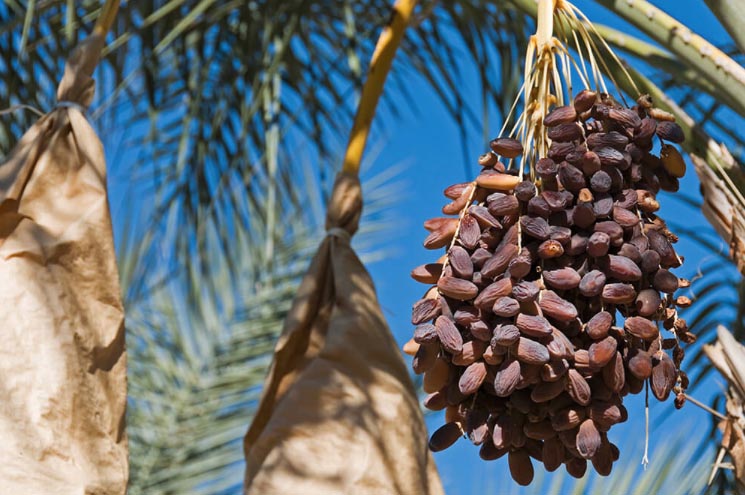
Quick Answers
What is metaxenia in date palms? The documented effect in which the pollen source (the male parent) measurably changes traits of the fruit itself — including size and ripening speed — in the same growing season, on the same mother palm.
Who discovered metaxenia in dates? USDA physiologist Walter T. Swingle described and tested it in American date groves in the 1920s, building on field observations at the U.S. Experimental Date Garden in Indio, California, and publishing his findings in the Journal of Heredity in 1928.
Does the pollen parent affect the seed inside a date, or the fruit around it too? Both. Swingle’s data showed differences in seed size, fruit length, and days-to-ripen, all driven by which male pollinated the flower.
Is metaxenia the same thing as cross-pollination changing the next generation? No, and this is the part that surprised researchers at the time. Ordinary genetic inheritance from the father shows up in the next generation, if the seed is planted and grown out. Metaxenia is different and stranger: it changes the fruit on the tree that was pollinated, in that same season, on a mother palm whose own variety never changes.
Can a grower use metaxenia on purpose? Yes — it’s one of the real reasons commercial growers keep more than one male palm and track which one supplies pollen to which block. A male known to push early, smaller fruit can be used to get part of a crop to market ahead of a price window; a male known to produce larger, later fruit can be saved for blocks aimed at premium size grading.
More from the orchard: see the full Date Palm Growers’ Hub, or read how pollination actually happens on our farm each spring.
Taste the result of a century of this choice, made right. This season’s fruit, from palms we pollinate by hand every spring: Shop Medjool → · Golden Zahidi
From our farm to your door
We grow every date we sell on our family farm in Sky Valley, California. Shipping is included in the price to the lower 48.
- Jumbo Medjool Dates — large, soft, caramel-sweet, from $19
- Golden Zahidi Dates — firm, nutty — the baking date, from $15
- Barhi Dates — butterscotch, creamy, seasonal, between harvests