No products in the cart.
Fertilizing Date Palms: What a Compost-Built Grove Has Taught Us
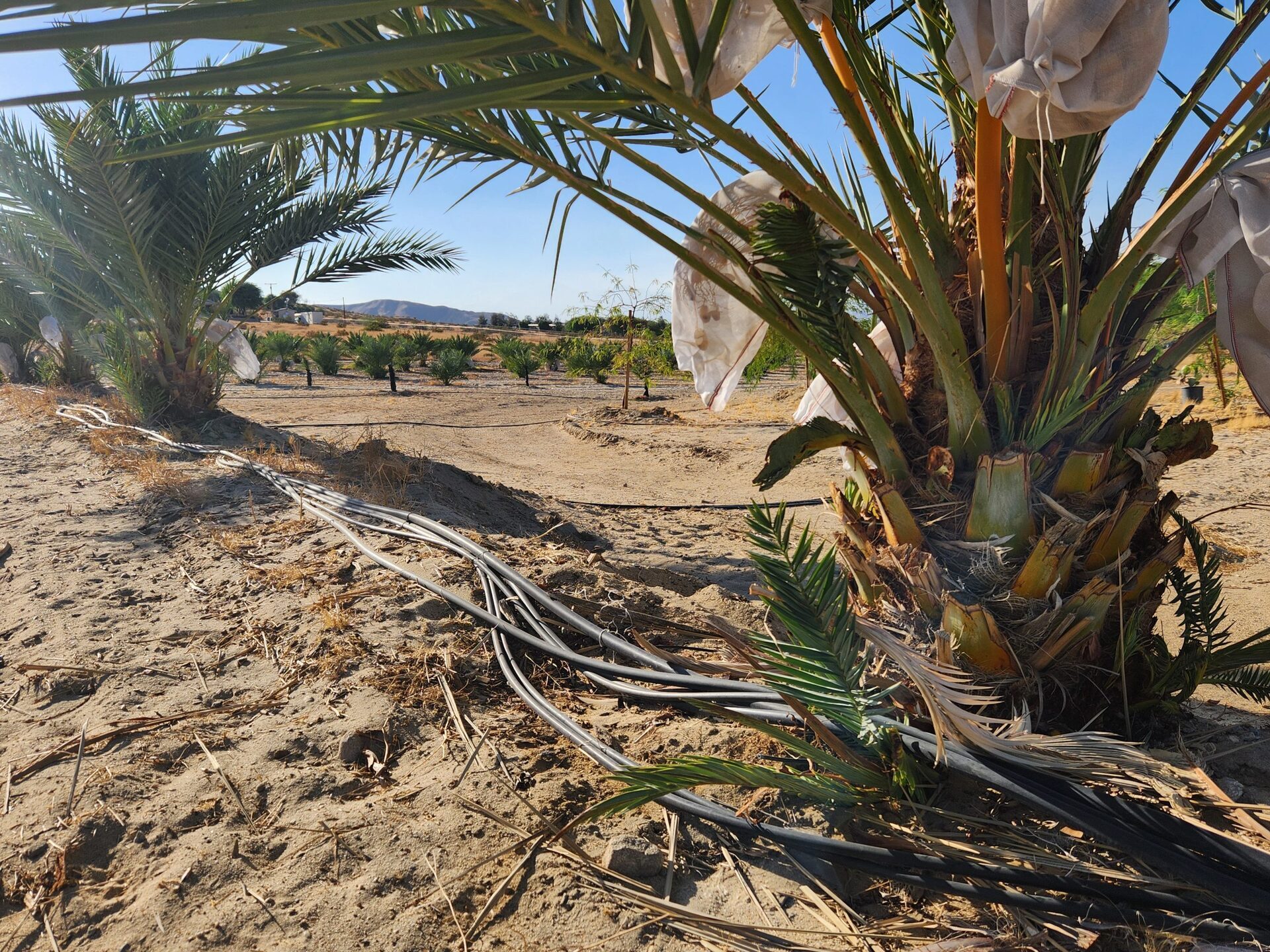
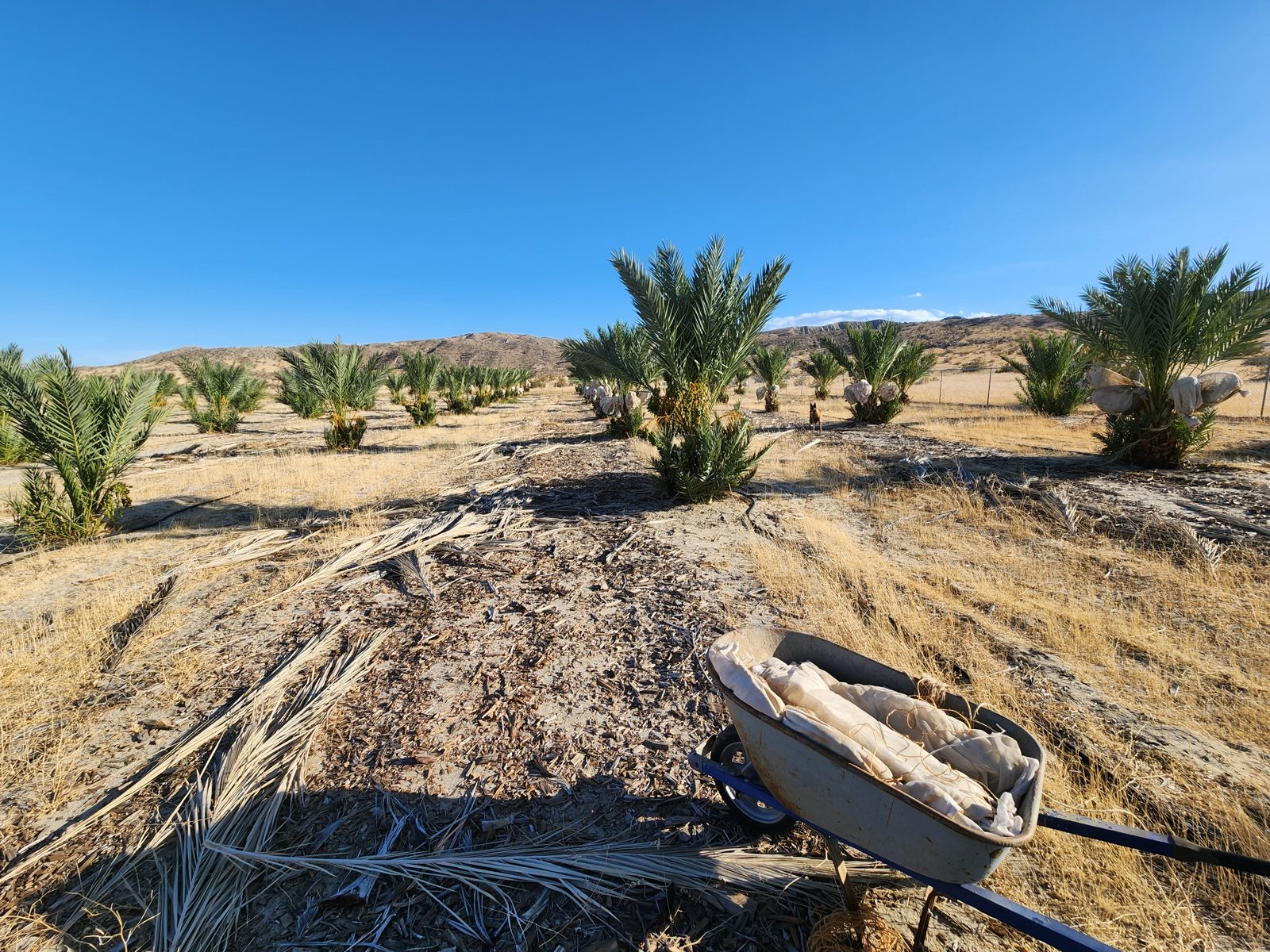
Date palms are big, fast-growing trees carrying heavy crops, so they need feeding. Many commercial groves use synthetic nitrogen. We don’t. Our grove in Sky Valley is fed with compost and aged manure only, and the palms have done well on it. Here is what we use, when, and how to tell when a palm is short of something.
Why compost works in desert soil
Desert soils are usually sandy and low in organic matter. Water runs straight through them and nutrients go with it. Compost changes that: it holds moisture in the root zone, feeds slowly instead of in one burst, and builds the soil life that keeps feeding the palm long after you spread it. Our full soil story is in It Starts With the Ground.
We grow these. Golden Zahidi Dates — Nutty, Less Sweet, Never Sticky | California Farm-Direct from our family farm in Sky Valley, California — from $15/lb, shipping included. See them →
What to use, and what never to use
- Use: green-waste compost or well-aged manure from a supplier who will tell you exactly what went into it.
- Avoid: anything made from biosolids (treated sewage sludge). It can carry PFAS, the “forever chemicals”, and we won’t put it on ground that grows food. We turned down cheap loads for exactly that reason.
- Avoid: fresh, hot manure right against young offshoots. Let it age first.
When and how to apply it
- Winter is the main feeding. We spread compost from December through February, so it is working in the soil before spring growth and bloom.
- Spread it over the root zone, across the basin and out toward the edge of the canopy, not piled against the trunk.
- Water it in. Compost sitting dry on the surface does very little.
- Top up lightly in late spring if the palms are carrying a heavy set.
For newly planted offshoots, go light: a thin layer on the basin surface only. Strong feeding near damaged roots does more harm than good. See planting a date palm offshoot.
Reading the fronds
Palms show nutrient problems in their leaves, and where on the palm it shows up tells you a lot. These are general palm patterns, not a diagnosis:
- Older, lower fronds yellowing or spotting first usually points to a mobile nutrient such as potassium or magnesium being pulled from old leaves to feed new growth.
- The newest leaves coming out small, pale or frizzled points to a problem with a nutrient that doesn’t move within the palm, such as manganese.
- Overall pale, slow growth often means too little nitrogen, or roots that are waterlogged or too dry to take anything up.
Before adding anything to fix a problem, get a soil test, and a leaf test if you can. Watering problems mimic nutrient problems more often than people expect.
Quick Answers
Do date palms need fertilizer? They need feeding to fruit well. Compost and aged manure can supply it; synthetic fertilizer is one option, not the only one.
What’s the best fertilizer for a date palm? For us, clean compost spread in winter and watered in. Whatever you use, know what is in it.
Can I over-fertilize a date palm? Yes, especially young offshoots. Too much salt from fertilizer burns roots in dry soils.
Date Palm Care series, from our orchard in Sky Valley
- How to remove a date palm offshoot
- How to plant a date palm offshoot
- Date palm care calendar, month by month
- Fertilizing date palms with compost
- Pruning and dethorning date palms
- Male vs. female date palm
- Why isn’t my date palm fruiting?
- South American palm weevil and date palms
Every grower guide we publish lives in the Date Palm Growers’ Hub.
Compost, water and sun. Nothing synthetic. Taste what that grows: Shop Medjool → · Golden Zahidi
From our farm to your door
We grow every date we sell on our family farm in Sky Valley, California. Shipping is included in the price to the lower 48.
- Jumbo Medjool Dates — large, soft, caramel-sweet, from $19
- Golden Zahidi Dates — firm, nutty — the baking date, from $15
- Barhi Dates — butterscotch, creamy, seasonal, between harvests