No products in the cart.
Yellow Dates: What This Fruit Is and Why It’s Usually Barhi
Yes — we grow yellow dates. On our California family farm we grow two golden varieties, Barhi and Zahidi, both prized for their color and honey-sweet flavor. So if you have seen bright yellow dates and wondered what they are, or where to buy them, you are in the right place.
The yellow dates most people have actually seen and eaten are Barhi, because Barhi is the one variety genuinely good to eat at that stage. More on why below.
We grow these. Golden Zahidi Dates — Nutty, Less Sweet, Never Sticky | California Farm-Direct from our family farm in Sky Valley, California — from $15/lb, shipping included. See them →
What varies is how long that stage lasts, how it tastes, and whether anyone bothers to sell the fruit while it is still yellow.
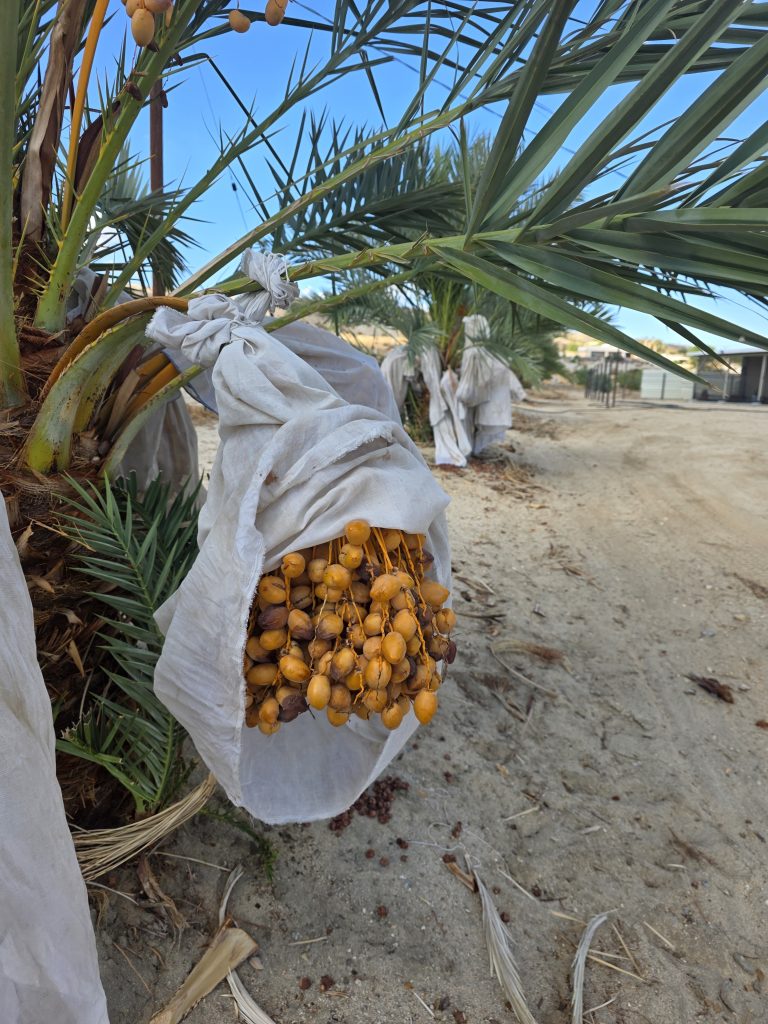
One fruit, many names: what people call yellow dates
Part of what makes this fruit hard to search for is that no two markets call it the same thing. All of these names mean the same fruit at the same stage:
| The name | Where you’ll hear it |
|---|---|
| Yellow dates | US grocery stores and Asian markets — often sold still attached to the strand |
| Khalal dates | The Arabic name for the ripening stage itself — common in Middle Eastern markets |
| Balah | Egypt and the Levant — fresh dates generally, and yellow ones especially |
| Fresh dates / dates on the branch | Farm stands and specialty grocers in late summer |
| Crunchy dates | A texture description that has become a search term of its own |
| Golden dates | Usually means cured Zahidi — golden at the ripe stage, not yellow khalal (more below) |
One thing yellow dates are not: red dates. In Chinese and Korean groceries, “red dates” are jujubes — a different plant entirely, no relation to the date palm. If a recipe calls for red dates it means jujubes; if it calls for yellow or fresh dates, it means the palm fruit on this page.
The three stages of a ripening date
| Stage | Looks like | Tastes like |
|---|---|---|
| Khalal | Firm, bright yellow or red, glossy | Crisp and crunchy, like a firm apple. Sweet in some varieties, astringent in most |
| Rutab | Softening, browning from the tip down, often half yellow and half brown | Honey-sweet, very soft, high moisture |
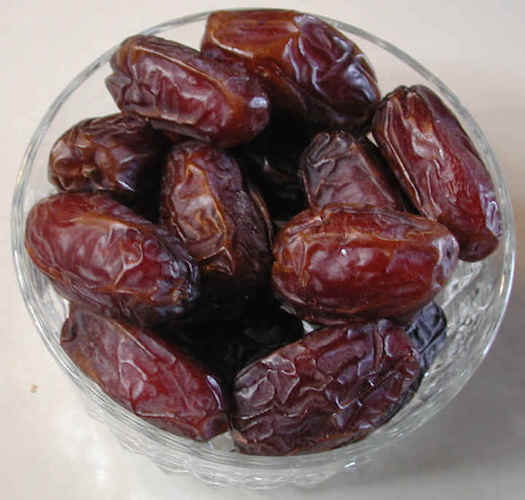
| Tamar | Fully brown, cured, wrinkled | Deep caramel sweetness, lower moisture, keeps for months |
A single bunch on our palms will hold all three at once. The fruit does not ripen evenly, which is why harvest is not one day’s work — we go through the same palm several times across the season.
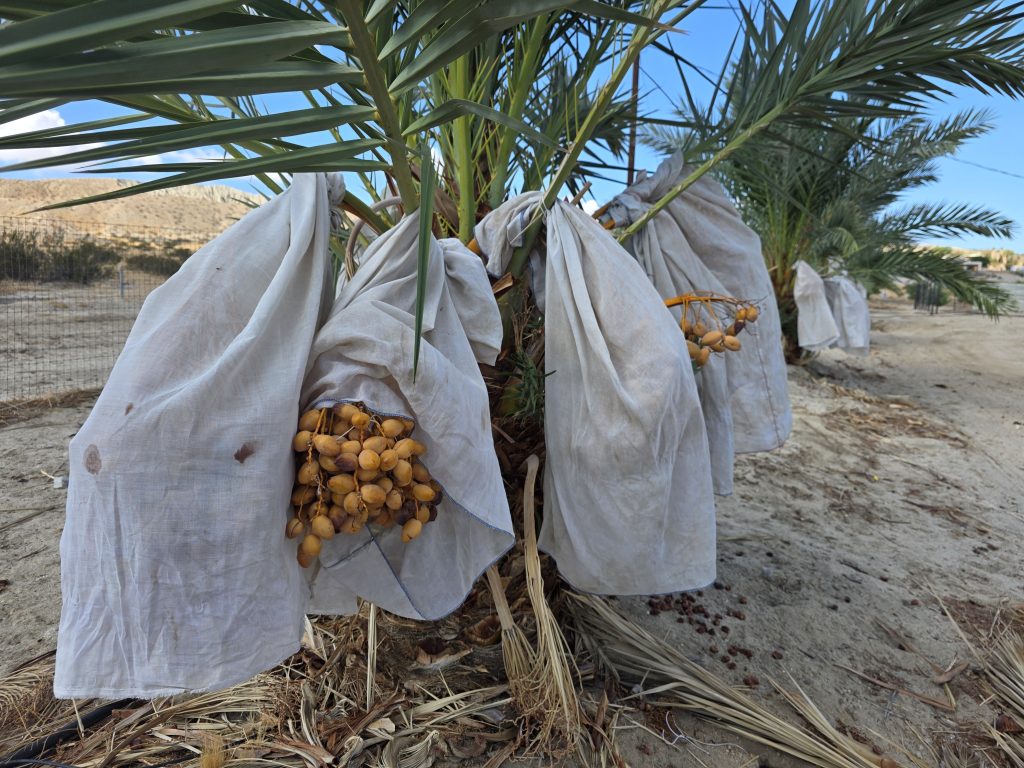
Yellow Barhi dates: why the yellow fruit you have seen is almost always Barhi
Because Barhi is the one variety that is genuinely good to eat at the khalal stage.
Most varieties are astringent when yellow — edible, but they dry your mouth out and nobody would choose them. Barhi is the exception. Yellow Barhi is crisp, sweet and slightly grassy, closer to eating a sweet apple than a date. It is a completely different experience from the soft brown fruit, and people who grew up with it wait for it every year.
Zahidi can also be eaten yellow, though it is less commonly sold that way. We grow it and we still sell it brown — the reasons are below. If you want the difference between the two varieties spelled out, we wrote Zahidi vs Medjool as a grower who packs both.
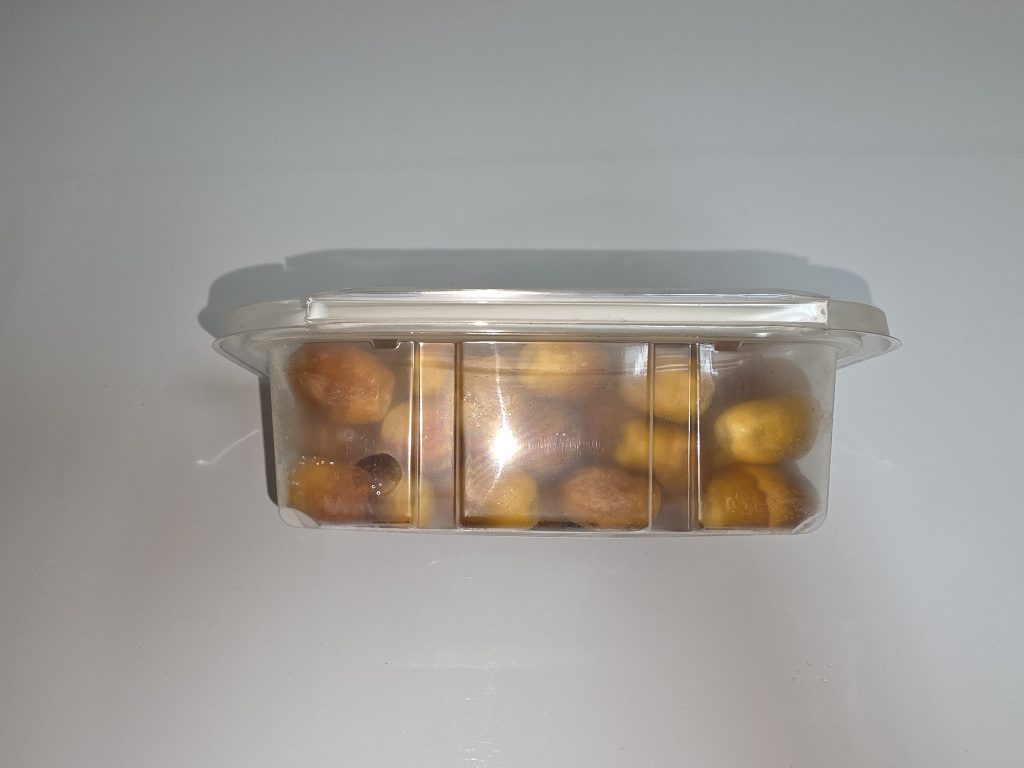
So “yellow dates” in a shop or at a farm stand almost always means khalal Barhi. The term is general, the fruit usually isn’t.
Why we only sell brown dates
This is the honest part, and it is an operational answer rather than a quality one.
Khalal fruit is on a clock. Once dates start turning, they move fast. You either sell them within a very short window or you let them run through to fully ripe. There is no holding them.
We ship nationwide by USPS, typically 3 to 4 days in transit. Yellow fruit does not survive that. It would leave the farm crisp and arrive somewhere in between, which is nobody’s idea of a good date.
Fully ripe tamar fruit is different. We flash-freeze at harvest and store it frozen until it ships, which means the box you open is the fruit as it was when it came off the palm — not something that has been sitting in a warehouse slowly ageing.
That is the trade-off. Selling khalal makes you a farm-stand business. Selling tamar lets you ship to someone in Pittsburgh and have it arrive the way it should.
If you want to know who else grows dates in this valley and how their seasons run, we wrote a grower’s guide to the date farms of the Coachella Valley — sixteen farms, honestly described.
Grower’s notes: why the desert decides all of this
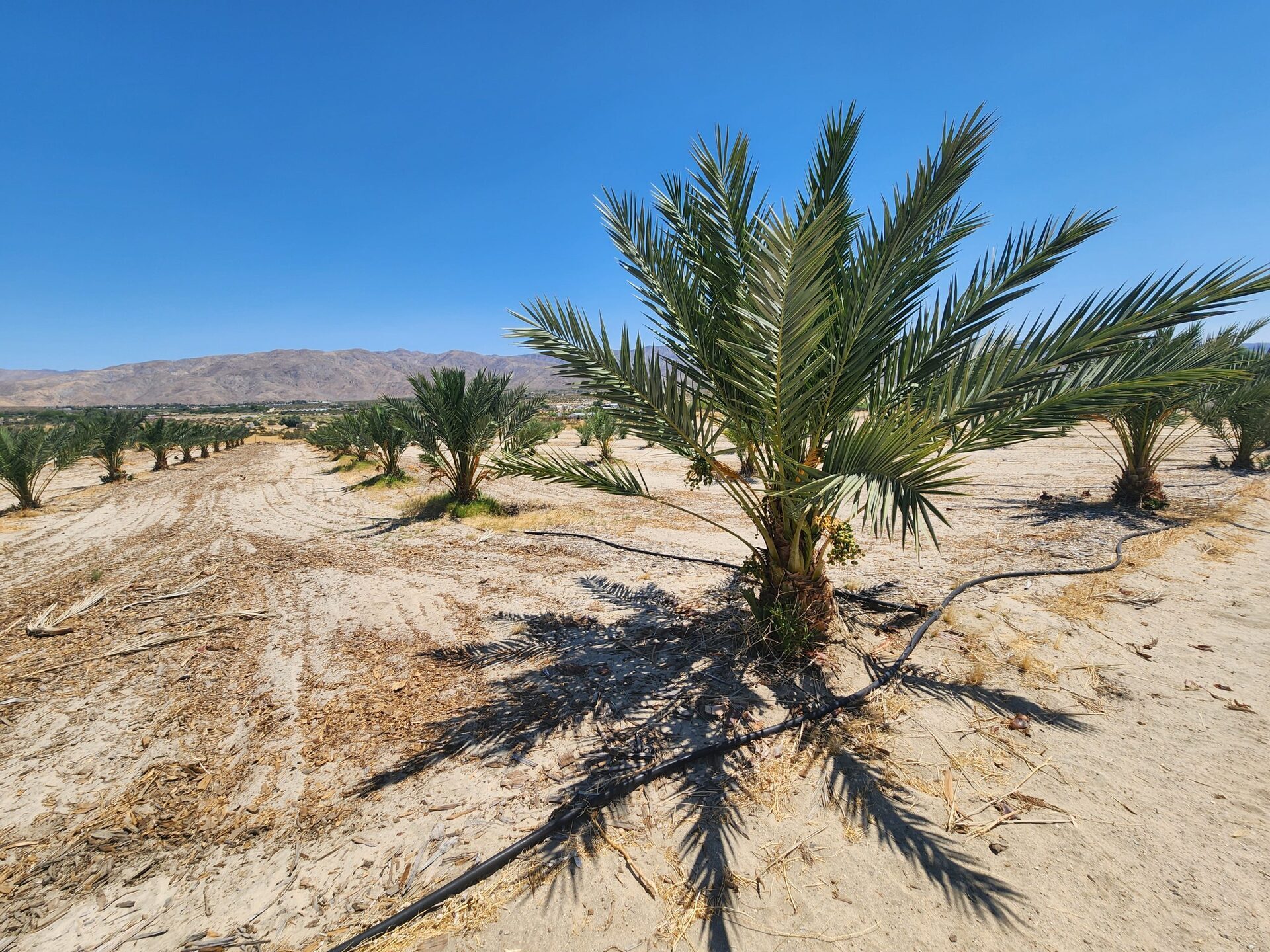
The reason the Coachella Valley can ripen dates on the palm at all comes down to numbers most eaters never see. The FAO’s date-palm literature puts the palm’s growth sweet spot near 32°C, with mature palms enduring summer spikes well past 45°C as long as irrigation keeps up — and Indio, just down the valley from us, appears in the FAO climate tables with some of the highest average temperatures of any recorded date district. That heat is the engine that pushes fruit from yellow khalal through to cured tamar.
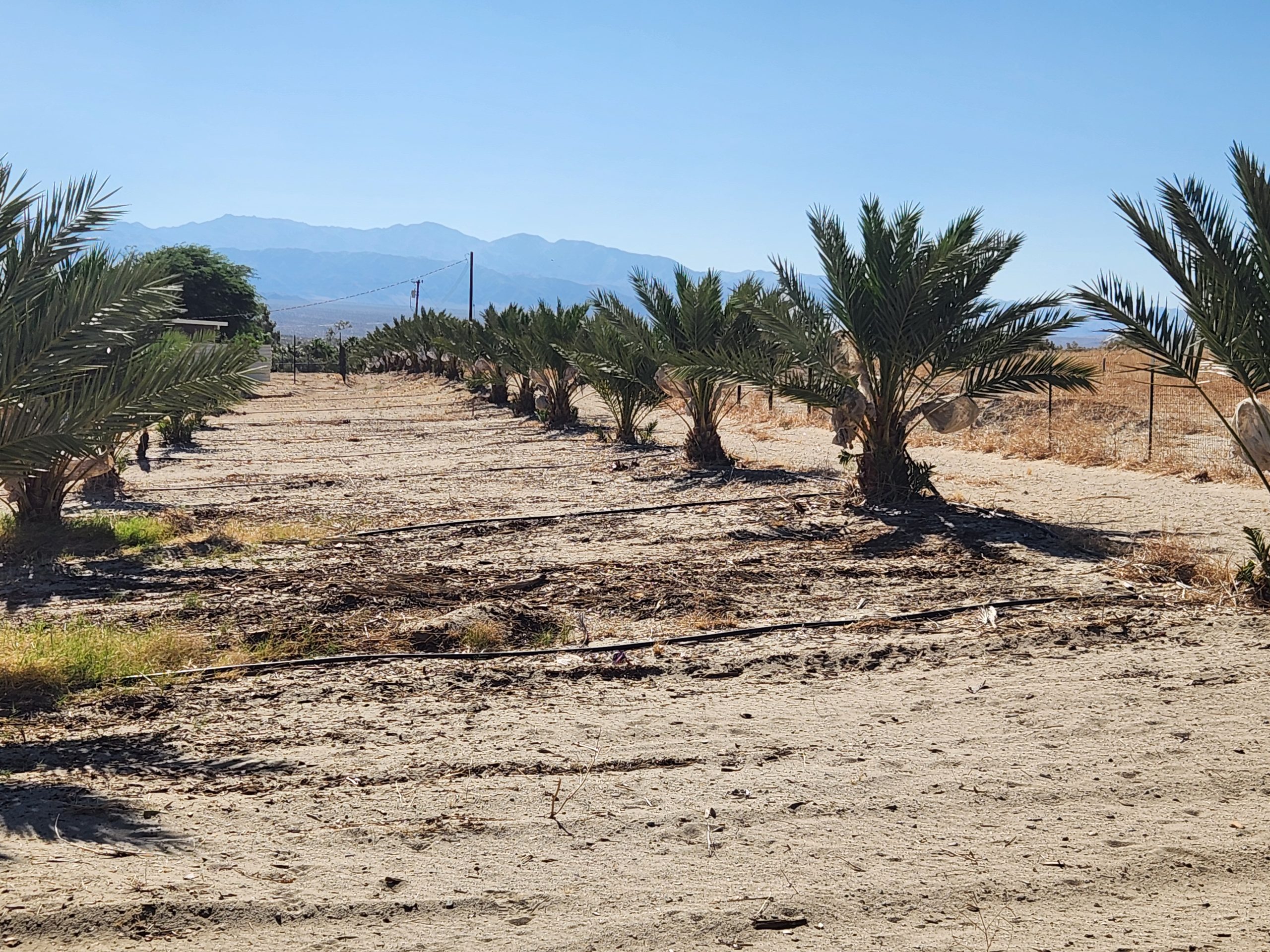
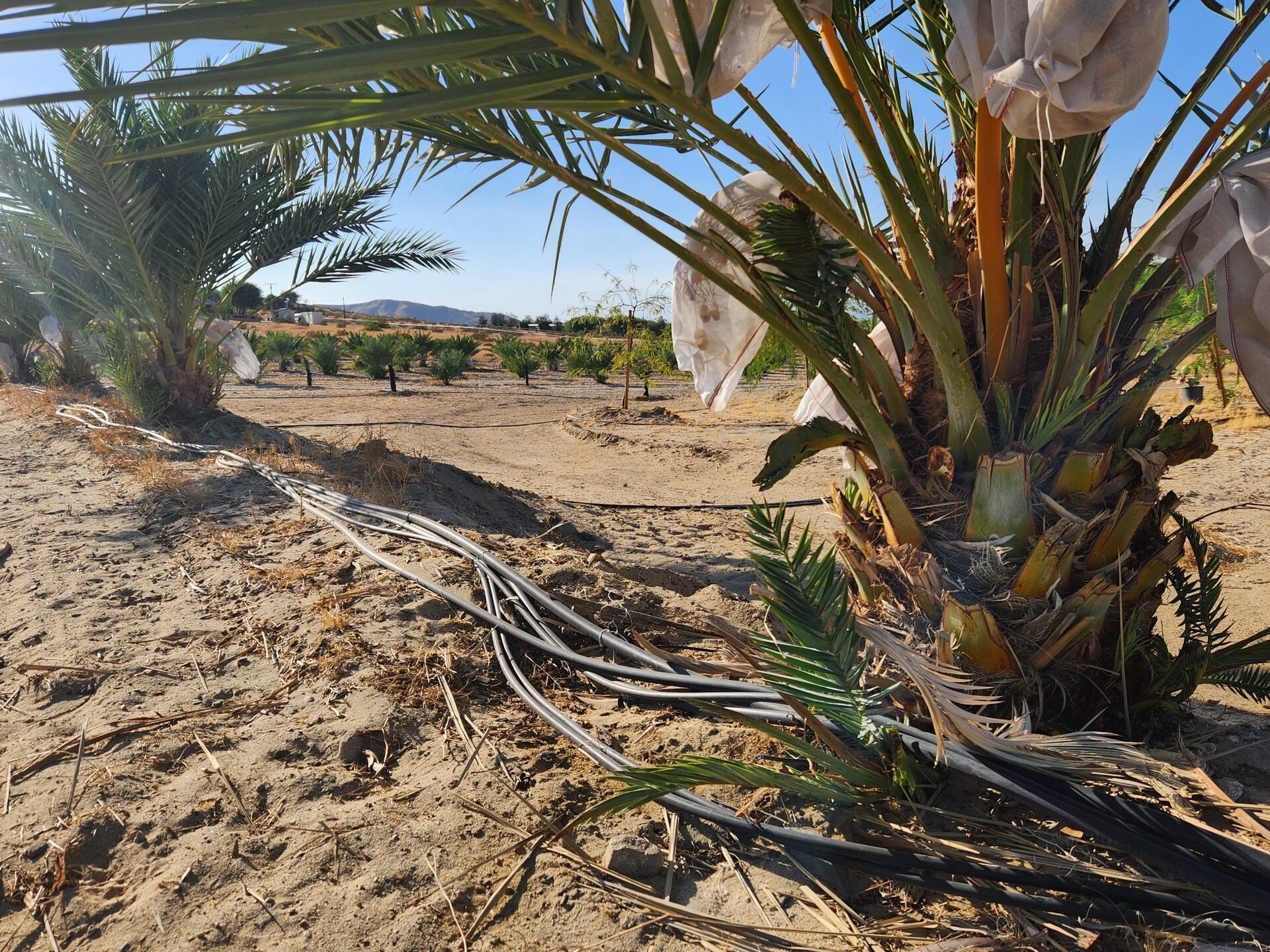
Just as important is what does not happen here: rain. The classic date regions are nearly rainless from July through October, and our valley is the same. A light rain on early yellow fruit is harmless — it mostly rinses off dust — but late in the khalal stage it cracks the skin, and once fruit softens into rutab, rain and humidity will rot a bunch. That is one reason growers here bag bunches (you can see ours in the photo above), and why a dry autumn is worth more to a date farmer than any fertilizer.
One more detail if Zahidi caught your eye: in variety trials going back decades, Zahidi rated the most frost-tolerant of the commercial date varieties, and only average in rain sensitivity under Coachella Valley conditions while famous names like Deglet Noor ranked among the most fragile. It has always been the workhorse of date palms — which fits the fruit itself: firm, golden, keeps well, hard to ruin.
Agronomic details drawn from the FAO’s Date Palm Cultivation handbook (Zaid & de Wet).
What we grow, and what you can buy
Medjool — large, soft, caramel-sweet. Sold at tamar. In stock now.
Zahidi — golden, semi-dry, firmer and nuttier. If yellow dates are what brought you here, cured Zahidi is the nearest thing we can actually ship: the same pale-gold fruit, picked ripe, firm rather than crisp, and available year-round. In stock now.
Barhi — the honey-sweet one, and the variety most people mean when they say yellow dates. We sell Barhi fully ripe, not yellow. We have no Barhi stock this season. It will be back with the next harvest.
If Barhi is what brought you here, tell us and we will email you when it is picked. No deposit, no obligation — we would rather write to you when there is fruit than take an order we cannot fill.
Common questions
Are yellow dates unripe?
Not exactly. Khalal is a genuine ripeness stage, not an unripe one — the fruit has reached full size and full sugar development. It simply has not cured yet. Most varieties are unpleasant at that stage; a few are excellent.
Can you eat yellow dates?
Barhi, yes, and it is a treat. Most other varieties are astringent enough that you would not want to.
Do yellow dates turn brown if you leave them?
Yes. Left at room temperature, khalal fruit will move through rutab to tamar on its own. It happens quickly, which is exactly why khalal is hard to sell at any distance.
Are yellow dates a different variety?
No. Yellow is a stage every variety passes through. What differs is whether that variety is worth eating while it lasts.
Which dates do you sell yellow?
None. We sell Medjool, Zahidi and Barhi fully ripe. The reasons are above. If you want the golden fruit, Zahidi is in stock now.
Are yellow dates the same as red dates (jujubes)?
No. Red dates are jujubes, a different plant with no relation to the date palm. Yellow dates are true palm dates at the khalal stage.
What are khalal dates?
Khalal is the Arabic name for the yellow, crunchy stage — khalal dates and yellow dates are the same thing.
Written by Jason Shopshear, who grows Medjool, Zahidi and Barhi dates at Desert Sun Dates in Sky Valley, California. If you want to know how something grows, ask the person who grows it — the farm is in Sky Valley and the phone is (760) 501-1845. Shoppers hunt these under many names — khalal dates (the Arabic term for this crunchy yellow stage), apple dates, honey dates, fresh yellow dates — they’re all Barhi at khalal, and the season is three short weeks.
From our farm to your door
We grow every date we sell on our family farm in Sky Valley, California. Shipping is included in the price to the lower 48.
- Jumbo Medjool Dates — large, soft, caramel-sweet, from $19
- Golden Zahidi Dates — firm, nutty — the baking date, from $15
- Barhi Dates — butterscotch, creamy, seasonal, between harvests