No products in the cart.
Short answer: yes, and so is every other date you will ever buy. We would rather tell you that than sell you something you already have.
There is no such thing as a GMO date
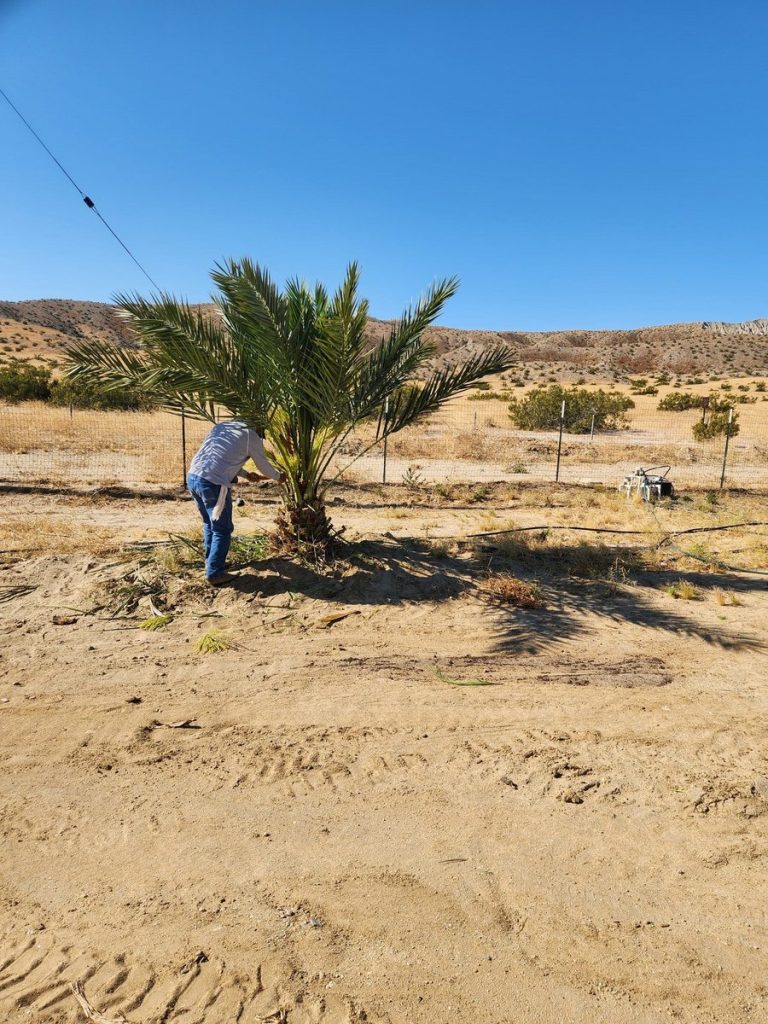
No genetically modified date palm is grown commercially anywhere in the world. Not in California, not in the Middle East, not anywhere.
The reason is partly biology and partly economics. Date palms are not propagated from seed the way row crops are — a seed-grown palm does not reliably produce the same fruit as its parent, and it takes the better part of a decade to find out. So the industry propagates by taking offshoots from an existing palm, or by tissue culture. Both methods produce a genetic copy of the parent tree.
Essentially every Medjool grown in America descends from a small number of offshoots brought over from Morocco in the 1920s. They are clones in the horticultural sense — which is ordinary agriculture, and completely unrelated to genetic modification.
On top of that, a date palm takes seven or eight years to bear a meaningful crop. Nobody has invested in genetically engineering a crop with that kind of development cycle when the existing varieties are already excellent.
So when a company advertises “non-GMO dates,” they are not telling you anything about their farming. They are describing a property that every date on earth shares.
What is actually worth checking
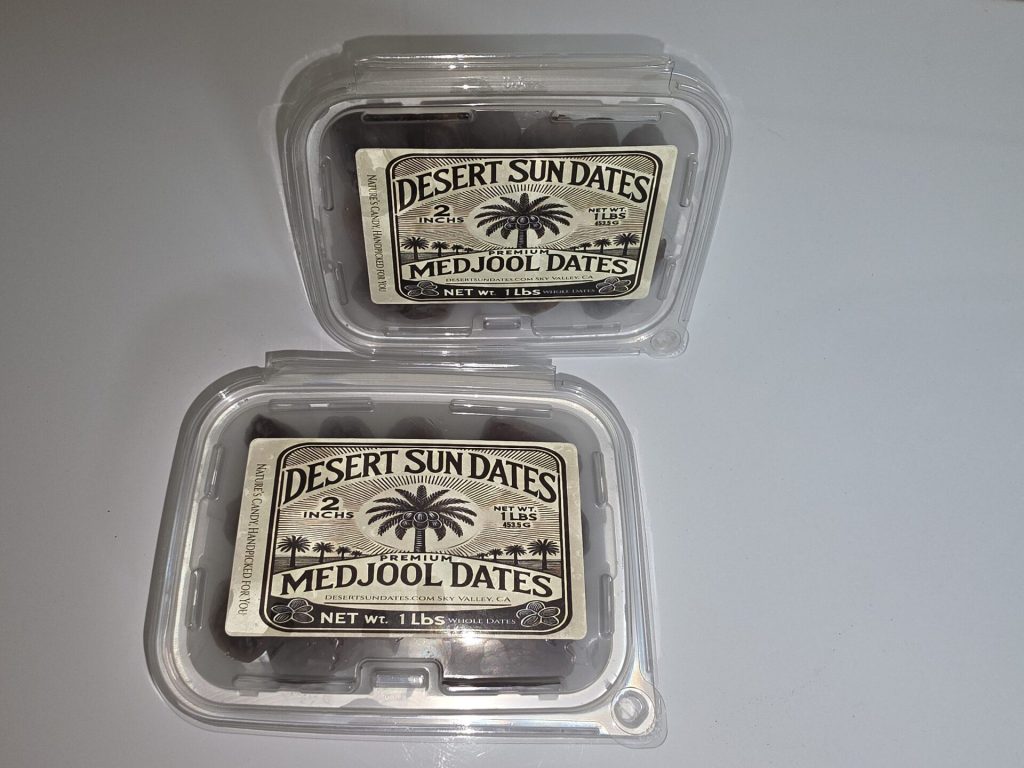
Since non-GMO is a given, here are the things that genuinely differ between one box of dates and another. These are the questions we would ask.
Is anything coated on them?
Some imported and lower-grade dates are coated in glucose syrup or sugar syrup to improve shine and disguise dryness. It makes an older, drier date look plump and glossy. Ours are not coated with anything. If a date looks unusually wet and shiny and tastes sugary on the outside before you bite it, that is worth asking about.
Are there sulfites or preservatives?
Sulfur dioxide is commonly used on dried fruit to preserve colour. It is legal and it must be declared, but a lot of people react badly to it. Our dates contain nothing but dates. No sulfites, no preservatives, no added sugar of any kind — which we cover in more detail on our no added sugar page.
Which variety is it, actually?
“Dates” usually means Medjool, but the varieties differ more than most people expect. Zahidi is golden, firm and nutty; Medjool is large, soft and caramel-sweet. We grow both, and compare them honestly in Zahidi vs Medjool.
Are they whole, or pitted and re-formed?
We sell whole, unpitted dates. The pit comes out easily with your fingers, and leaving it in means the fruit is not handled, machined, or exposed to air before it reaches you. Pitted dates are a perfectly reasonable product and plenty of good farms sell them — but whole fruit has been through less.
How old is the fruit?
This is the question almost nobody asks and it matters more than any label. Dates store well, so fruit from last season can sit in cold storage and still be sold as fresh. Ask when it was harvested. Ours are picked and packed on the ranch here in Sky Valley, and what is in stock is what is in stock — we do not take preorders against a harvest that has not happened.
Where the fruit actually comes from
Ours is grown in Sky Valley, in the Coachella Valley of California. If you want to know who else grows dates in this valley and which farms you can visit, we wrote a grower’s guide to the date farms of the Coachella Valley — sixteen farms, including several better known than us.
Is it certified organic?
Here we will be straight with you, because it cuts against us. We are not USDA certified organic. We grow without pesticides, and that is the narrower and more accurate claim, so it is the one we make. Several excellent farms in this valley do hold certification. If that is your criterion, buy from one of them — we would rather you got what you wanted than bought from us under a misunderstanding.
What we actually sell
Medjool, Zahidi and Barhi dates, grown on our own palms in Sky Valley, California. Hand-pollinated in spring, hand-harvested in late summer, packed in a shed a couple of hundred yards from the trees, and shipped by us. One ingredient: dates.
Prices include shipping to the lower 48 — 1 lb $19, up to 12 lb at $118, which works out to $9.83 a pound delivered.
Medjool dates → · Zahidi dates → · What is in stock today →
Common questions
Are Medjool dates genetically modified?
No. No genetically modified date palm is grown commercially anywhere. Medjool palms are propagated from offshoots of existing trees, which is a horticultural clone and has nothing to do with genetic engineering.
Do your dates have added sugar?
No. Nothing is added. Dates are sweet because ripening converts their own starches to sugar.
Are your dates treated with sulfites?
No. The only ingredient is dates.
Are they organic?
Not certified. We grow without pesticides, which is a narrower claim than certification and the only one we are entitled to make.
Desert Sun Dates is a family farm at 23925 Longvue Rd, Desert Hot Springs, California. Call us on (760) 501-1845 — if you want to know how something is grown, ask the person who grew it.