

No products in the cart.
The best Medjool dates are fresh, plump, soft all the way through and sold by someone who can tell you when they were picked. We grow Medjool on our family farm in Sky Valley, in California’s Coachella Valley, so we handle the fruit at every stage. Here is what actually separates a great Medjool from a disappointing one, and how to check before you buy.
Shop Jumbo Medjool Dates →
1–12 lb boxes · shipping included to the lower 48 · (760) 501-1845
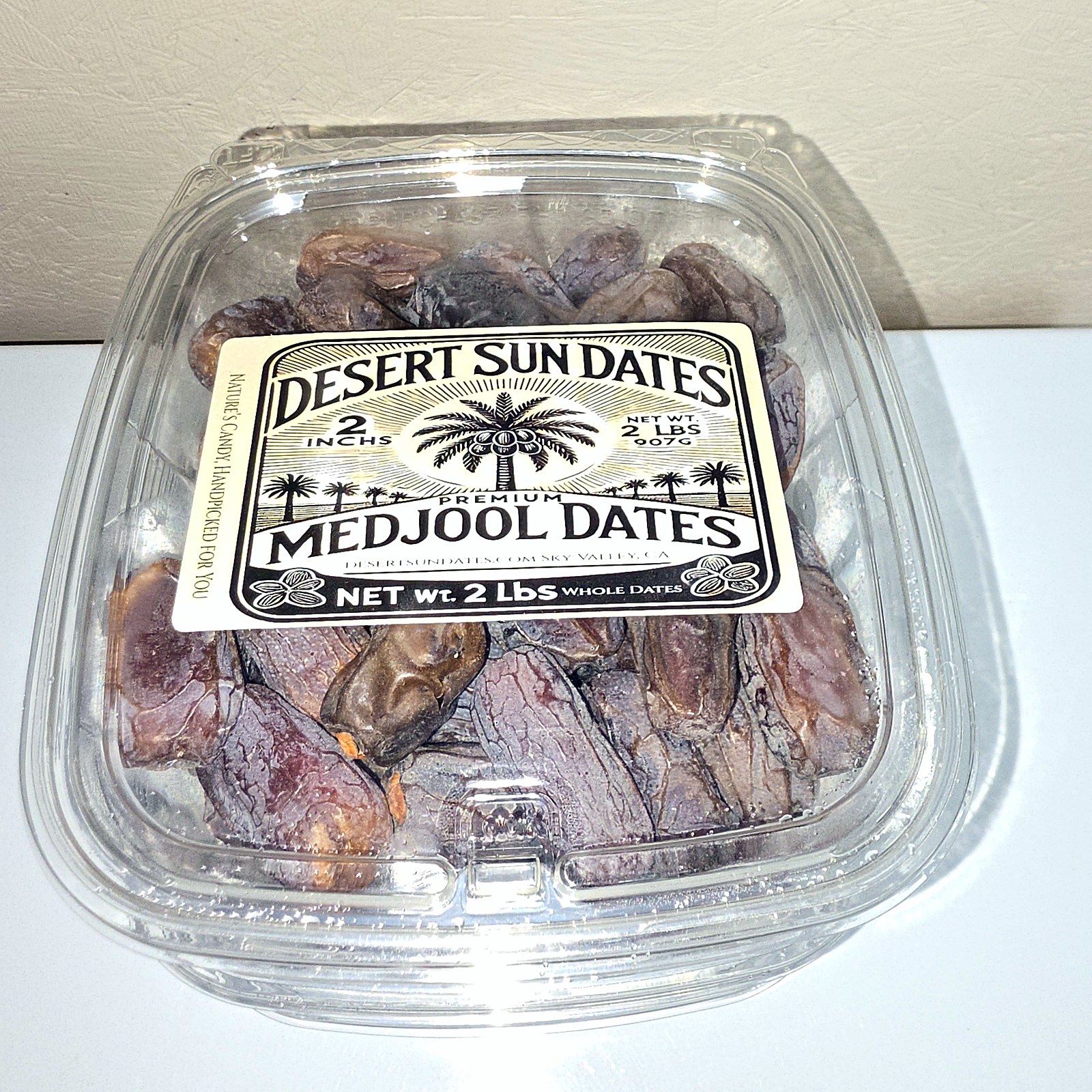
What to look for in a good Medjool
- Size. Jumbo Medjool runs roughly 22 to 28 dates per pound. Bigger fruit has more flesh around the pit and a richer, more caramel flavor.
- Soft, not sticky or hard. A fresh Medjool gives under gentle pressure and the flesh feels dense and moist. Rock-hard dates are old or dried out. Wet, glossy, syrupy dates have often been coated or stored warm.
- Skin. Deep amber to mahogany brown, with a fine wrinkle. Some wrinkling is normal as the fruit cures. Sharply shriveled skin is not.
- Little white crystals are fine. Sugar can crystallize just under the skin, especially in cold storage. It doesn’t mean spoilage.
- Smell. Sweet and a little like caramel. A sour or fermented smell means the fruit has gone off.
- One ingredient. The label should say dates. Nothing else needs to be on it.
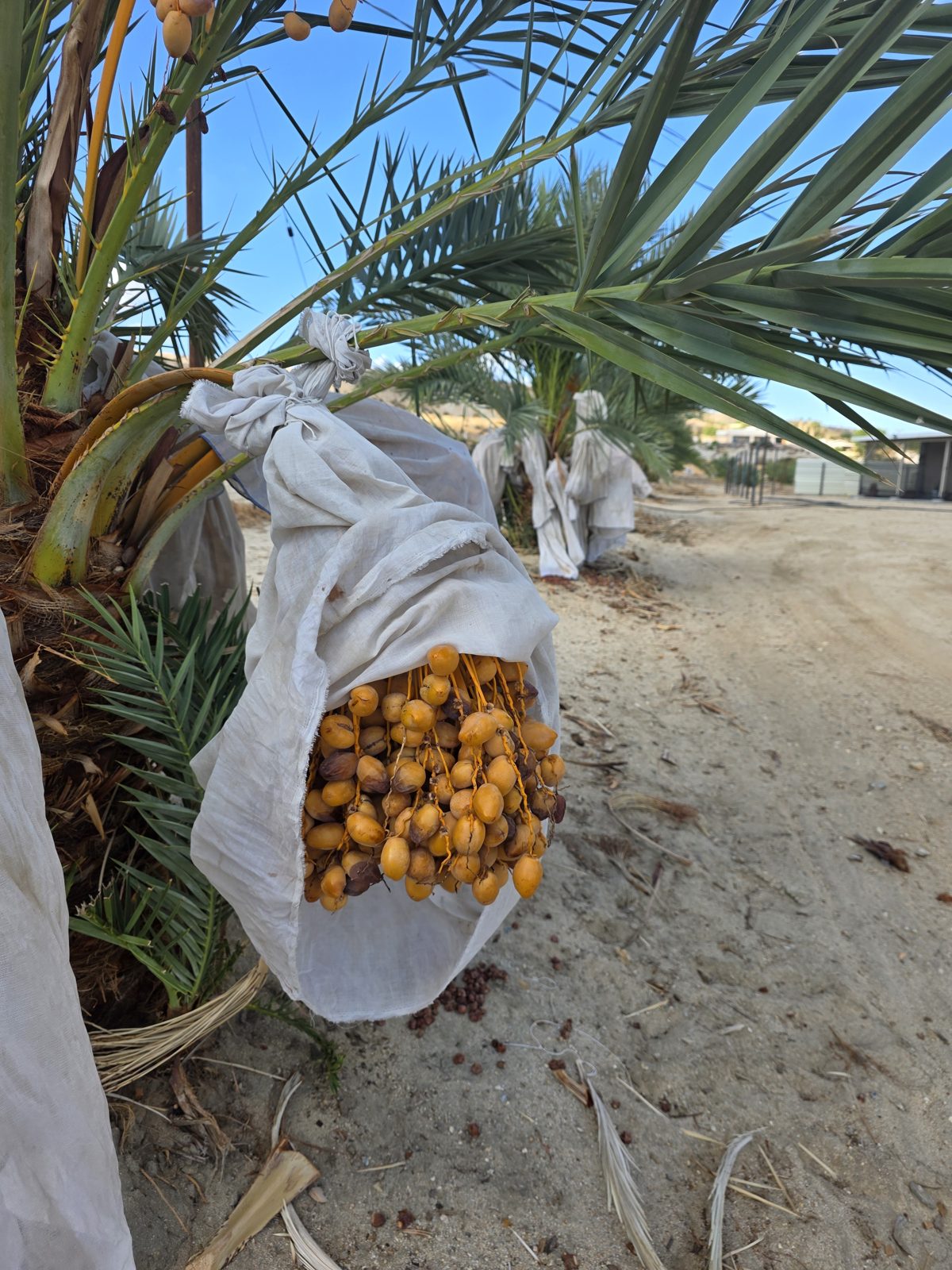
The three questions to ask before you buy
- When was it harvested? Many dates on store shelves are a year or more past harvest. Medjool is picked once a year, in late summer into fall, so the harvest date tells you a lot.
- Who packed it? A grower who packs their own fruit can tell you. A bag that passed through a packer and a distributor usually can’t.
- Is shipping included? The price per pound only means something with shipping counted in.
California Medjool vs. imported Medjool
Medjool is grown in California, Arizona, Israel, Jordan, Mexico and a few other places. Nearly all American-grown Medjool comes from the desert valleys of Southern California and Arizona. Where it is grown matters less than how fresh it is and how it has been stored. Our guide to where California dates are grown covers the regions.
How to keep Medjool dates at their best
A cool pantry holds them for up to 3 months, the refrigerator for up to a year, and the freezer for longer. Our storage guide has the details.
Is Medjool too sweet for you?
Medjool is the richest, stickiest date. If you’d like something milder, try golden Zahidi: see dates less sweet than Medjool and semi-dry dates. Baking? Here’s which to use when, and our date recipes put either to work. For the broader buyer’s guide, read the best dates to buy in 2026.
Where to buy Medjool dates
If you want fruit picked this season and sent straight from the farm, see where to buy Medjool dates online, or buy directly from the farm. You can order jumbo Medjool boxes, a gift box with your note on top, or wholesale cases from 24 to 100 lb.
Common questions
What size Medjool dates are best?
For snacking, stuffing and gifts, jumbo is the usual choice. For baking and blending, smaller dates work just as well and often cost less.
Are bigger Medjool dates sweeter?
Not necessarily. Size mostly gives you more flesh. Sweetness depends on how ripe and well cured the fruit is.
Should Medjool dates be refrigerated?
Not required for a few weeks, but the refrigerator keeps them soft and fresh much longer.
Why are some Medjool dates dry?
Old stock, or fruit stored too warm for too long. Fresh Medjool is soft and moist.