
Date palm tree root system diagram

The root of the DATE tree

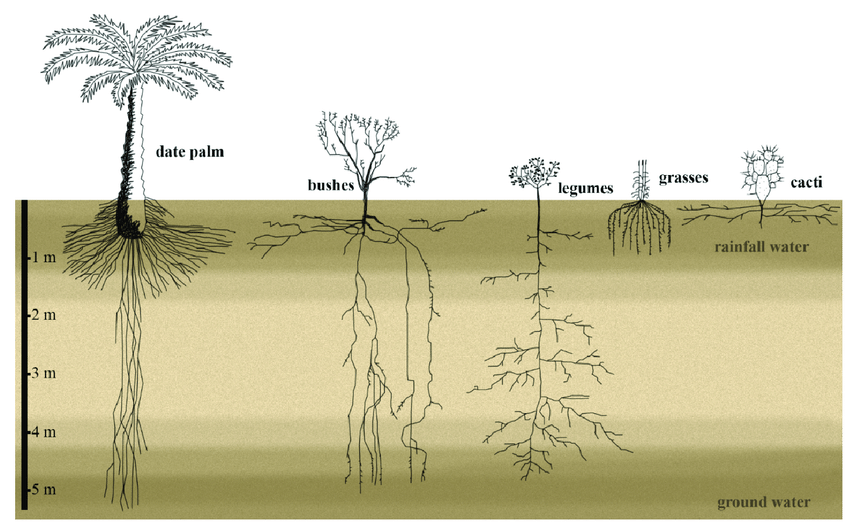
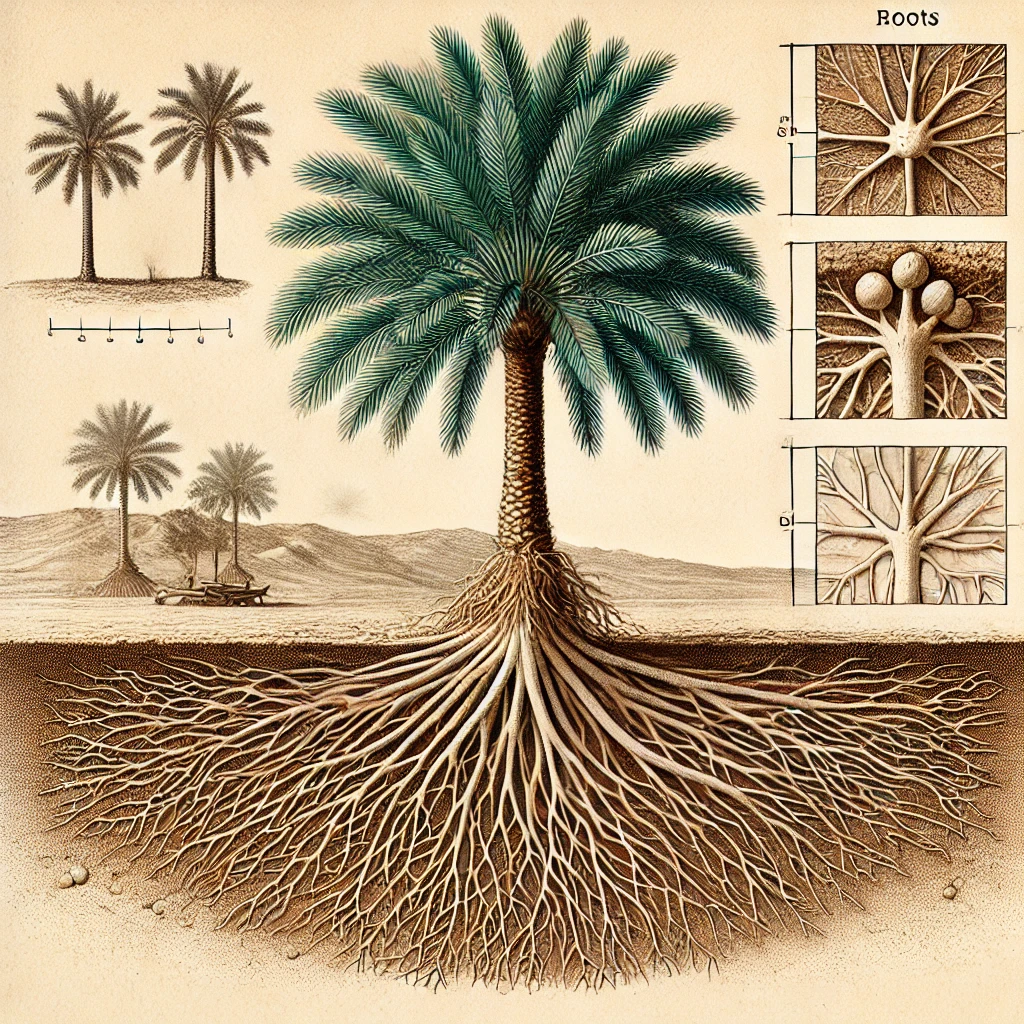
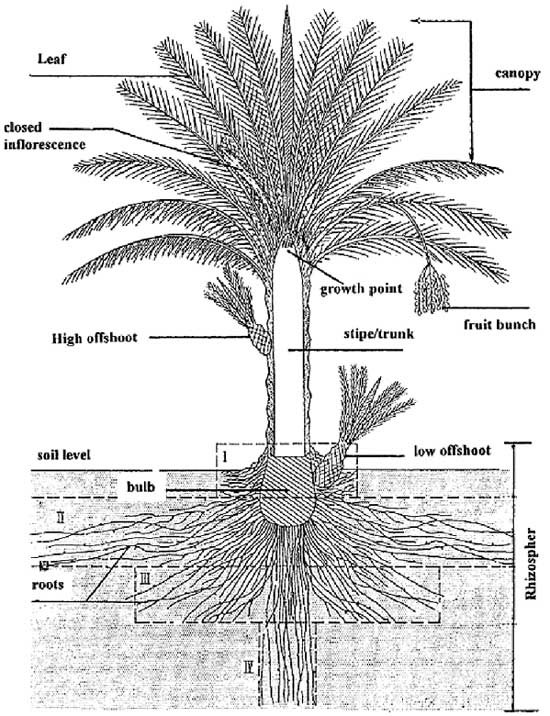
The date palm tree (Phoenix dactylifera) has a unique and highly efficient root system that supports its growth in arid and semi-arid environments. Here’s an explanation of its structure and functionality:

Date Palm Root System

Date palms have a unique root system that helps them thrive in some of the harshest growing conditions on earth.

  1. Fibrous Roots Instead of a Taproot
    • Unlike many trees that grow a deep taproot, date palms develop thousands of smaller fibrous roots that spread out from the base of the trunk. These roots create a large network that efficiently collects water and nutrients.
  2. Most Roots Stay Near the Surface
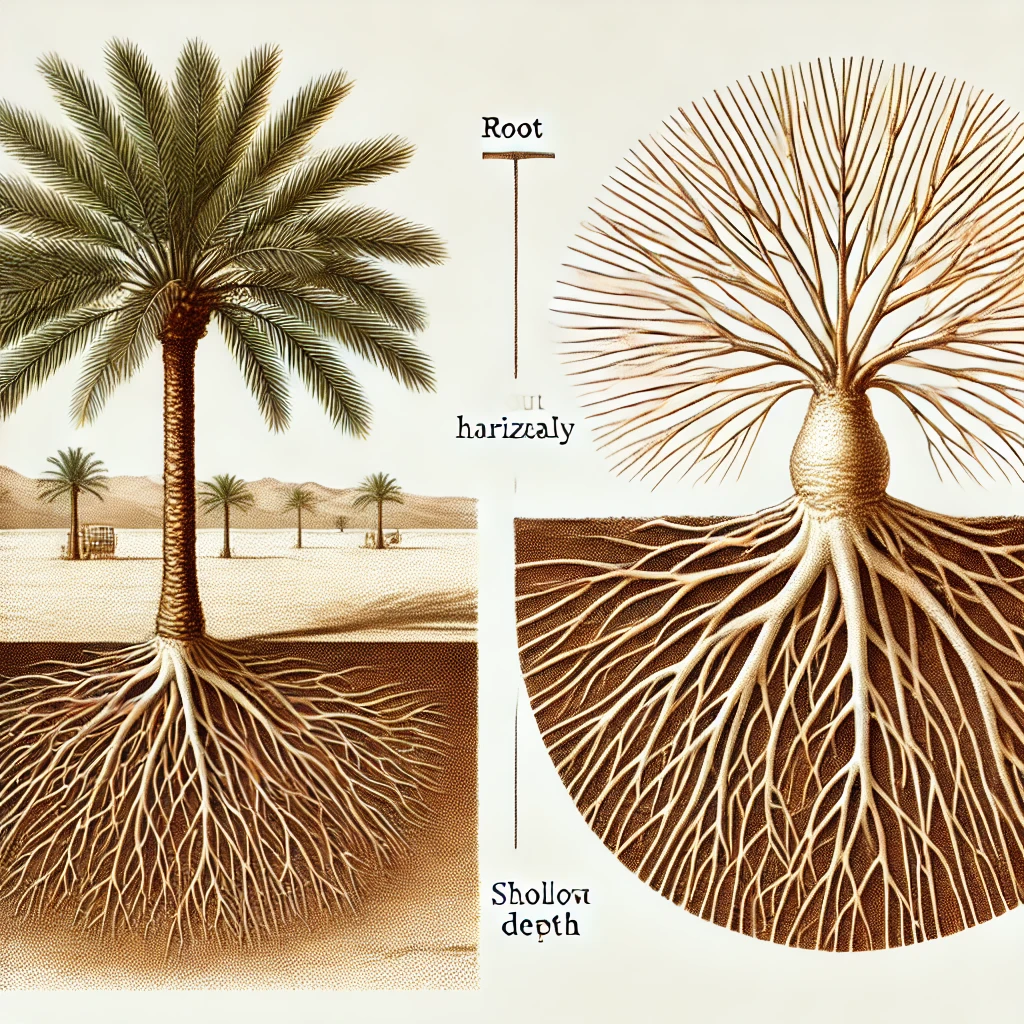
    • The majority of a date palm’s roots are found within the top 3 to 10 feet of soil. This allows the tree to quickly capture moisture from irrigation, rainfall, and naturally occurring groundwater.
  3. Wide Root Spread
    • While the roots don’t typically grow extremely deep, they can extend 30 to 50 feet outward from the tree. This broad root system helps the palm gather water over a large area, which is especially important in dry desert environments.
  4. Built for Desert Survival
    • Date palms are perfectly adapted to arid climates. Their extensive root network allows them to take advantage of even small amounts of moisture, making them one of the most drought-tolerant fruit trees in the world.
    • This is one reason date palms have traditionally been grown around oases and areas with shallow groundwater.
  5. Generally Non-Invasive
    • Unlike some shade trees, date palm roots are not known for damaging foundations, sidewalks, or underground utilities. Their fibrous root structure is efficient at finding water without becoming overly aggressive.

While many people assume date palms have deep roots, their real advantage comes from a dense, wide-spreading root system that allows them to capture water efficiently and thrive in desert conditions.

Date palm tree root system diagram

"Root System"

Date palm root system illustration

"Root System"

Water and Nutrient Absorption

  • Moisture Efficiency: Date palms are drought-tolerant, meaning their root systems can absorb water from deep water tables or take advantage of any moisture near the surface. This is essential in desert environments where water is scarce and often evaporates quickly.

  • Nutrient Uptake: The wide horizontal spread of the roots helps the tree absorb nutrients scattered across the soil. In nutrient-poor desert soils, the roots spread widely to capture whatever nutrients are available.

Irrigation in Cultivation

In modern agriculture, date palms are often grown with drip irrigation systems, which supply water directly to the root zone. This is highly efficient because it ensures that water is delivered to the shallow root system, reducing water waste in the arid environments where dates are typically cultivated.

“The team is part farmer, part archaeologist, always full of enthusiasm to inspire emotions through fragrances and flavors.”

Why This System Works for Date Palms

The shallow, fibrous root system makes sense for several reasons:

  • Desert Adaptation: In deserts, rain doesn’t soak deep into the ground; it tends to stay near the surface or evaporate. A shallow root system allows the tree to absorb water from light rains before it disappears.
  • Resilience in Harsh Conditions: The roots allow the tree to thrive in poor soil conditions and extreme heat, making date palms one of the most enduring trees in desert ecosystems.

This structure and adaptability are key to the date palm’s success in environments where other plants struggle to survive.

Taste the Difference — Farm-Direct California Dates

Our Medjool, Zahidi, and Barhi dates are hand-harvested in Sky Valley, California and shipped direct from the farm. No middlemen, no sitting in a warehouse — just fresh dates from our family orchard to your door.

Free shipping available to California, Arizona, Nevada, Oregon, Washington & Idaho.
Tags: